
Coverage line
General Liability Insurance for Flooring Contractors
The policy that answers to people who do not work for you, during the install and after the floor is down — and the first certificate a general contractor asks you for.
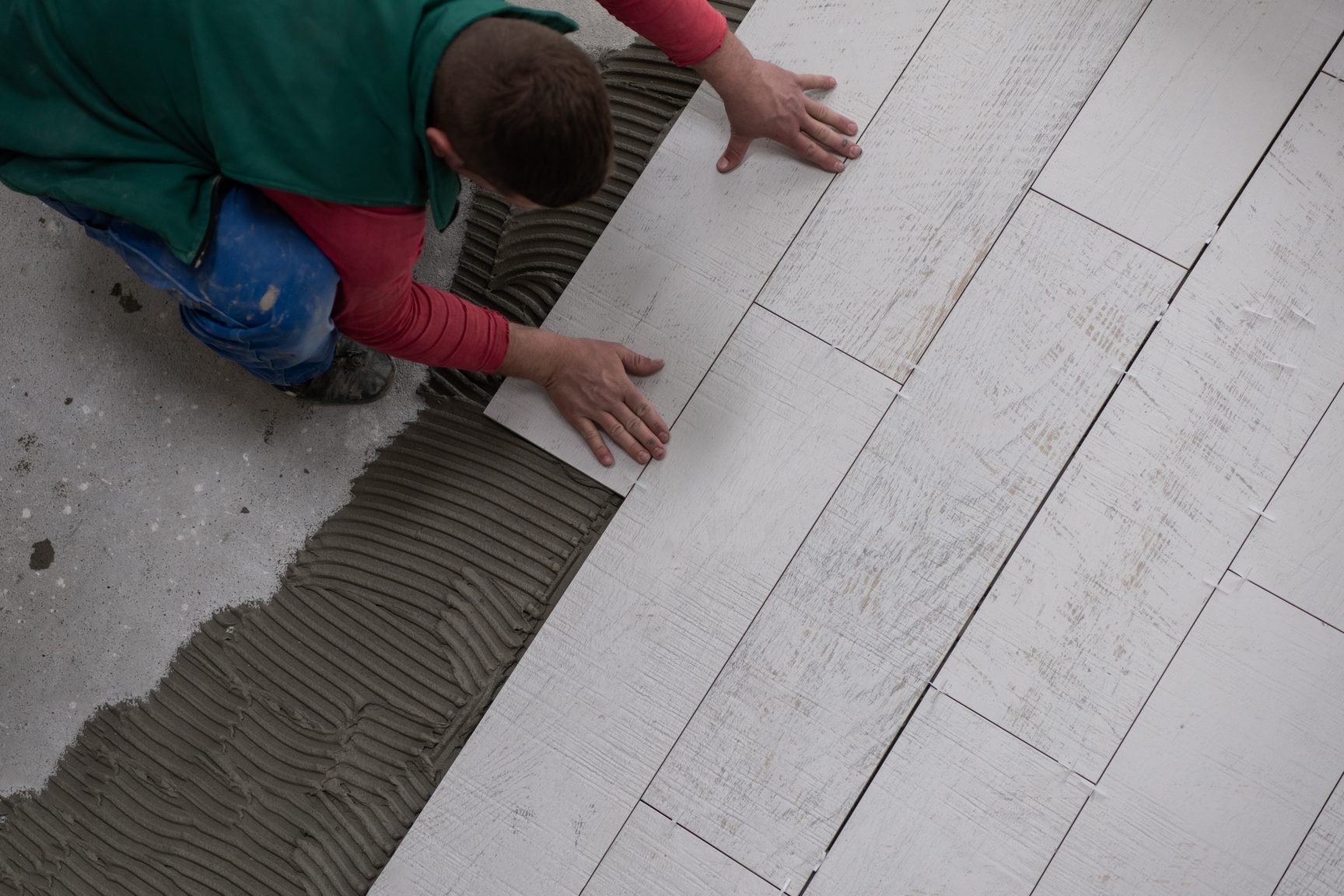
General liability is the policy that answers when your work injures someone who does not work for you, or damages property that is not yours. A customer trips on a transition strip, a cabinet is gouged while the old floor comes up, a floor you finished last spring lets go and ruins what sits on it. It is also the policy a general contractor, a property manager or a homeowner asks you to prove before the job starts.
What it does not do is pay to redo your own work, replace your tools or cover an employee who gets hurt. Those belong to other policies. The places where one policy stops and the next begins are where flooring owners find out what they actually bought, so this page reads the policy the way a flooring job runs: before the install, during it, after it, and with the installers you bring in.
What general liability answers for, and what it hands off
Under the standard ISO form as commonly written — the Commercial General Liability Coverage Form, CG 00 01 04 13 — the policy responds to bodily injury and property damage you become legally obligated to pay, caused by an accident, plus the cost of defending the claim. Carriers file their own versions and add their own endorsements, so your policy wording, not this page, decides a claim.
For a flooring business, that usually means the policy is about:
- a customer, tenant or another trade injured on a job you are running;
- damage to the customer’s property around the work, such as walls, trim, cabinets and furniture;
- a completed floor that fails and damages something else, such as a subfloor, a ceiling below or a finished room;
- the defense of a claim, even one that turns out to have no merit.
And it usually hands these to another policy or leaves them with you:
- tearing out and reinstalling your own faulty work;
- your tools, saws and materials, which belong on an inland marine tools and equipment policy;
- your vans and trucks on the road, which belong on commercial auto;
- an injury to your own employee, which belongs to workers compensation;
- pollution, which is where older flooring that may contain asbestos lands as an exclusion question.
A two-column comparison. The first column holds what the general liability policy is generally about for a flooring business: an injury to a customer, tenant or another trade on the job; damage to the customer’s property around the work; a completed floor that fails and damages something else; and the defense of the claim. The second column holds what it generally hands off: the cost of redoing your own faulty work, which stays with you; your tools and materials, which belong to inland marine; your vans and trucks, which belong to commercial auto; and an injury to your own employee, which belongs to workers compensation. Your own policy wording decides any real claim. No figures are shown.
During the install and after it: where flooring work meets the policy
The policy reads a flooring job in two phases, and the difference matters more on this trade than on most. While you are working, the form sets aside damage to the particular part of the property you are working on when your operations cause it, and the part that has to be redone because your work was done wrong. The rest of the room is a different question. A saw that scars a cabinet face, a dropped box of tile that cracks a countertop, adhesive tracked onto a carpeted hallway — that is damage to property you were not hired to work on.
Once the job is finished, the claim moves into completed operations. That is the part of the policy that answers when the work itself causes injury or damage after you have left: a plank floor that lifts and becomes a trip hazard, a threshold transition that separates, tile that cracks over a subfloor that was never right, moisture that comes up through a slab and releases the adhesive. The form frames all of it as your work, and your work means work performed by you or on your behalf, together with the materials you furnished for it.
Two things follow for a flooring owner. The floor you installed is generally not what the policy pays to replace; the damage that floor causes to other property often is. And the completed-operations part of the policy has its own aggregate limit, which is why a contract that asks for completed-operations protection is asking about something different from the job in progress.
Older buildings add a question of their own. Some older resilient tile and the mastic under it may contain asbestos, and removing it is regulated work — the EPA’s asbestos rules and OSHA’s asbestos standards both reach it. Older homes can also bring the EPA lead renovation program into a job that disturbs painted trim. On the insurance side, the general liability form carries a pollution exclusion that reaches this kind of material, so the time to ask is before you bid the tearout.
The 1099 installer on your job
Most flooring businesses bring in installers they do not employ: a carpet crew for a busy month, a tile setter for a stone job, a single installer paid by the square rather than by the hour. Whether that person is an independent contractor is decided by how the work is actually controlled, not by the paperwork, and the IRS explains the tests it uses. For the insurance, what matters first is what happens when that installer’s work goes wrong.
To the customer, the installer is you. Under the standard ISO form as commonly written, work performed on your behalf is your work, so a claim that the installer damaged a customer’s property, or that their finished floor caused an injury, is usually made against your business first. The form also carries a subcontractor exception to its damage-to-your-work exclusion: when the damaged work, or the work that caused the damage, was performed for you by a subcontractor, that exclusion does not apply. Some policies narrow or remove that exception by endorsement, and it is one of the first things we check on a flooring submission.
The general contractors and property managers who hire you know this, which is why they ask for certificates and for additional insured status before the job starts. The standard endorsements for that are CG 20 10 04 13, for the job in progress, and CG 20 37 04 13, for completed work. Ask the same of the installers you bring in: their own general liability, a current certificate, and your business named as an additional insured, so their mistakes are answered first by their policy rather than by your loss history.
The other half of this seam belongs to workers compensation: if an installer carries no insurance of their own, the audit at the end of the policy year can add what you paid them to your payroll — the workers compensation page walks through that side.
A top-to-bottom flow. It begins with an installer you pay as an independent contractor doing work on your job. To the customer that work is yours, and under the standard form work done on your behalf counts as your work. When that work damages property or injures someone, the claim is usually made against your business first. The installer’s own policy, with you named as an additional insured, is what keeps the claim from landing on your record alone. If the installer carries no insurance of their own, the other half of the question moves to workers compensation, where the audit can add what you paid them to your payroll. Your own policy wording decides any real claim. No figures are shown.
Claims flooring businesses bring to this policy
No two jobs are alike, but the claims that reach a flooring contractor’s general liability tend to fall into a handful of shapes. None of these is a promise of how a particular policy will respond; each turns on the facts and the wording.
- An injury on an occupied site. A tenant, a shopper or another trade trips over staged material, a raised transition or an open edge while the work is under way.
- Damage to the customer’s property during the job. Walls, trim, cabinets, fixtures and furniture take the knocks while floors come up and go down.
- A finished floor that fails and damages something else. Adhesive or moisture failures that reach a subfloor, a ceiling below or an adjoining room, after the crew has gone.
- A claim that arrives through a contract. A general contractor or property owner is sued over your work and tenders the claim to you under the agreement you signed.
Limits, layers and the contract that sets them
A general liability policy carries a limit for each occurrence and aggregate limits over the policy period, with a separate aggregate for completed operations. On commercial work the contract usually sets the minimums, and it may also ask for additional insured status, a waiver and coverage that stays in place for completed work. We would rather read the contract and set the limits against it than quote a limit as though one size fits every flooring business.
When a contract asks for more than a primary policy is built to carry, the extra usually comes from an umbrella liability policy that sits above general liability, commercial auto and employer’s liability together.
Why place it with Flooring Business Insurance
We are an independent agency, so no single insurance company owns the answer. We place flooring businesses with markets that want the trade — residential and commercial, carpet, hardwood, tile and stone — and we read the parts of the policy that decide flooring claims before you need them: the subcontractor exception, the additional insured endorsements a contract calls for, and the pollution exclusion on older tearout. When you send us a contract, a licensed agent reads it against the policy before you sign.
More on coverage for a flooring business
Coverage lines
General liability questions from flooring owners
Does general liability pay to redo a floor my crew installed wrong?
Generally not. Under the standard ISO form as commonly written, the cost of tearing out and reinstalling your own faulty work is excluded. What the policy can answer for is the damage that faulty floor causes to other property, such as a subfloor, cabinets or a room below.
An installer I hired damaged a customer’s cabinets. Whose policy answers?
The customer will usually look to you, because the installer was working on your job. Your policy treats work done on your behalf as your work, and the installer’s own policy, if they carry one, is the other place the claim can go. That is why their certificate matters before they start.
Do my installers need their own general liability if they work under my business?
Most general contractors and many property managers expect it, and your own underwriter will ask. An installer with their own policy, naming you as an additional insured, keeps a claim from their work off your loss history first.
A general contractor wants to be an additional insured. What does that mean for my policy?
It means your policy extends some protection to the contractor for claims arising out of your work. The contract decides whether that has to reach completed work as well as the job in progress, and those are two different endorsements. Send us the contract language before you sign.
We are pulling up old tile that might contain asbestos. Is that covered?
Treat it as an exclusion question before the job, not after. Most general liability policies carry a pollution exclusion that reaches asbestos, and removal is regulated work in its own right. If you take on that kind of tearout, tell us so we can look at the right policy for it.
Does this policy cover my tools or my van?
No. Your tools and equipment belong on an inland marine tools and equipment policy, and your vans and trucks on commercial auto. General liability answers for what your work does to other people and their property.
Is an employee who gets hurt on the job covered here?
No. An injury to your own employee is a workers compensation claim. General liability answers for injury to people who do not work for you, such as a customer, a tenant or another trade on the site.
Send us the work, the crews and the contracts
A licensed agent reads your current policy against the jobs you take and the installers you use, and comes back with what the markets will do.