
Flooring Contractor Insurance by State
Oregon Flooring Contractor Insurance
Oregon’s Oregon Construction Contractors Board licenses floor covering work statewide and asks for proof of liability insurance, and the state runs its own lead renovation and asbestos programs on top of a compulsory workers’ compensation law.
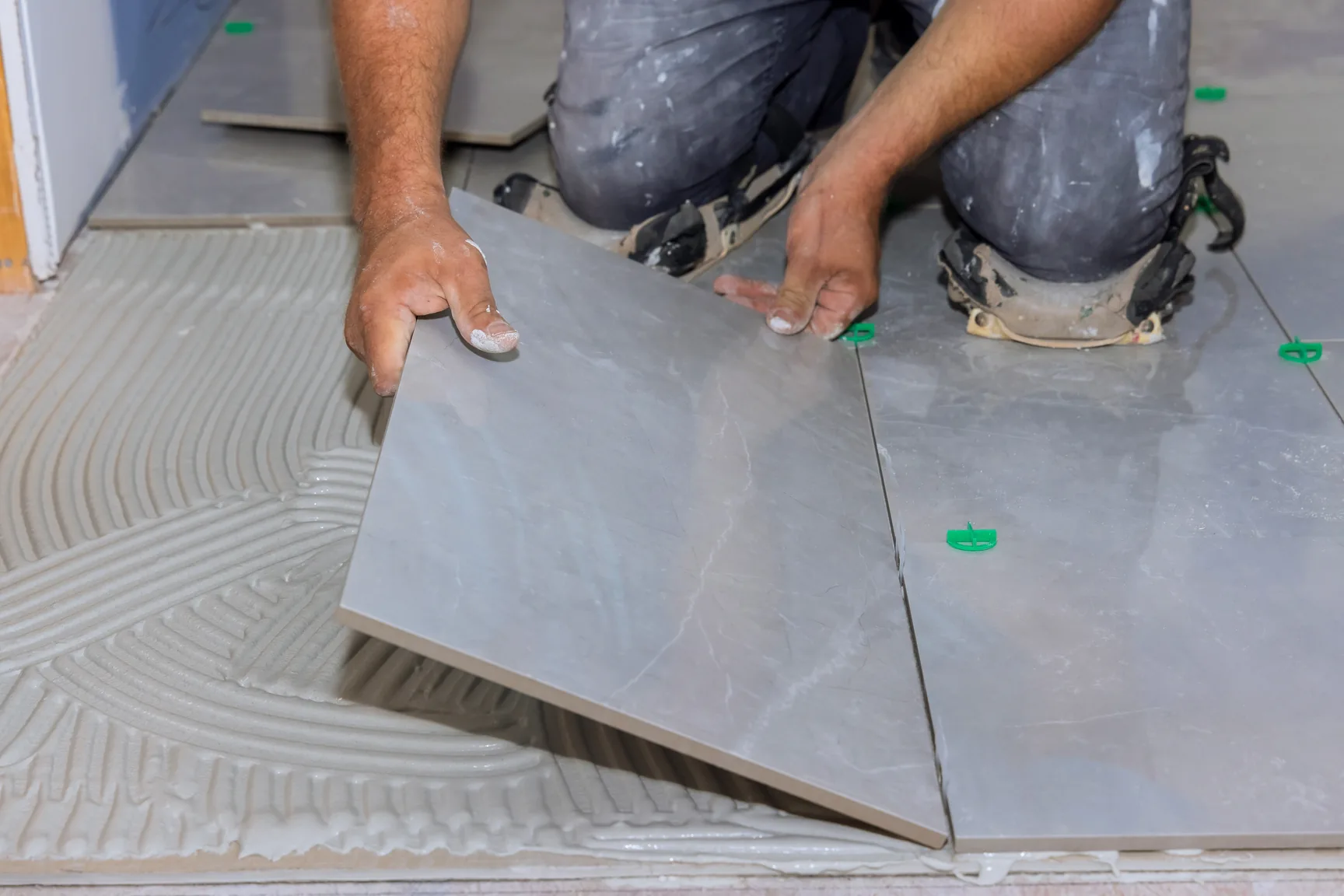
Oregon puts flooring inside a statewide license: the Oregon Construction Contractors Board requires one of anyone who works for compensation on improvements to real property, lists floor covering among the work that needs it, and will not license a contractor without liability insurance that reaches products and completed operations. On top of that license, the state runs its own lead renovation program, in which the Board says renovation includes flooring projects, along with a state asbestos program that names flooring removal and a compulsory workers’ compensation law.
That combination makes Oregon unusual for a flooring owner. In many places the first insurance conversation happens when a general contractor asks for a certificate. Here it starts with the licensing office, because the license file itself holds proof of coverage. Lead-safe work adds a second Board license rather than a federal certificate, and old flooring has its own vocabulary under the state’s asbestos rules, where sheet goods and tile land on different sides of a line. Each section below sets out the verified finding, quotes the source where its exact words matter, and then turns to what the finding asks of you before and during a job.
Policy wording is not an Oregon question, so it lives on the flooring contractor insurance page and the pages linked from it. What follows keeps to the state, whether your firm runs a residential flooring crew in occupied homes, a commercial flooring operation working under builders, a carpet installation business or a tile and stone shop.
Oregon’s Construction Contractors Board license and the floor covering work it names
Oregon licenses construction contractors statewide, and flooring work is inside the license. The Construction Contractors Board requires a license of anyone who works for compensation on improvements to real property and lists floor covering among the work that needs one. Each license carries an endorsement matched to the job: residential endorsements for homes and small commercial structures, commercial endorsements for small and large commercial structures.
Authority: ORS 701.005(5)(a); ORS 701.010(4); ORS 701.021(1); ORS 701.026(1); ORS 701.073; OAR 812-003-0131(2), (11)
The duty itself is short. The contractor statute states it in a single sentence, with an endorsement attached:
“Except as provided in ORS 701.010, a person or joint venture that undertakes, offers to undertake or submits a bid to do work as a contractor must have a current license issued by the Construction Contractors Board and possess an appropriate endorsement as provided in this section.”
Whether a floor installer counts as a contractor is answered on the Board’s own licensing page, which gives examples instead of leaving the question to a definition:
“Examples of work that does require a license include: Roofing Siding Painting Carpentry Floor covering …”
A flooring business holds a current Board license with the right endorsement before it bids, offers or performs the work, and a contractor may hire it only if it is licensed and properly endorsed. The license requires a surety bond, a responsible managing individual and liability insurance covering the contractor’s work, including products and completed operations, with proof filed at licensure and renewal. A specialty endorsement is limited in the number of unrelated trades it covers, and very small casual jobs are exempt only for a business that does not advertise itself as a contractor.
Of the conditions attached to the license, one belongs squarely on an insurance page. The statute ties the license to liability coverage, and it names completed work in the process:
“A contractor who possesses a license as required under this chapter shall have in effect public liability, personal injury and property damage insurance covering the work of the contractor that is subject to this chapter, including the covering of liability for products and completed operations …”
It then makes the coverage something the Board sees, not something a contractor merely promises:
“The contractor shall provide satisfactory evidence to the Construction Contractors Board at the time of licensure and renewal that the insurance required by subsection (1) of this section has been procured and is in effect.”
Read together, those two sentences turn a lapse in coverage into a licensing problem as well as an insurance one. A renewal date on the license and a renewal date on the policy are worth keeping on the same calendar, and the questions about how products and completed operations coverage actually responds after a floor is handed over are taken up on the general liability page.
The statute also reaches the relationship between contractors, which is where many flooring firms spend most of their year:
“A contractor may not hire a contractor to perform work unless the contractor is licensed under this chapter and properly endorsed for the work to be performed or is exempt from licensure under ORS 701.010.”
Seen from a builder’s side, that sentence explains why a license lookup often comes before a purchase order. From your own side of the job, the same rule governs any installer you bring onto a site. The narrow exemption for very small casual work does not change that picture for a business that presents itself as a contractor, as the statute makes plain:
“A person working on one structure or project, under one or more contracts, when the aggregate price of all of that person’s contracts for labor, materials and all other items is less than $1,000 and such work is of a casual, minor or inconsequential nature. This subsection does not apply to a person who advertises or puts out any sign or card or other device that might indicate to the public that the person is a contractor.”
Habits that fit a license built this way:
- Match each job to the endorsement you hold before pricing it, and note on the estimate whether the structure is residential or commercial.
- Look up every installer you subcontract to with the Oregon Construction Contractors Board and keep the result in the job file.
- Send the Board’s insurance proof and your renewal paperwork through the same person, so neither side of the license lapses unnoticed.
The certificates and additional insured wording a builder asks for are covered on the commercial flooring contractor insurance page; what a homeowner may ask to see is on the residential page.
Lead-safe renovation in Oregon runs through the contractor board and the health authority
Oregon runs its own EPA-authorized lead renovation, repair and painting (RRP) program. The Construction Contractors Board issues the Lead-Based Paint Renovation license a licensed contractor must hold before it offers or performs renovation in covered older housing or child-occupied facilities, and the Oregon Health Authority certifies the firms the Board does not license and accredits the renovator training.
Authority: ORS 701.505; ORS 701.510(2); ORS 701.515; OAR 812-007-0300
The federal rule on renovation in older housing still exists, but in Oregon two state bodies stand in for EPA. The Oregon Health Authority, Lead-Based Paint Program explains how that came about:
“In 2010, EPA authorized the Oregon Construction Contractors Board (CCB) and the Oregon Health Authority (OHA) to administer and enforce the rule instead of EPA.”
The Board’s rule then puts the license duty on the contractor in plain terms:
“No contractor shall offer to perform or perform renovation in target housing or child-occupied facilities without first receiving a certified LBP renovation contractor license from the board, unless such contractor is exempt from the board’s licensing requirements.”
Owners of flooring businesses sometimes assume a lead program is written for painters. The Board answers that directly on its specialty licenses page:
“This includes projects involving flooring, windows, gutters, siding, and painting. Window replacement is considered renovation.”
The Board says renovation under the rule includes projects involving flooring, so a flooring contractor that disturbs painted baseboards, trim or other painted surfaces in a covered building needs the Board’s lead-based paint renovation license on top of its contractor license, with an owner or employee who holds a renovator course completion certificate. Lead abatement is a separate set of licenses.
The surfaces that bring a flooring crew into the program are usually at the edges of the room. Baseboards are pulled so new flooring can run to the wall, shoe molding comes off with them, and a painted threshold may need to come up. The Board also makes clear that the renovation license sits on top of the contractor license, not in place of it:
“In Oregon, they must also have a CCB license.”
Questions worth asking before a price goes out on an older house or a building where young children spend their days:
- Does the building count as covered housing or a child-occupied facility? The state’s renovation program page explains which buildings count, and the answer belongs on the estimate sheet.
- Who pulls the painted trim? When your own installers do it, your firm needs the renovation license.
- Does anyone on the job expect lead hazards to be removed rather than worked around? That is abatement, which the obligation sentence above places under a separate set of licenses.
Older homes bring these questions up more than any other job, which is part of why the residential flooring contractor insurance page spends time on them. Policy treatment of a claim involving lead is a separate matter, taken up on the general liability page.
Sheet vinyl, floor tile and mastic under Oregon’s DEQ asbestos rules
Oregon’s Department of Environmental Quality runs a state asbestos program that reaches flooring removal. Its rules count replacing, stripping or repairing flooring as renovation, require a survey by an accredited inspector before renovation, and treat friable and nonfriable material differently. The Department’s contractor fact sheet lists sheet vinyl flooring as friable material, which only a DEQ-licensed asbestos abatement contractor may remove on a business job, and vinyl floor tile and black mastic as nonfriable material.
Authority: OAR 340-248-0010(39); OAR 340-248-0100; OAR 340-248-0250(1)(c), (e); OAR 340-248-0270(1), (6); ORS 468A.707
Many asbestos rules leave a flooring crew to work out whether a tear-out counts. The Oregon Department of Environmental Quality, Asbestos Program writes flooring into its definition:
“"Renovation" means altering one or more facility components. Renovation includes replacing, stripping, or repairing facility components, such as mechanical ventilation systems, pipes, ceilings, walls, flooring, and insulating materials.”
That definition matters because the survey duty attaches to renovation, and it comes before the work starts:
“Except as OAR 340-248-0250 provides, before performing a demolition or renovation, the owner or operator of a demolition or renovation activity must have an accredited inspector complete a survey according to OAR 340-248-0270(3).”
The Department’s fact sheet for contractors then sorts the materials a flooring crew is most likely to find. On one side of the line:
“Examples of friable materials include sheet vinyl flooring, insulation on pipes, ductwork and boilers, fireproofing, ceiling and wall texture, ceiling panels and soundproofing materials.”
And on the other:
“Examples of nonfriable materials include vinyl floor tile, black mastic, cement water pipe, and cement siding, roofing or paneling.”
A licensed construction contractor may remove nonfriable flooring material such as vinyl floor tile without an asbestos abatement license, but it files the Department’s nonfriable removal notification with its fee before starting and removes the material so it stays nonfriable; once the material is crushed, crumbled or pulverized it becomes friable and only a DEQ-licensed asbestos abatement contractor may handle it. Mastics fully encapsulated in a petroleum-based binder that are not hard, dry or brittle are exempt from most of the rules while they are not made friable, and newer small residential buildings are exempt from the survey requirement.
Sheet vinyl and tile can look alike from a doorway and still sit on opposite sides of that list, so the difference is worth settling from the survey rather than from a glance. For the nonfriable side, the rule sets out the exemption a licensed contractor relies on, and the point at which it stops:
“A nonfriable asbestos abatement project is exempt from the asbestos licensing and certification requirements under OAR 340-248-0100 through 340-248-0180. The exemption ends whenever the asbestos-containing material becomes friable.”
The fact sheet describes what ends it in practical terms:
“If nonfriable materials are crushed, crumbled or pulverized, they become friable and can only be handled and disposed of by DEQ-licensed asbestos abatement contractors.”
That puts the removal method at the center of the job. A tile that comes up whole keeps the project on the nonfriable side; a grinder, a shot blaster or a scraper that breaks the tile into dust can move it across.
- Ask for the survey before pricing the tear-out, and read what it found under the floor you are replacing, not only in the room as a whole.
- Name the removal method in writing on the proposal. If tile starts breaking up, stop and call the owner before anyone changes tools.
- Keep the Department’s notification with the job file, next to the survey and the proposal, so the three can be read together if a question comes up later.
- Brief the lead installer on the difference between sheet goods and tile, and on what to do when a second layer turns up that nobody mentioned.
Asbestos claims and the way a policy treats finished work once the room is back in use belong on the general liability page. Tear-out on a builder’s commercial project brings in the contract’s insurance terms, covered on the commercial page, and tile demolition has its own version of the question on the tile and stone page.
What Oregon’s workers’ compensation law asks of a flooring employer
Every employer that employs subject workers in Oregon must carry workers’ compensation. The employer maintains assurance with the Director of the Department of Consumer and Business Services by qualifying either as a carrier-insured employer, covered by an insurer authorized to write the coverage in Oregon, or as a self-insured employer. A competitive state insurer, organized under Oregon law as an independent public corporation, sells policies alongside private insurers, so it is described here by what it does rather than by name.
Authority: ORS 656.017(1); ORS 656.023; ORS 656.005(14); ORS 656.751(1); ORS 656.752(1); ORS 701.035(5)
The chapter sets out whom it reaches in a single line:
“Every employer employing one or more subject workers in the state is subject to this chapter.”
It then describes the duty those employers carry, and the two ways of meeting it:
“Every employer subject to this chapter shall maintain assurance with the Director of the Department of Consumer and Business Services that subject workers of the employer and their beneficiaries will receive compensation for compensable injuries as provided by this chapter and that the employer will perform all duties and pay other obligations required under this chapter, by qualifying: (a) As a carrier-insured employer; or (b) As a self-insured employer as provided by ORS 656.407.”
For most flooring businesses the practical route is the first one, a policy from an insurer authorized to write the coverage in Oregon. The state-created insurer mentioned in the finding above competes for that business alongside private insurers; it is one option in the market, not a requirement.
A flooring contractor with employees carries workers’ compensation for them, and a commercial contractor licensed by the Construction Contractors Board in the exempt class, the class for businesses without employees, must still procure and maintain workers’ compensation insurance under the Board statute.
That second half is the part owners of small firms tend to miss. The contractor statute speaks to it directly:
“A person that is within the exempt class described in subsection (2)(b) of this section and is licensed as a commercial contractor shall procure and maintain workers’ compensation insurance as authorized by ORS 656.128.”
So a commercial contractor that has no employees today is not finished with the question. If your firm holds a commercial endorsement in that class, confirm with the Board what the duty means for you before you assume the coverage is optional. An underwriter’s payroll questions, and how installers paid as subcontractors are treated, belong on the workers’ compensation page, since they concern the policy rather than Oregon.
Which Oregon office handles insurance, licensing, lead, asbestos and workers’ comp
Insurance companies and agents operating in Oregon answer to the Oregon Division of Financial Regulation, whose role, as verified, is this: insurance regulator, a division of the Department of Consumer and Business Services. To look up the license our agency holds, or that of any other agency, use NIPR.com.
The other state bodies behind this page each hold one part of the picture. Every link below opens the office’s own site, with the role the record verified:
- Oregon Construction Contractors Board: statewide construction contractor licensing with residential and commercial endorsements, including flooring work, and the lead-based paint renovation contractor license
- Oregon Health Authority, Lead-Based Paint Program: state-run RRP program with the Construction Contractors Board: certifies firms the Board does not license and accredits renovator training; the Board licenses contractors for renovation
- Oregon Department of Environmental Quality: state environmental agency; runs the asbestos program
- Oregon Department of Environmental Quality, Asbestos Program: asbestos abatement contractor licensing, worker certification, survey rules and project notification
- Oregon Workers’ Compensation Division: workers’ compensation administration within the Department of Consumer and Business Services; employer coverage and self-insurance
Notice that the contractor board appears twice in this story, once for the license every flooring firm needs and again for the lead renovation license. An owner with a question about either can start in the same place.
Oregon metro areas from Portland to Medford, with their counties
The cards show Oregon’s largest metropolitan areas, as the U.S. Census Bureau delineates them, with the Oregon counties in each. Because the license comes from the state, its line reads the same on every card; what changes from one metro to the next is the distance your crews drive.
Portland-Vancouver-Hillsboro, OR-WA
Oregon counties in the metro: Clackamas County, Columbia County, Multnomah County, Washington County and Yamhill County.
Flooring work here needs the same statewide license and endorsement from the Oregon Construction Contractors Board.
Salem, OR
Counties included: Marion County and Polk County.
Flooring work here needs the same statewide license and endorsement from the Oregon Construction Contractors Board.
Eugene-Springfield, OR
Counties included: Lane County.
Flooring work here needs the same statewide license and endorsement from the Oregon Construction Contractors Board.
Bend, OR
Counties included: Crook County, Deschutes County and Jefferson County.
Flooring work here needs the same statewide license and endorsement from the Oregon Construction Contractors Board.
Medford, OR
Counties included: Jackson County.
Flooring work here needs the same statewide license and endorsement from the Oregon Construction Contractors Board.
Albany, OR
Counties included: Linn County.
Flooring work here needs the same statewide license and endorsement from the Oregon Construction Contractors Board.
Oregon rules and the coverage pages that pick up from them
The sections above place Oregon’s rules. The insurance that answers for the work is the same set of policies a flooring business carries anywhere, each with its own page:
- Claims from others, including tear-out and completed work, sit with general liability.
- Injuries to your crew, and the subcontracted-installer questions the hiring rule raises, sit with workers’ compensation.
- Saws, sanders, stretchers and material that travel between jobs sit with inland marine coverage for contractors’ tools and equipment.
How much weight each carries depends on the flooring you install. A carpet business and a tile shop face different owners, subfloors and tear-outs, and the carpet installation and tile and stone pages treat each on its own terms. Once those pieces are clear for your Oregon work, a quote request is the next step.
Residential Flooring Contractor Insurance
A panel for Oregon in rows. Contractor license: a state license or registration can reach this work. It connects to the General Liability page. Lead-safe renovation: the state runs its own lead-safe program. It connects to the Residential Flooring Contractor Insurance page. Asbestos flooring and mastic: a state program reaches flooring removal. It connects to the General Liability page. Workers’ compensation: bought in the open market. It connects to the Workers Compensation page. Each row pairs a state rule with the page on this site that discusses it. No figures are shown.
Nearby states we also write
Related coverage and services
What we insure
Coverage lines
Oregon flooring contractor insurance questions
What license does an Oregon flooring installer need before bidding a job?
A current license from the Oregon Construction Contractors Board, with an endorsement that matches the work. The Board requires a license of anyone who works for compensation on improvements to real property and names floor covering among its examples. Residential endorsements reach homes and small commercial structures; commercial endorsements reach small and large commercial structures.
Does the Oregon contractor license come with an insurance requirement?
Yes. A licensed contractor must carry liability insurance covering its work, including products and completed operations, and must show the Board proof of it at licensure and at every renewal. The license also calls for a surety bond and a responsible managing individual who manages or supervises the construction work.
Can an Oregon general contractor hire a flooring installer who has no license?
Not under the state’s contractor law. A contractor may hire another contractor only if that contractor is licensed and properly endorsed for the work, or is exempt from licensure. For a flooring subcontractor, the license is part of what makes it hirable.
Does a floor replacement in an older Oregon home fall under the lead renovation rules?
It can. Oregon runs its own lead renovation program in place of EPA, and the Oregon Construction Contractors Board says renovation includes projects involving flooring. A flooring contractor that disturbs painted baseboards, trim or other painted surfaces in covered housing or a child-occupied facility needs the Board’s lead-based paint renovation license on top of its contractor license.
Is old sheet vinyl handled differently from vinyl floor tile under Oregon’s asbestos rules?
Yes. The Oregon Department of Environmental Quality lists sheet vinyl flooring as friable material, which only a licensed asbestos abatement contractor may remove on a business job, and vinyl floor tile and black mastic as nonfriable. A licensed construction contractor may remove nonfriable flooring without an abatement license if it files the Department’s notification with its fee and keeps the material nonfriable; crushed or pulverized, it becomes friable.
Does an Oregon flooring job need an asbestos survey before the old floor comes up?
Before a renovation, the owner or operator must have an accredited inspector survey the building, unless a rule exemption applies. The Department’s rules count replacing or stripping flooring as renovation, and the exemption from the survey reaches only certain newer residential buildings.
Where does an Oregon flooring employer get workers’ compensation?
From an insurer authorized to write the coverage in Oregon, or by qualifying as a self-insured employer. Oregon law also created a competitive state insurer, organized as an independent public corporation, that sells policies alongside private insurers. A commercial contractor licensed in the Board’s exempt class, for businesses without employees, must still procure and maintain the coverage.
Which Oregon office oversees insurance companies and agents?
The Oregon Division of Financial Regulation, a division of the Department of Consumer and Business Services. Employer coverage and self-insurance under the workers’ compensation law sit with the Oregon Workers’ Compensation Division.
This page describes insurance for flooring contractors and installers operating in this state. It is general information, not legal advice and not a statement of coverage. Licensing, lead-safe and asbestos requirements change; verify current requirements with the agency named before relying on them.
Get a quote for your Oregon flooring work
Tell us which Oregon endorsement you hold, what sits under the floors you take out and who is on your crew, and we will put a program together around those answers.