
What we insure
Residential Flooring Contractor Insurance
Coverage for flooring businesses that work in people’s homes — around the family and their things while the job runs, in rooms handed back one at a time, and over whatever lies under the old floor.
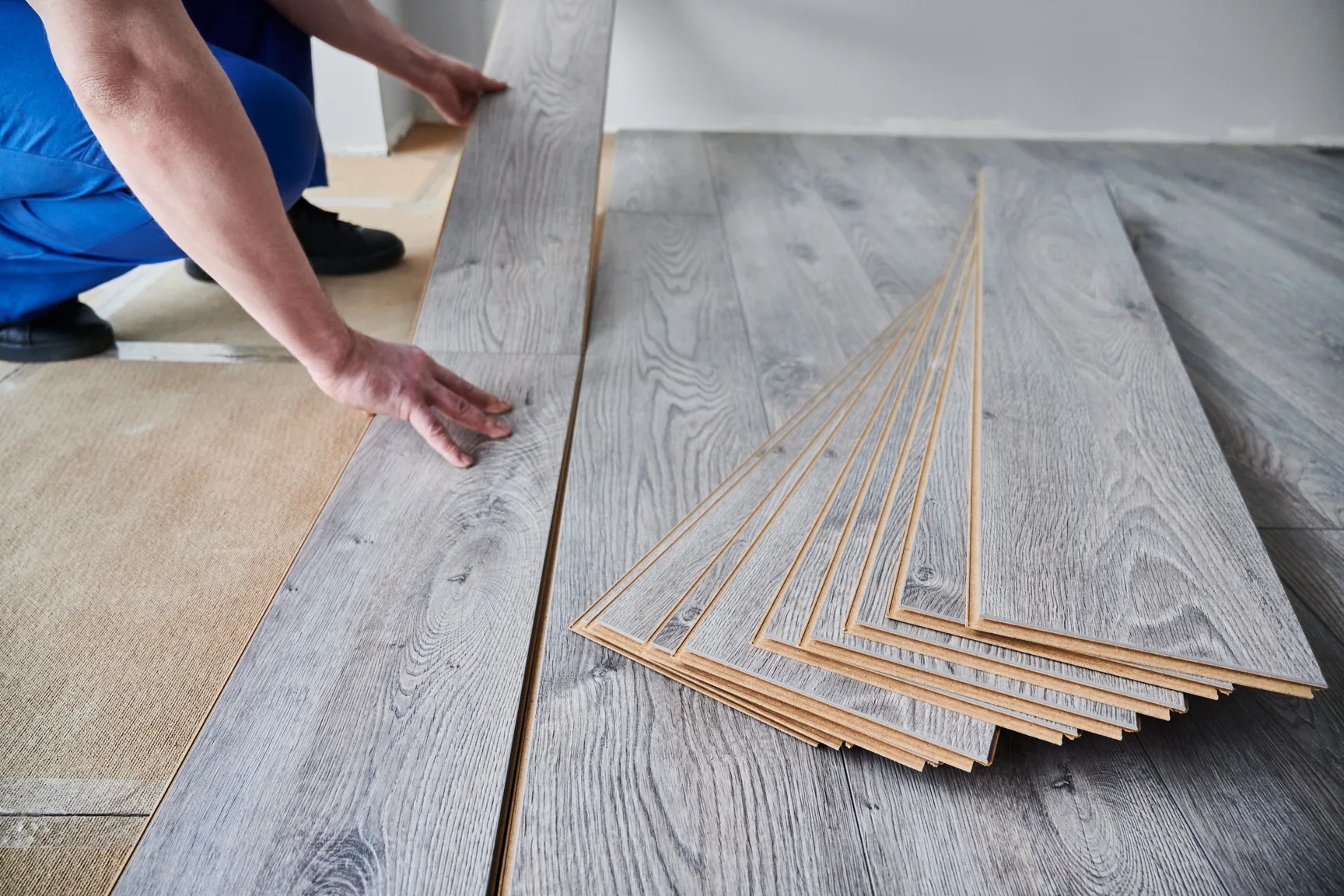
Residential flooring contractor insurance is the set of policies a flooring business carries for work inside people’s homes: general liability to answer for injury and damage to the homeowner’s family, guests and belongings, workers compensation for the crew, and inland marine for the saws, nailers and plank that travel to each house. What sets it apart is the house itself — the family lives in it while you work, and the floor you pull up may be older than anyone living there knows.
A commercial floor usually goes down on a site that a general contractor runs. A homeowner job happens in a kitchen that still has to produce dinner, a hallway the children still walk through, and a living room where the sofa has been pushed against the wall your crew is about to trim. The people who can get hurt and the property that can get damaged belong to the customer, and they are in the room with you.
Hardwood and LVP or vinyl make up most of this work. A site-finished hardwood floor brings sanding and finish work into a lived-in house; a floating vinyl plank floor goes down quickly and is walked on the same day. Both put the homeowner on the new floor sooner than a commercial tenant would be, and both come back as callbacks when something under them moves.
This page follows the homeowner job from the contract to the callback: rooms handed back early, floors that fail later, moisture arguments, and what lies under the old floor.
Why a homeowner job is insured differently from site work
On a residential job there is usually nobody between you and the customer. The homeowner signed your contract, chose the plank and will walk the floor every morning of the job. That direct relationship changes the insurance picture in three ways.
- Everything around the work belongs to the person paying for it. Base cabinets, stair treads, painted walls and trim, a piano rolled into the dining room. Crews often move the furniture themselves, and what gets scraped on the way is a property damage question.
- The people in the house are not trades. A child, a grandparent, a dog walker or a delivery driver may cross a room with cartons stacked against the wall, an unfinished transition or a compressor hose across the doorway.
- The house keeps running. Rooms are cleared, finished and handed back one at a time, so part of the job is finished while the rest is still under way. That matters to the policy.
A homeowner who is unhappy with a floor does not route the complaint through a project manager. They call you, often standing on the floor in question, with a photo and a demand to redo the room. Knowing which part of that demand a policy can answer, and which part is a workmanship conversation, is most of what this page is for.
Homeowner contracts and the state rules behind them
Residential flooring sits inside the home improvement rules that many states write for work on houses, and those rules usually run separately from commercial contractor licensing. Two examples from primary sources show the shape. Neither stands in for any other state, and your own licensing board is the authority for your work.
The Maryland Home Improvement Commission treats the alteration, remodeling, repair or replacement of any part of a residence as home improvement work, and it includes work inside individual condominium units. Only a licensed home improvement contractor may enter into the contract with the homeowner, while a subcontractor working for a licensed contractor may do the work without a license of their own. Maryland also requires licensed home improvement contractors to carry general liability insurance, and it keeps a guaranty fund that compensates homeowners for losses from poor workmanship or a contract left unperformed.
California’s Contractors State License Board gives flooring a license classification of its own for flooring and floor covering contractors, and its scope starts with preparing the surface for the new floor — the subfloor work that residential moisture arguments so often turn on.
Two federal programs reach older homes wherever they are. EPA’s lead renovation program requires firms paid to disturb painted surfaces in older housing to be certified, sole proprietorships included, and to give occupants EPA’s Renovate Right pamphlet before work begins; the EPA page for contractors sets out firm certification. The rule does not name flooring, and it reaches a floor job through the painted baseboard, shoe molding, door casings and thresholds the job disturbs. For asbestos, EPA notes that federal law does not require people who handle asbestos-containing material in detached single-family homes to be trained and accredited, but that some states and localities do. Where you work decides which of those rules binds your crew.
A two-column comparison. One column holds the job in progress in an occupied home: damage to the homeowner’s cabinets, trim, walls and furniture around the work; a family member or visitor who trips over staged plank or an open edge; and the part of the floor being worked on, which the standard form generally sets aside. The other holds the room back in use: a finished room the family is living in can already count as completed work while the crew is in the next room; a completed hardwood or vinyl floor whose failure damages something else; and the cost of redoing the floor itself, which generally stays with the contractor. Any real claim is decided by your own policy wording. No figures are shown.
A room back in use: completed work in an occupied home
In a lived-in house, the standard ISO form as commonly written — the Commercial General Liability Coverage Form, CG 00 01 04 13 — splits a flooring job into two phases, and the line between them runs through the middle of the job. While your crew is working, the form sets aside damage to the particular part of the property your operations are on, along with any part that has to be redone because the work itself was done wrong. The rest of the house is another matter: a cabinet toe-kick gouged by a pry bar, a stair tread cracked under a dropped carton, a painted wall scuffed as plank goes up the stairs.
The form treats your work as finished at the earliest of several moments, and one of them is when a part of the job has been put to its intended use by someone other than another contractor on the same project. In an occupied home that happens constantly. The family moves back into the finished bedroom while the crew starts the hall; the kitchen floor is done in the morning and dinner is cooked on it that night. A finished room can therefore count as completed work while you are still on site, and a claim from it moves to the completed-operations part of the policy.
Completed operations is where a floor that fails later is answered. The form generally does not pay to tear out and relay your own floor, but damage that floor causes to something else can fall within it. There is also a subcontractor exception to the form’s damage-to-your-work exclusion, and some policies narrow that exception by endorsement; the general liability page reads the whole of it.
Hardwood and LVP callbacks, moisture and the homeowner’s subfloor
The residential callback is familiar to anyone in the trade: hardwood that cups or gaps after a season, a glued-down vinyl plank that lifts at the seams, a floating floor that peaks at a doorway. The homeowner calls the installer, and the installer points at the slab, the subfloor or the conditions in the house. Whether a policy responds depends on what was damaged — the floor itself or something beyond it — and on what the facts show about the cause.
For concrete, the manufacturer-neutral frame comes from ASTM’s test method for relative humidity in concrete floor slabs. It explains that excess moisture in a slab after a floor covering goes down can cause failures such as debonding and peaking, that flooring manufacturers generally require moisture testing before installation on concrete, and that a test result describes the slab only when and where it was taken. That is basement and slab-on-grade work, where a great deal of residential vinyl plank is laid.
Wood subfloors, which sit under much residential hardwood, fall outside that concrete standard, but moisture in a wood subfloor and the conditions a product’s manufacturer sets for installation still decide many hardwood disputes. The practical point is the same for both. A moisture reading recorded before the install, the manufacturer’s requirements kept with the job file, and photos of the subfloor as you found it are the evidence a contractor has when a homeowner claim arrives.
Sanding and finishing in an occupied home adds dust, fumes and fire questions of its own. The post on what a refinisher should ask about dust, fire and machines goes through them.
A top-to-bottom flow. It begins with finding the layers under the floor being replaced, such as old resilient tile, the backing on old sheet vinyl, and adhesive. The next step is to question what those layers are made of, because the federal environmental agency lists these materials among the places asbestos may be found and says you generally cannot tell by looking. The flow then stops for testing or for a decision to cover over or refer the removal to accredited professionals, which is regulated work in its own right. The last step is the policy question: the standard general liability form carries a pollution exclusion, and many policies add their own asbestos or lead exclusions, so this is an exclusion to read before the bid. Any real claim is decided by your own policy wording. No figures are shown.
What lies under the old floor in an older home
Tearout is where residential flooring differs most from new construction. Under a worn floor in an older home there may be another floor, and under that one an adhesive. EPA’s overview of asbestos lists vinyl floor tiles, the backing on vinyl sheet flooring and adhesives among the places asbestos may be found, and its homeowner guidance says a material generally cannot be identified as containing asbestos just by looking at it.
That homeowner guidance treats old flooring as a decision to make before anything is disturbed. It advises against sanding or trying to level flooring that may contain asbestos, advises against power strippers on it, suggests covering it with new flooring where possible, and points homeowners who are planning a remodel toward inspection by a trained and accredited asbestos professional. Removal, in other words, is its own trade. For an installer quoting new hardwood or vinyl plank, the choices are to have the old layers tested, to install over them where the product allows, or to refer the removal out.
The insurance side is an exclusion question rather than a coverage feature. The standard general liability form, as commonly written, carries a pollution exclusion that reaches irritants and contaminants released at a job site, and the cost of answering a demand to test for them or clean them up. The form does not name asbestos or lead, and whether disturbed tile, mastic or paint falls within that exclusion can be argued; many carriers settle the argument by attaching their own asbestos or lead exclusion. The form does treat fumes from materials your crew brings in differently from what was already in the house, though that is no promise a fume claim is covered.
Painted trim raises the same question from another side. When a floor job pulls baseboard and shoe molding, undercuts painted door casings or removes thresholds in an older home, EPA’s lead renovation rule can apply to your firm, and a lead exclusion on your policy can apply to the claim. Tell us before you bid tearout in an older home, and we will read the policy against the job.
The residential flooring policy set, line by line
The lines below are the ones most residential flooring businesses carry, in the order a homeowner job tends to reach them.
- General liability. The homeowner’s belongings and the people in the house, during the job and after each room goes back into use. It is also the certificate a homeowner, a condominium board or a state licensing rule is most likely to ask for.
- Workers compensation. Injuries to your own crew: knees on hard floors all day, cartons of plank and hardwood carried up stairs, saws and nailers used in tight rooms.
- Inland marine — contractors tools and equipment. Saws, sanders, moisture meters and the plank staged in a homeowner’s garage or driveway before it goes down.
- Commercial auto. The vans and pickups that carry crews and material from house to house.
- Umbrella liability. A layer above the primary policies for a severe injury in a home or a loss that outruns the limits beneath it.
When an installer you pay as an independent contractor does part of a homeowner job, the questions that follow are taken up on the general liability and workers compensation pages.
What moves the cost of residential flooring coverage
Price depends on the shape of the business more than on its trade label. An owner who installs alone, a small crew with a helper or two, and a business running several crews at once are priced on different facts, and within each of those the same drivers move the number:
- payroll and crew size, and how much of the work goes to installers you pay as independent contractors;
- whether those installers carry their own general liability and workers compensation, with certificates on file;
- the mix of residential work — new installation or sanding and refinishing, hardwood or LVP and vinyl;
- whether you take on tearout in older homes, and how you handle suspected asbestos or lead: test, cover over or refer out;
- your moisture-testing and documentation practice;
- claims history, especially callbacks and property damage in customers’ homes;
- the limits a state rule, a homeowner contract or a condominium association asks for;
- the value of tools and material carried on a floater, and the vehicles on the road.
Claims a residential flooring installer may face in a customer’s home
These are general shapes, not predictions of how any policy will answer; the facts and the policy wording decide each one.
- The piano in the dining room. The crew moves furniture to clear a room, and a leg gouges the homeowner’s existing hardwood in the next room — property the job never touched.
- The bedroom that was already finished. A family member trips on a raised transition in a room the crew handed back the day before, while work continues down the hall.
- The basement floor that lifts. Vinyl plank over a slab lifts a season later and the homeowner’s baseboard and furnishings are damaged. The relay of the plank and the damage beyond it are separate questions, and the moisture record decides much of the argument.
- The tearout that stopped. A crew breaks up old sheet flooring before anyone asks what is in its backing, and the homeowner demands testing and cleanup. That lands in the pollution exclusion first.
What underwriters ask a residential flooring contractor
Every market has its own application, but underwriters commonly ask a residential flooring business about the same handful of things:
- how much of the work is subcontracted, and whether you collect certificates from those installers;
- whether you remove old flooring in older homes, and what you do when a layer may contain asbestos;
- whether your firm is certified for lead-safe work when a job disturbs painted trim;
- how much sanding and site finishing you do in occupied homes;
- whether you test and record moisture before installing over concrete or a wood subfloor;
- prior floor-failure claims and property damage losses;
- your home improvement license, where your state requires one, and whether you use written homeowner contracts.
A business that removes old floors with no plan for suspect materials may find some markets unwilling to quote the tearout, or willing only with an exclusion attached.
Why residential installers place it with Flooring Business Insurance
No single insurance company owns the answer, since this is an independent agency. We place flooring businesses that work in people’s homes with markets that want residential hardwood and vinyl work, and we read the parts of the policy that decide homeowner claims before you need them: when a finished room becomes completed work, what the pollution exclusion and any asbestos or lead endorsement do to a tearout, and whether the subcontractor exception survives the endorsements. Send us a homeowner contract or a tearout you are about to bid, and a licensed agent will read it against the policy before you sign.
More for flooring work in people’s homes
What we insure
Questions from contractors who work in people’s homes
The family moved back into a room we finished while we were still working elsewhere in the house. Does that matter to our policy?
It can. The standard ISO form as commonly written treats part of a job that has been put to its intended use by someone other than another contractor on the project as completed work. A claim from that room may then sit with the completed-operations part of the policy, not the job in progress.
Moving furniture, my crew scratched the homeowner’s existing floor in the next room. Which policy handles that?
Usually general liability, because it is damage to property you were not hired to work on. The floor you are actually installing is treated differently, and the cost of redoing your own work generally stays with you.
A homeowner says our new hardwood cupped because of how we put it down. What helps us most?
The record from before the install: moisture readings, the manufacturer’s installation requirements and photos of the subfloor as you found it. Whether the policy responds turns on whether the claim is about the floor itself or about damage it caused to something else.
Should we have the old floor tested before we quote a tearout in an older home?
EPA says a material generally cannot be identified as containing asbestos just by looking at it, and advises leaving a doubtful material alone. Pollution is an exclusion question on most general liability policies, and many carry an asbestos exclusion as well, so talk to us before you price the tearout.
Does the lead renovation rule reach a flooring job?
The rule does not name flooring. It applies to paid work that disturbs painted surfaces in older homes, so pulling painted baseboard, undercutting painted casings or removing thresholds can bring a flooring firm under it. EPA’s page for contractors explains firm certification.
Do I need general liability before I can sign a contract with a homeowner?
Some states require it of home improvement contractors, and Maryland is one example. Homeowners also ask for a certificate on their own. Your state’s licensing board is the authority for the rule where you work.
We sand and finish hardwood on site while the family lives there. What should our agent know?
That the home is occupied, that sanding and finishing happen on site, and how you stage material and protect the rest of the house. Those facts shape how an underwriter reads a residential flooring business.
Tell us about the homes your crews work in
A licensed agent reads your current policy against the residential jobs you take, the tearout you do and the installers you use, and comes back with what the markets will do.