
Coverage line
Property Insurance for Flooring Businesses
Protection for the building you own or the shop you rent, and for the carpet, tile, plank and adhesives stacked inside it — up to the point where the material leaves the door.
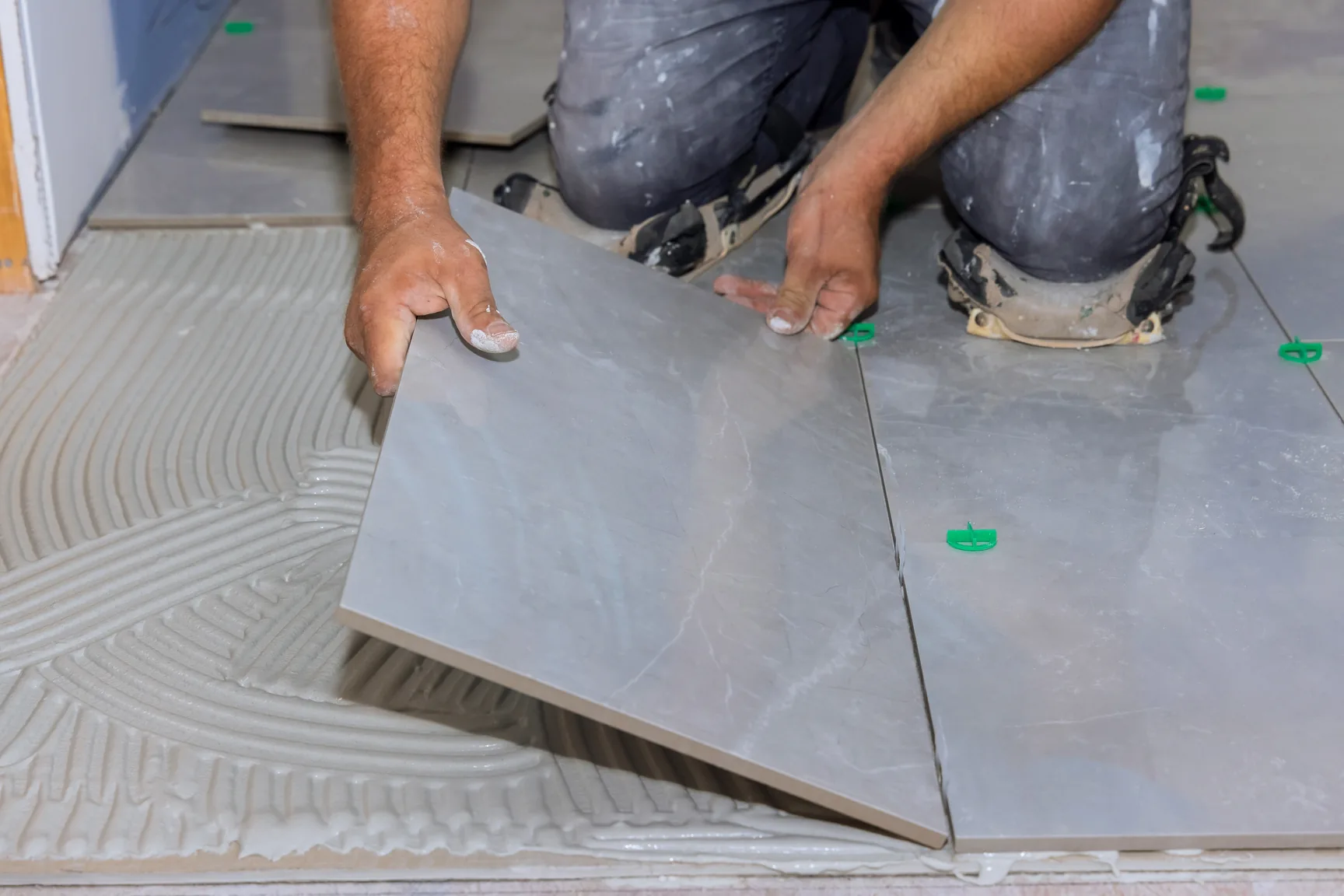
Commercial property insurance pays for physical loss or damage to what your flooring business owns at the place it operates: the building, if you own one, and the contents either way. For most flooring contractors the contents are the story. Carpet and pad, pallets of tile and plank, underlayment, trim and adhesives sit in a shop or warehouse, and a fire, burst pipe or break-in can take a season’s inventory with it.
This policy is also tied to an address. It protects property at the premises listed in the declarations and says very little about material riding in a van or waiting on a jobsite. Knowing where that line falls, and which policy picks up past it, is most of what a flooring owner needs to get right here.
What a property policy protects at your shop, and what it passes on
The core promise, under the standard ISO form as commonly written — the Building and Personal Property Coverage Form, CP 00 10 10 12 — is to pay for direct physical loss of or damage to covered property at the described premises, caused by a covered cause of loss. A separate causes-of-loss form supplies those causes. Each insurer files its own version, so the policy you hold, not this page, decides any claim.
For a flooring business, the property policy is generally about:
- a building you own and use as a shop, showroom or warehouse;
- furniture, racking, computers and equipment kept at that location;
- flooring stock on the shelves and pallets there;
- the build-out you paid for in a space you rent;
- customer material or special-order goods you are holding at the shop.
It generally passes these to another policy or leaves them with you:
- material on a truck or staged at a jobsite, and the tools that travel with your crews, which belong to inland marine;
- the vans and trucks themselves, which belong on commercial auto;
- injury to others or damage your work causes, which is liability, not property;
- flood and earth movement, which are typically written separately.
A two-column comparison. The first column is the building limb, which matters when you own the structure: the shop, showroom or warehouse itself, and its permanent fixtures. The second column is business personal property, which a renter still needs: furniture, fixtures and equipment kept at the shop; flooring stock such as carpet rolls, tile pallets, plank and adhesives; the build-out you paid for in a space you rent; and customer or special-order material you are holding. A policy can carry either limb or both, depending on which shows a limit in the declarations. Your own policy wording decides any real claim. No figures are shown.
Own the building or rent the shop: how property coverage is shaped
Property coverage is written in limbs, and a flooring business picks the ones that match how it occupies its space. The businessowners form, BP 00 03 07 13, frames it plainly under the standard ISO form as commonly written: covered property includes buildings, business personal property, or both, depending on which carries a limit in the declarations.
If you own the building, the building limb applies to the structure. If you rent, the landlord usually insures the structure and your policy starts at the contents, which is not an empty policy. Business personal property reaches furniture and fixtures, machinery and equipment, stock, and other property you own and use in the business. For a renter it also reaches your use interest in improvements and betterments: the alterations and additions you paid to put into a building you do not own and cannot take with you, such as a showroom build-out or an office framed into a warehouse corner. Read the lease beside the policy, because many leases set out what the tenant must insure and prove.
Carpet rolls, tile pallets and adhesives as warehouse stock
The property form defines stock as merchandise held in storage or for sale, raw materials, and goods in process or finished, along with the supplies used to pack or ship them. A flooring warehouse fits that description naturally: carpet on racks, pallets of porcelain and stone, cartons of vinyl, laminate and hardwood plank, rolls of underlayment, and buckets of adhesive, grout and thinset. How a particular item is treated is a wording question, but inventory of that kind is what the stock line of a property policy is built around.
Flooring stock has habits that shape the risk. It is heavy and stacked high, so racking and collapse are real questions. Much of it is sensitive to water, and a leak that would only stain concrete can ruin cartons of plank. It is portable and resaleable, which draws thieves; how theft of material is handled turns on the exact policy language, and we read it rather than assume. Stock levels also swing with bulk buys and busy seasons, so keeping the declared stock value current is the owner’s side of the bargain.
Special-form property coverage: covered unless excluded
When the declarations show the special causes-of-loss form, the definition changes shape. In the standard ISO form as commonly written, Causes of Loss – Special Form CP 10 30 09 17, a covered cause of loss means direct physical loss unless the policy excludes or limits it. A named-perils form works the other way, covering only what it lists.
So the exclusions and limitations are the part worth reading. Flood, earth movement and wear and tear sit among them in the standard wording, and flood and earthquake protection are typically bought separately. A shop full of water-sensitive stock should know exactly how its policy treats water.
A top-to-bottom flow that follows flooring material out of the building. It begins at the shop or warehouse listed in the declarations, where the property policy is the main answer. When the material is loaded onto a van or truck, the property form’s off-premises extension does not apply to property in or on a vehicle and its transit extension is narrow, so the load generally belongs to inland marine while the vehicle itself belongs to commercial auto. At the customer’s jobsite, material waiting for the install is generally an inland marine subject as well. A second warehouse or a storage unit becomes a property location only once it is added to the declarations. Your own policy wording decides any real claim. No figures are shown.
Where property ends: the van, the jobsite and the storage unit
Property protects a place; inland marine follows the material and the tools. The boundary between them is where flooring owners most often find a gap, because so much inventory spends part of its life away from the shop.
The property form does include a limited extension for covered property temporarily away from the described premises, but it is capped and, in the standard wording, does not apply to property in or on a vehicle. The special form adds a narrow, capped extension for your own property in transit. Neither is built to insure tile and plank that go out on trucks every week or sit at a customer’s address until the install.
That is the job of an inland marine policy: an installation floater for material headed to or waiting on the job, and a contractors equipment floater for the tools. The van carrying it is answered by commercial auto. A second warehouse or a storage unit becomes a property location only once it is added to the declarations. And the Washington insurance regulator cautions that many owners wrongly expect a homeowners policy to protect business property kept at home, which is the position of anyone storing flooring stock in a garage.
A businessowners policy or a commercial package for your property
A business owners policy bundles property, business income and liability into a single form. The Insurance Information Institute describes it as designed for smaller businesses, with eligibility shaped by the type of business; it leaves out commercial auto and workers compensation, and its limits tend to run lower. A commercial package policy pairs separate coverage parts, such as property, general liability and inland marine, and can be tailored part by part for an operation a bundle does not fit. Which one a flooring business qualifies for is an underwriting call.
Business income after property damage closes the shop
A fire that guts the warehouse takes more than the stock. Business income coverage, written under the standard ISO form as commonly written in the Business Income (and Extra Expense) Coverage Form, CP 00 30 10 12, responds to income lost while operations are suspended because of covered physical damage at the described premises, and extra expense helps with the added cost of keeping going. It does not respond to a lost bid, a delayed job or a general contractor holding back payment.
Property losses a flooring shop tends to report
These are broad kinds of loss, not promises; each turns on its facts and the wording.
- Fire or smoke at the shop or warehouse. The building, the racking and the stock on it are damaged together.
- Water from inside the building. A roof leak or a burst pipe soaks cartons of plank or rolls of carpet.
- A break-in. Doors are forced and material is taken, where the theft wording is read line by line.
- Vandalism. Showroom displays, sample boards or office equipment are deliberately damaged.
Building limits, stock values and the property declarations
A property policy carries a limit for each kind of property the declarations show: a building limit where you own the structure, and a business personal property limit for contents, stock and improvements. Those limits follow the values you declare, so the declared stock value decides how far the policy stretches after a loss. We would rather set it with you, location by location and against the inventory you carry through the year, than guess.
Why place your shop’s property with Flooring Business Insurance
As an independent agency we work with several insurance markets, and we place flooring businesses with the ones that understand the trade. We read the property questions that decide flooring claims: how the stock is valued, which locations are listed, where the property form stops and inland marine begins, and whether a bundle or a package fits. Send us the lease and a picture of what you store, and a licensed agent will set the coverage against both.
Further reading on flooring property coverage
Property coverage questions from flooring shop owners
I rent my warehouse. Do I still need property insurance?
Usually, yes. The landlord insures the building, but the carpet, tile, racking, office equipment and any build-out you paid for are yours. A lease often requires you to carry insurance on them as well, so read it alongside the policy.
Does my property policy cover a pallet of tile sitting at a customer’s house?
Generally not in any meaningful way. The property form is written around the premises named in the declarations, and its off-premises extension is narrow and capped. Material staged at a jobsite is the subject of an inland marine policy.
Is carpet in the back of my van covered by the shop policy?
Do not count on it. The off-premises extension on the standard property form does not apply to property in or on a vehicle, and the transit extension on the special form is small. Material that travels belongs on inland marine, and the van itself on commercial auto.
A roof leak soaked our stock of laminate. Is water damage covered?
It depends on the source of the water and the wording. A special causes-of-loss form covers direct physical loss unless the policy excludes or limits it, and water is one of the areas with exclusions and conditions. Flood from outside is typically a separate policy.
We keep flooring material in my home garage. Will my homeowners policy respond?
Often it will not, or only in a limited way. Homeowners policies are not built for business stock, and state regulators warn home-based owners about that assumption. Tell us what you store at home and we will show you how a business policy can pick it up.
Should a small flooring business buy a business owners policy?
Many look at one first, because it bundles property and liability in a single form. Whether your business is eligible is an underwriting question that turns on its type and size, and a package policy is the alternative when a bundle does not fit.
We added a storage unit across town. Is it covered automatically?
Do not assume so. A property policy is tied to the locations it lists, and any temporary grace for a newly acquired location comes with conditions. Tell us when you add a location so it can be scheduled on the policy.
Tell us about the building, the stock and the lease
A licensed agent sets your property coverage against where you work, what you store and how often it leaves the shop, and comes back with what the markets will do.