
What we insure
Flooring Contractor Insurance
Every policy a flooring business carries, laid out the way a job runs: the crew, the installers you bring in, the van, the shop and the floor you leave behind.
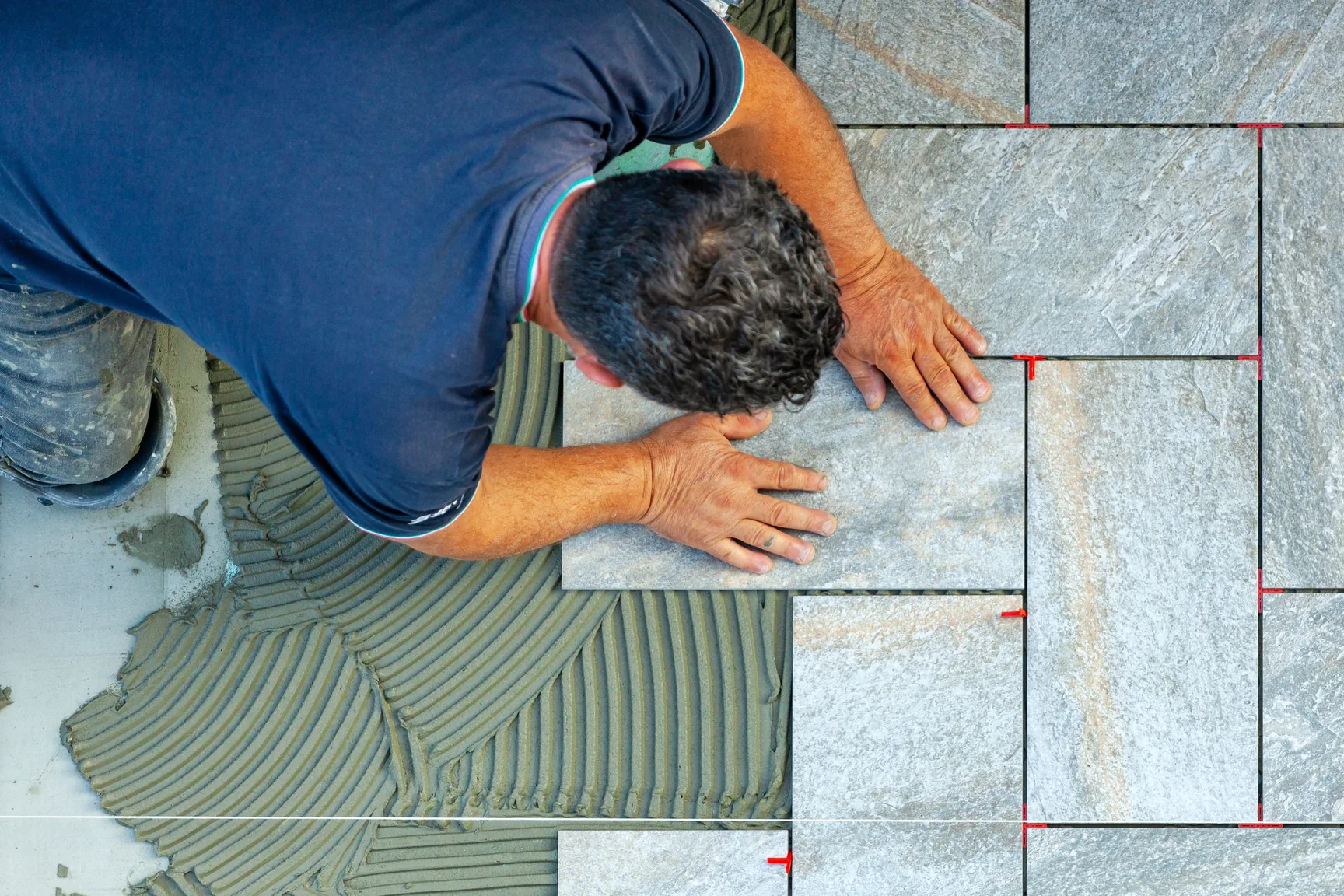
Flooring contractor insurance is the set of policies that protects a flooring business across all of its work: the people and property its jobs can harm, its own crew, its tools and material, its vehicles, its shop, and the floors it leaves behind. It is not one policy but several — general liability, workers compensation, inland marine for tools and equipment, commercial auto, property and umbrella liability — each written for a different piece of the operation.
Think of a flooring business as a crew, a van or two, a shop or a storage bay, and a long string of finished floors in other people’s homes and buildings. Nearly all of the work happens on property you do not own, with material you bought and tools you carried in, and some of it may be done by 1099 installers rather than employees. Each of those pieces brings its own exposure, and each one lands on a different policy.
Flooring installers insurance is the same thing under another name. Whether you call the business a contractor or an installer, a one-truck operation and a shop running several crews need the same lines, sized to what they do. Carpet, resilient sheet and plank, hardwood, tile and stone all sit inside that picture; the differences show up in which lines carry the most weight.
This page is the map. It follows one flooring job from the first measurement to the floor in use and names the policy that answers at each stage, then takes each coverage line and each kind of flooring work we insure in turn, with a link to the page that goes deeper. After that come the licensing examples, the things that move the price, the claims that cross from one policy to another, and what an underwriter looks for.
A top-to-bottom flow of one flooring job. It begins with the estimate, when someone drives to the site to measure and check the subfloor; the drive answers to commercial auto and a visitor hurt on the site to general liability. Next the material is bought and loaded; at the shop it is property coverage’s subject, and on the truck or staged at the job it moves to inland marine. Then the crew and any installers you bring in do the work; an injury to your own employee belongs to workers compensation, and damage to the customer’s walls, cabinets and furniture to general liability. The floor is handed over. Finally the finished floor is in use, and a floor that fails or trips someone later is a completed-work claim under general liability, with umbrella liability above it when a claim outgrows the primary limit. Each real claim is settled by the wording of your own policy. No figures are shown.
One flooring job, start to finish, and the policy at each stage
Follow a single job and the policies line up in the same order the work does. The value of reading them this way is that the gaps show up where one stage hands off to the next, not in the middle of any one policy.
Measuring and estimating. Before any material moves, somebody drives out, measures the rooms and checks the subfloor for level and moisture. The exposure at this stage is small but real: the vehicle on the road answers to commercial auto, and a customer or visitor hurt while you walk the site is a general liability question.
Buying and loading material. Rolls, cartons and pallets come from the distributor to your shop or straight to the job. While the material sits in your building it is a property coverage question. Once it is on a truck or staged in a customer’s garage, it has left the location a property policy is written around, and inland marine — built to follow things that travel — is where it usually belongs. The van itself answers to commercial auto; the stock riding in it does not.
Tearout, prep and installation. Old flooring comes up, the subfloor is scraped, leveled and dried, and the new material is cut, set, seamed, grouted and trimmed. Two different exposures peak here. The crew’s bodies take the knees, backs, blades and dust, and an injury to your own employee belongs to workers compensation. The customer’s walls, cabinets, trim and furniture sit inches from the work, and damage to that surrounding property is a general liability question. The floor you are actually working on is handled differently from the rest of the room under the standard ISO form as commonly written, which is one of the reasons to read the general liability page before a claim rather than after one.
When the person doing the install is a 1099 installer rather than an employee, two pages carry the detail: general liability for what their work means to your policy, and workers compensation for what their pay can mean when the policy year closes.
Handing the floor over. The last room is finished, the trim goes back on and the crew packs up. From that point the floor is completed work, and the exposure changes shape rather than ending.
The floor in use. A plank floor that lifts, tile that cracks, a transition that separates, a seam that opens into a trip hazard — any of these can surface long after the crew has gone, and the claim is still a general liability claim against your business. At any stage, a single loss can outgrow a primary limit: a serious fall, a crash with a loaded van, a lawsuit from an injured employee. Umbrella liability, sitting over the others, is built for exactly that.
Put together, most coverage surprises in this trade come from the handoff points rather than from the policies themselves: the saw left in the van, the pallet on the driveway, the installer with no certificate. Seeing the whole operation at once is the point of starting here.
A hub with spokes. At the center is a flooring contractor’s operation. From it run spokes to each coverage line, each labeled with the part of the operation it answers for. The general liability spoke covers injury to other people and damage to their property, during the job and after the floor is in use. Workers compensation answers for your own crew hurt on the job. Inland marine for contractors tools and equipment answers for the tools and material that travel. Commercial auto answers for the vans, pickups and trailers. Property answers for the shop and the stock kept there. Umbrella liability answers for a claim larger than the policies beneath it. Each real claim is settled by the wording of your own policy. No figures are shown.
The coverage lines behind a flooring contractor’s business
Each line below answers a different question about the same business. The one-line version is here; the linked page carries the detail, the handoffs and the questions owners ask about it.
General Liability. Usually the first policy a flooring business buys, and the first one a homeowner, property manager or general contractor wants to see on a certificate. For a flooring contractor it answers for injury to people who are not on your payroll and damage to property that is not yours, while the job runs and after the floor is in use. It is also where the question of the installers you bring in begins.
Workers Compensation. Benefits for your own employees when the work hurts them, and flooring is hard on the people who do it. The O*NET occupational profiles for carpet installers, floor layers and tile and stone setters all list kneeling, crouching, stooping and crawling among the conditions of the job. Workers compensation is a matter of state law, and each state applies its own test for who counts as an employee. It is the second half of the installer question.
Inland Marine — Contractors Tools & Equipment. Sanders, saws, stretchers, seaming irons, moisture meters and lasers spend their working lives in the van and on the job, not in the shop. General liability does not pay for your own tools, and a property policy is written around a location, so this is the line that travels with them. It can also be arranged to pick up flooring material in transit or staged at a job before it goes down.
Commercial Auto. Every van, pickup and trailer that moves crews and material, and the liability when one of them hits someone. Flooring businesses also rent trucks for large deliveries and send crew members on errands in their own cars, and both belong in the conversation when the policy is set up. The vehicle is this policy’s concern; the tools and stock inside it are handled elsewhere.
Property. The shop, the warehouse or the build-out you rent, and the stock, racking and office contents kept there. It is tied to the premises, which is why material that leaves the building usually passes to inland marine.
Umbrella Liability. Additional limit above general liability, commercial auto liability and employer’s liability together. This is the line a contract drives most often: when a general contractor or property manager asks for more liability than a primary policy carries, the umbrella is usually how the difference is made up. It never pays workers compensation benefits and never repairs your own van.
Certificates run in both directions across these lines. You collect them from the installers you bring in, which is where the general liability and workers compensation pages pick up the story. General contractors, property managers and, in Washington, the state’s contractor registration office collect yours. On a commercial job the certificate can matter as much as the policy behind it, which is why the commercial flooring page takes a general contractor’s demands one at a time.
The kinds of flooring contractor work we insure
The coverage lines stay the same across the trade; the weight on each one shifts with the work. We write flooring businesses in four groups, and each has its own page.
Residential Flooring Contractor Insurance. Work inside somebody’s home, often with the family still living in it: furniture moved room to room, people walking past the work, and the old floor coming up. In older homes, pulling baseboard and trim can disturb painted surfaces, which brings the EPA’s lead renovation program into a job that looked like flooring. Hardwood and luxury vinyl plank installs sit within this page.
Commercial Flooring Contractor Insurance. Work under a general contractor or a property manager, where the subcontract decides a good deal of the insurance before the first carton is opened: additional insured status, waivers, certificates and umbrella limits. Polishing and commercial tile and resilient flooring are part of this page’s scope.
Carpet Installation Insurance. Built around the installer’s own body and tools. Carpet is stretched over tack strip, seamed with a heated iron and trimmed with a knife, much of it on the knees, and the tack strip and seams left behind can become the trip hazard in a completed-work claim.
Tile & Stone Contractor Insurance. Cutting, lifting and what lies underneath. Cutting tile and stone throws silica dust, the material is heavy to carry and set, and cracked tile tends to become an argument about the substrate beneath it. At least one state licensing board draws the same line between tile and the rest of flooring, as the next section shows.
Licensing and registration rules a flooring contractor meets
Licensing and registration for flooring work are set state by state, and they vary widely in what they ask of a business. Two state agencies show how differently the question can be framed.
In California, the Contractors State License Board’s flooring and floor covering classification covers preparing a surface for flooring and installing carpet, resilient sheet goods and tile, wood floors and other flooring materials, including finishing and repairing them — with ceramic tile carved out. The board licenses ceramic and mosaic tile work under a classification of its own, which is the same division this site makes between general flooring and tile and stone.
In Washington, the Department of Labor & Industries requires every construction contractor to register, and state law requires contractors to be bonded and insured to protect the public. The liability policy has to carry the business’s exact name and list the department as a certificate holder, so the certificate becomes part of the registration itself. A contractor registered in a specialty may work only in that specialty and may not hire subcontractors — a rule that bears directly on a flooring business built around outside installers.
Federal safety rules run alongside the state rules. The Occupational Safety and Health Administration treats construction, including alteration and repair work, as a high-hazard industry, and two of the hazards it names reach flooring directly: silica dust, from cutting tile and stone, and asbestos, a possibility whenever old flooring comes up. Neither is an insurance rule, but both shape how an underwriter reads the work you do.
Wherever you work, the state board or agency is the source for what a license or registration requires. Our part is matching the policies, the limits and the certificates to what that state and your contracts ask for.
What moves the price of a flooring operation’s insurance
No two flooring businesses are priced alike, because each policy in the program reads its own facts: payroll and its classification, the installers you pay, the vehicles, tools and shop, the kind of floors you lay and the claims behind you. Our flooring contractor insurance cost guide takes those drivers policy by policy and service by service, and never with a number we cannot source.
Claims that cross more than one of a flooring operation’s policies
The claims that teach owners the most are the ones that do not stay inside a single policy. These are illustrations of how the lines divide a loss, not promises of how any particular policy will respond.
- The van broken into overnight. The broken window and the damaged door are an auto physical damage question, if that coverage was bought. The sander, the saws and the pallet of plank bound for tomorrow’s job are inland marine questions. Stock that was still at the shop would have been property’s.
- The floor that lifts after the job. A tenant trips on a plank edge in a finished hallway and is badly hurt. The claim runs to general liability as completed work, and if it is serious enough to exhaust that limit, the umbrella above it is next.
- The installer who damages a kitchen and then gets hurt. An outside installer gouges a run of cabinets and later cuts a hand on the same job. The cabinet claim and the injury raise two different questions on two different policies, which is why the general liability and workers compensation pages each carry half of the installer story.
- The helper hurt at the curb. A helper carrying cartons from the van slips on a customer’s front steps and breaks the porch rail on the way down. The helper’s injury is a workers compensation claim; the porch rail is the customer’s property and a general liability question. One slip, two policies, and neither one is the auto policy, even though the van is parked a few feet away.
How underwriters size up a flooring contractor
An underwriter will typically want to understand the operation in words before looking at any rating detail: what you install, for whom, with whose crews, and under what contracts. From there, the questions tend to follow the same order as the price drivers above.
A clear file on subcontracted installers helps more than almost anything else — who they are, what you pay them, and a current certificate for each one. So does a driver list that matches the vehicles, a tools schedule that reflects what actually rides in the vans, and copies of the contracts that set insurance requirements. Tearout of old floors, work in occupied buildings and a claims history with no explanation attached are the things that slow a submission down, and they are best described plainly up front.
A flooring business that can show how it runs a job tends to be easier to place than one that can only show a payroll figure. Much of what we do before a submission goes out is help put that picture together.
Why flooring contractors work with Flooring Business Insurance
An independent agency is not tied to one company’s menu, and we work with several insurance markets that write the flooring trade. We place residential and commercial flooring businesses, carpet and resilient installers, and tile and stone contractors, and we read the pieces of a policy that decide flooring claims — the installer questions, the handoffs between lines, the contract requirements — before you need them. Send us a subcontract and a licensed agent reads it against your policies before you sign.
From the flooring contractor hub to the detail
What we insure
Flooring contractor insurance questions, answered
What insurance does a flooring contractor need before taking on jobs?
Most start with general liability, because customers and general contractors ask to see it before work begins, and workers compensation once there is anyone on the payroll. Tools and equipment coverage, commercial auto for the vans, property for a shop, and an umbrella when a contract asks for higher limits fill in the rest. What you actually need depends on how your business runs and what your state and your contracts require.
Is flooring installers insurance different from flooring contractor insurance?
Not in substance. The two names describe the same kind of business and the same set of coverage lines. A one-person installer and a shop with several crews buy the same policies in different sizes, and the questions an underwriter asks are the same.
How do 1099 installers affect my flooring business insurance?
They touch the first two lines at once: general liability, because the work they do on your jobs reaches your policy, and workers compensation, because their pay can matter at the end of the policy year. Each of those pages explains its half. The short version is to collect a current certificate from every installer before they start.
Which policy covers flooring material before it is installed?
It depends on where the material is. Stock sitting at your shop is generally a property coverage question. Material on a truck or staged at a customer’s job generally belongs to inland marine, written to follow things that travel. The auto policy looks after the van that carries it, not the material inside.
Does a residential flooring business need the same coverage as a commercial one?
The lines are largely the same; the weight falls differently. Residential work puts more attention on the homeowner’s property and on older homes, while commercial work is shaped by the general contractor’s subcontract, which often sets additional insured, waiver and umbrella requirements before you start.
Do state licensing rules affect my flooring contractor insurance?
They can. In Washington, for example, contractors must register with the state and be bonded and insured, and the state must be listed as a certificate holder on the liability policy. California licenses flooring and ceramic tile under separate classifications. We set the policies up against the rules of the states where you work.
What should I have ready when I ask for a flooring contractor quote?
A description of the work you do and where, payroll by role, what you pay subcontracted installers and whether they carry their own insurance, your vehicles and drivers, the value of your tools and stock, your claims history, and any contracts that set insurance requirements. The more of it we see up front, the fewer surprises later.
Tell us how your flooring operation runs
A licensed agent looks at the whole business — the crews, the installers, the vehicles, the shop and the contracts — and comes back with what the markets will do.