
Flooring Contractor Insurance by State
Indiana Flooring Contractor Insurance
Indiana has no statewide flooring license, so the rules a flooring business meets come from the county or town, from EPA, from the state asbestos program and from the workers’ compensation law.
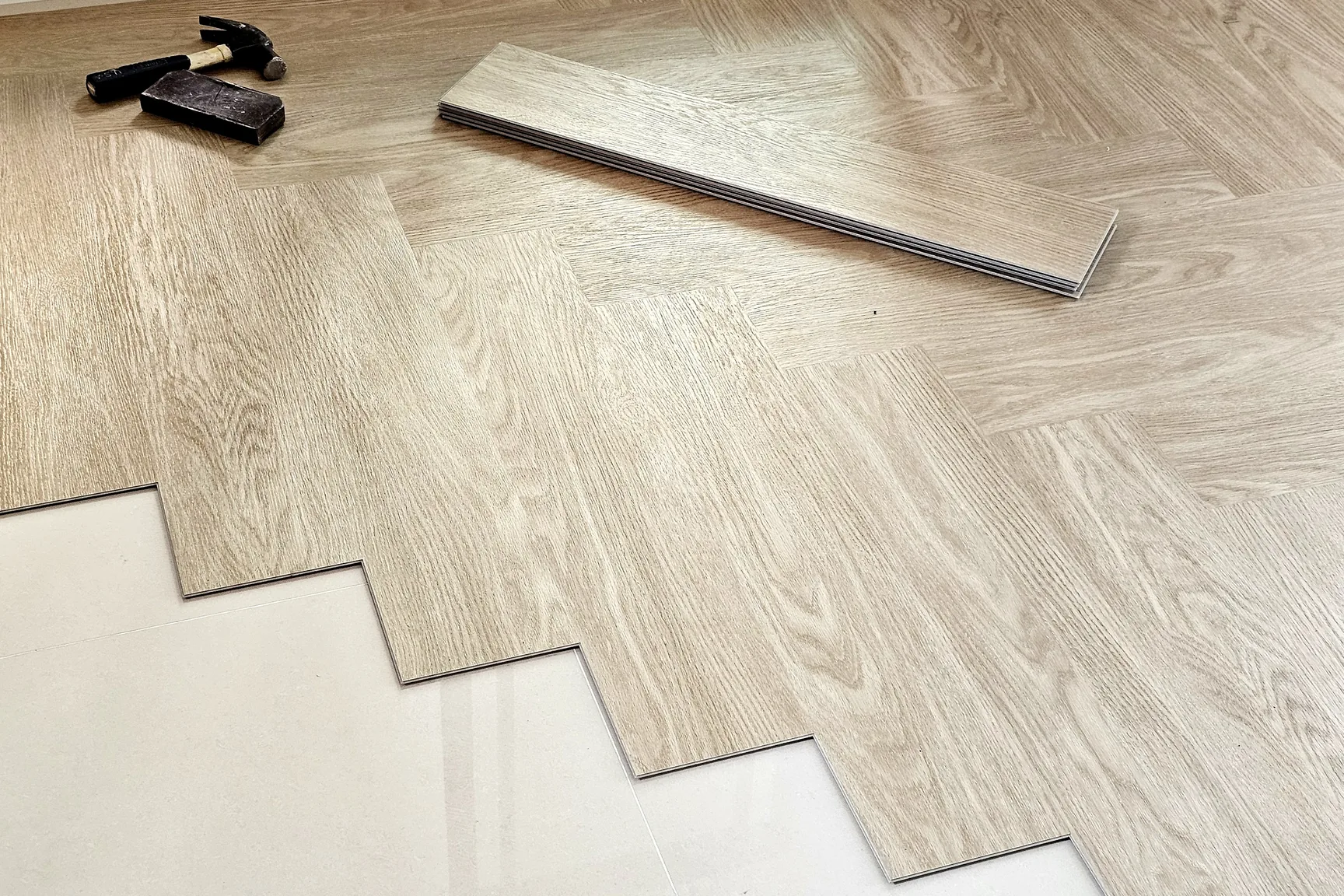
A flooring contractor in Indiana has no statewide contractor license to hold, because licensing here is local: the city, town or county where the job sits sets its own rule. Lead-safe renovation certification comes from EPA rather than the state, the Indiana Department of Environmental Management’s asbestos program reaches flooring removal, and workers’ compensation is compulsory for the employers the law covers and is bought from the private market, since Indiana has no state fund.
Those four findings shape how a flooring business bids, staffs and insures work across the state, and each one is easy to get half right. No state license is not the same as no rules. A federal program is not the same as no state program. An asbestos rule with a carve-out for resilient flooring is not the same as an exemption for flooring. The sections below take each finding in turn, print it as it was verified against its source, show the source’s own words, and then say what it means for an owner running crews.
What the policies themselves do for a flooring business, in Indiana or anywhere, is set out on the flooring contractor insurance page and the pages it links to. This page stays with what is particular to Indiana, whether you run a residential flooring crew working in occupied homes, a commercial flooring operation working under general contractors, a carpet installation business or a tile and stone shop.
Indiana contractor licensing for flooring work is local, not statewide
Flooring installation in Indiana needs no statewide contractor license or registration. The Indiana Professional Licensing Agency’s list of licensed professions includes plumbing, home inspection and manufactured home installation, and no general, building or flooring contractor license.
Authority: IC 36-8-2-10; IC 36-1-4-22(d)
For an owner, the useful way to read that finding is as a change of address rather than an absence. There is no state license number to put on a bid, no state renewal to track and no state board to answer to for installation work. The authority to set conditions on the trade was not withheld; it was placed with local government.
No state license is not the same as nothing being required. Indiana law lets a city, town or county regulate businesses and trades, and a county such as DeKalb requires every contractor and subcontractor doing construction work there to register with its building department first, so the rule for a particular job is set by the local unit where the work is done.
“A unit may regulate the operation of businesses, crafts, professions, and occupations.”
That grant is short, and it is broad. It does not tell a city or county what to require of a flooring business; it tells them they may require something. The consequence for a crew that works in more than one place is simple to state and easy to forget: the paperwork that cleared you for last month’s job does not tell you what next month’s job, a county line away, will ask for.
The DeKalb County Building Department shows what a local rule can look like. Its registration reaches all contractors and subcontractors doing construction work in the county and in the towns it inspects for, which plainly includes flooring installers and general contractors.
“Prior to doing any construction work in DeKalb County, all contractors, subcontractors and/or persons doing construction work in DeKalb County, and in any city or town for which DeKalb has contracted to function as the Building Inspector, shall register with the DeKalb County Building Department.”
Two words in that rule deserve a flooring owner’s attention. The first is subcontractors: a flooring business working under a general contractor is named alongside the general contractor, so the general contractor’s own registration does not stand in for yours. The second is prior: the registration comes before the work, which puts it on the bid calendar rather than the job calendar.
A few habits make a local-rule state easier to work in:
- When a job is in a county or town you have not worked in before, contact its building department during the bid, not the week the material arrives, and ask what it requires of a contractor doing the work you are quoting.
- Keep one folder per jurisdiction with whatever it issued you and when it lapses, so the office can answer a general contractor’s question without calling the crew lead.
- Do not assume the rule where your shop sits follows you anywhere else. The finding above is that each local unit sets its own.
- Keep local registration and proof of insurance in separate columns of your checklist. They are different documents from different parties, and a job can stall on either one.
Proof of insurance is its own conversation. The certificate a general contractor asks for before a commercial job starts, and the additional insured wording that often comes with it, is taken up on the commercial flooring contractor insurance page; the proof a homeowner may ask for is on the residential page.
Lead-safe renovation certification for Indiana flooring jobs comes from EPA
Indiana is not an authorized RRP state: EPA administers the lead renovation, repair and painting (RRP) program there, so the lead-safe certification a flooring firm needs for covered renovation work comes from EPA.
Authority: 410 IAC 32; 40 CFR Part 745
That is a precise finding, and it has a second half. Indiana does not run the renovation program, but that is not the same as Indiana having nothing to say about lead. The state’s own program sits with the Indiana Department of Health, and it covers different ground.
Outside renovation, the Indiana Department of Health runs the state’s own lead program: it licenses lead-based paint inspection, risk assessment and abatement, and a separate state rule sets lead-safe work practices for some remodeling on older rental housing. Flooring work that disturbs painted surfaces such as baseboards and trim can bring the federal renovation rule, the state rule or both into play.
“EPA requires that RRP projects that disturb lead-based paint in homes, child care facilities and preschools built before 1978 be performed by lead-safe certified contractors.”
The state’s own contractor page is where that federal requirement is stated for Indiana readers, which is a fair summary of the division of labor: the certification a renovating firm holds is federal, and the state licenses the people whose work is lead-based paint activity itself. The same page draws the line between the two.
“The rules recognize that some renovation, repair, remodeling, landscaping, maintenance, or other activities are not conducted for the express purpose of lead hazard abatement. In general, lead abatement rules do not apply to those activities, even when they incidentally result in the elimination of lead-based paint hazards.”
For a flooring crew, the practical point is where the job meets paint. Floors rarely carry paint, but the edges of a floor often do: the baseboard that comes off so the new floor can run under it, the trim around a doorway, the painted surfaces a crew disturbs while it works along the walls. The obligation sentence above names baseboards and trim for that reason. Whether a particular job falls under the federal renovation rule, the state rule for older rental housing, both or neither turns on facts only the job can answer, and this page does not decide it for you.
What an owner can do is ask the right questions at the walkthrough:
- When was the building put up? The federal requirement quoted above turns on the age of the home or facility, so the answer belongs on the estimate sheet.
- Is it a rental? The state rule the obligation sentence describes reaches some remodeling on older rental housing, so the owner’s answer changes which rule you check.
- Will your crew remove or cut painted trim, or will someone else? If a carpenter or painter handles the trim, know which firm is doing the disturbing before the job starts.
- Who in your business holds the certification, and is that person on this job?
Older homes bring more than one of these questions at once, which is why the residential flooring contractor insurance page spends time on them. How a general liability policy treats a claim that involves lead or other contaminants is a separate matter, and the general liability page is where that is worked through.
Asbestos in old floor tile and mastic under Indiana’s own program
Indiana’s own asbestos program, run by the Indiana Department of Environmental Management, reaches flooring removal. Before a renovation of a covered building, an Indiana-licensed inspector must check for asbestos, including the resilient floor coverings the rule classes as nonfriable. Floor tile, sheet vinyl and their adhesives stay outside the regulated category unless they are sanded, beadblasted, mechanically pulverized or burned, and work on a regulated asbestos project requires Indiana-licensed asbestos personnel. Homes and other small residential buildings are exempt from the inspection and emission rules.
Authority: 326 IAC 14-10-1(a)(1); 326 IAC 14-10-2; 326 IAC 18-1-2; 326 IAC 18-2.1-1(a); IC 13-17-6
Of the four findings on this page, this is the one that reaches furthest into flooring work, because the material the rule describes is the material a flooring crew pulls up. The Indiana Department of Environmental Management asbestos program is a state program, run by the state, and it names resilient floor covering in its own definitions.
“Prior to the commencement of the demolition or renovation, the owner or operator shall use an Indiana-licensed inspector to thoroughly inspect the affected facility or part of the facility where the demolition or renovation operation will occur for the presence of asbestos, including Category I and Category II nonfriable asbestos-containing material (ACM).”
The inspection comes first and it names the category that includes old resilient flooring, so a renovation in a covered building that takes up that kind of floor starts with a licensed inspector rather than a scraper. The next question is what the removal itself is, and the rule answers it with a carve-out.
“The term does not include nonfriable asbestos-containing resilient floor covering materials including: (i) sheet vinyl flooring; (ii) resilient tile; and (iii) associated adhesives; unless the materials are sanded, beadblasted, or mechanically pulverized so that visible emissions are discharged or the materials are burned.”
Read the two together and the removal method stops being only a production choice. Under the carve-out, floor tile, sheet vinyl and their adhesives stay outside the regulated category unless the method sands, beadblasts, mechanically pulverizes or burns them. Once material is in the regulated category, the headline above says the work on that project calls for Indiana-licensed asbestos personnel. A flooring business that does not hold that license has a reason to settle the method before the bid, not at the slab.
Some owner habits follow from that:
- On a tear-out outside the home exemption the headline describes, ask the building owner or the general contractor for the inspection before you price the removal, and read what it found under the floor you are replacing.
- Write the removal method into the proposal. If the job changes once the old floor is up, stop and talk to the owner before the method changes with it.
- Brief the crew lead on what the inspection found. The person with the scraper in hand is the person who sees the second layer of flooring no one mentioned.
- Keep the inspection, the proposal and any change in writing with the job file. If a question comes up later, those are the documents that show what was known and when.
The home exemption deserves one more sentence. It exempts homes and small residential buildings from the state’s inspection and emission rules; it is not a finding about what an old floor in a house contains. A residential crew still decides how to take up a floor it knows little about, which is part of why the residential page treats older homes as their own subject.
On the insurance side, tear-out raises questions the policies answer in their own terms. Whether a general liability policy responds to a claim involving asbestos, and how work you finished is treated once the owner is using the room again, are both taken up on the general liability page. A commercial tear-out under a general contractor adds the contract’s insurance requirements on top, which the commercial page covers, and a tile demolition job raises its own version of the same questions on the tile and stone page.
How workers’ compensation works for an Indiana flooring business
Workers’ compensation is compulsory in Indiana for the employers its law covers. An employer either buys a policy from an insurer authorized to write the coverage in Indiana or qualifies with the Worker’s Compensation Board of Indiana to carry the risk itself. Coverage in Indiana comes only from the private market, since there is no state fund.
Authority: IC 22-3-2-5(a); IC 22-3-5-1(a)
Two routes, and only two, are open to an employer the law covers. The first is the one the statute states in these words:
“insure and keep insured the employer's liability under IC 22-3-2 through IC 22-3-6 in some corporation, association, or organization authorized to transact the business of worker's compensation insurance in this state”
The second route, carrying the risk yourself with the board’s approval, is described in the headline above. Neither route runs through a state fund, and the board says so in plain terms on its own page.
“In Indiana, workers’ compensation benefits are paid by employers, not the State.”
For a flooring business that means workers’ compensation is placed the way the rest of the program is: with an insurer authorized to write the coverage in Indiana, chosen through the private market. There is no state policy to fall back on.
What an underwriter asks a flooring business about its payroll, and how installers you pay as subcontractors are treated, including why their own certificates matter to your policy, is set out on the workers’ compensation page rather than here, because it is a question about the policy and not about Indiana.
One more point follows from the record itself. Nothing verified on this page crosses a state line. If your crews work across the border, the neighboring state’s rules are its own.
Who regulates what for an Indiana flooring contractor
The Indiana Department of Insurance regulates insurance in the state. You can look up an insurance agency’s license, ours included, on NIPR.com.
The other state bodies this page draws on each hold a different piece of the picture. Each link goes to the agency’s own site, and each role is described as the record verified it:
- Indiana Professional Licensing Agency: statewide professional and trade licensing (no general or flooring contractor license)
- Indiana Department of Environmental Management: state environmental agency
- Indiana Department of Environmental Management asbestos program: asbestos inspection, notification, work practices and asbestos licensing
- Indiana Department of Health: state lead program (Lead & Healthy Homes Division): lead-based paint activity licensing; RRP itself is EPA-administered
- Worker’s Compensation Board of Indiana: worker’s compensation administration and self-insurance approval
Two things are missing from that list on purpose. There is no statewide contractor licensing board for flooring, for the reason the licensing section gives, and there is no state workers’ compensation fund. The offices that matter most on an ordinary week are the local building departments where your jobs sit, and those are the ones no statewide list can name for you.
Indiana metro markets and the counties that license the work
The metro markets below are the largest metropolitan areas whose principal cities are in Indiana, as the U.S. Census Bureau delineates them. Where a metro reaches across a state line, its card names only the Indiana counties in it, because under the licensing finding above it is those counties, and the cities and towns in them, that set the local rule.
Indianapolis-Carmel-Greenwood, IN
Counties in this metro: Boone County, Brown County, Hamilton County, Hancock County, Hendricks County, Johnson County, Madison County, Marion County, Morgan County, Shelby County and Tipton County.
Licensing for flooring work is set locally, by the city, town or county where the job sits, so the rule can change from one of these counties to the next.
Fort Wayne, IN
Counties in this metro: Allen County, Wells County and Whitley County.
Licensing for flooring work is set locally, by the city, town or county where the job sits, so the rule can change from one of these counties to the next.
South Bend-Mishawaka, IN-MI
In Indiana, this metro takes in: St. Joseph County.
Licensing for flooring work is set locally, by the city, town or county where the job sits, so the rule can change from one of these counties to the next.
Evansville, IN
Counties in this metro: Posey County, Vanderburgh County and Warrick County.
Licensing for flooring work is set locally, by the city, town or county where the job sits, so the rule can change from one of these counties to the next.
Lafayette-West Lafayette, IN
Counties in this metro: Benton County, Carroll County, Tippecanoe County and Warren County.
Licensing for flooring work is set locally, by the city, town or county where the job sits, so the rule can change from one of these counties to the next.
Elkhart-Goshen, IN
Counties in this metro: Elkhart County.
Licensing for flooring work is set locally, by the city, town or county where the job sits, so the rule can change from one of these counties to the next.
Putting an Indiana flooring insurance program together
The findings above tell you where the rules sit. The coverage that answers for the work is the same set of policies a flooring business carries anywhere, and each has its own page:
- General liability for injury and damage to others, including how completed work and tear-out are treated.
- Workers’ compensation for the crew, including the subcontracted-installer question.
- Inland marine coverage for contractors’ tools and equipment for the saws, sanders, nailers and material that ride from job to job.
Which of those matter most depends on the kind of flooring you do. A carpet installation business and a tile and stone shop meet different jobs, different owners and different tear-outs, and the service pages take each on its own terms. When you are ready to put the pieces together for Indiana work, a quote request is the place to start.
Residential Flooring Contractor Insurance
A panel for Indiana in rows. Contractor license: no statewide license reaches this work. It connects to the General Liability page. Lead-safe renovation: the federal program applies in this state. It connects to the Residential Flooring Contractor Insurance page. Asbestos flooring and mastic: a state program reaches flooring removal. It connects to the General Liability page. Workers’ compensation: bought in the open market. It connects to the Workers Compensation page. Each row pairs a state rule with the page on this site that discusses it. No figures are shown.
Related coverage and services
What we insure
Coverage lines
Indiana flooring contractor insurance questions
Does Indiana license flooring contractors?
Not at the state level. The Indiana Professional Licensing Agency licenses a list of professions that has no general, building or flooring contractor license on it. Indiana law lets a city, town or county regulate businesses and trades, so any license or registration a flooring job needs is set by the local unit where the work is done.
I install floors as a subcontractor under a general contractor. Can a county’s registration rule still reach me?
It can. The DeKalb County Building Department, for example, requires contractors, subcontractors and anyone doing construction work in the county, and in the towns it inspects for, to register with it before the work starts. Check the rule of each county or town you work in rather than relying on the general contractor’s registration.
Who certifies a flooring firm for lead-safe renovation work in Indiana?
EPA. Indiana does not run the renovation, repair and painting program itself. The Indiana Department of Health runs the state’s own lead program, which licenses lead-based paint inspection, risk assessment and abatement, and a separate state rule sets lead-safe work practices for some remodeling on older rental housing.
Does Indiana’s asbestos rule reach pulling up old vinyl floor tile?
It can. The Indiana Department of Environmental Management requires an Indiana-licensed inspector to check a covered building for asbestos before a renovation, including resilient floor coverings. Floor tile, sheet vinyl and their adhesives stay outside the regulated category unless they are sanded, beadblasted, mechanically pulverized or burned, and work on a regulated asbestos project requires Indiana-licensed asbestos personnel.
Does the asbestos inspection rule apply when we replace a floor in someone’s house?
The Indiana Department of Environmental Management exempts homes and other small residential buildings from its asbestos inspection and emission rules. The exemption is from those state rules; it says nothing about what an old floor contains, so ask the homeowner what is known about it before the job is priced.
Is workers’ compensation required in Indiana, and can I buy it from the state?
It is compulsory for the employers the law covers, and Indiana has no state fund. An employer buys a policy from an insurer authorized to write the coverage in Indiana or qualifies with the Worker’s Compensation Board of Indiana to carry the risk itself.
Who regulates insurance in Indiana?
The Indiana Department of Insurance is the state’s insurance regulator. Workers’ compensation administration and approval to self-insure sit with the Worker’s Compensation Board of Indiana.
This page describes insurance for flooring contractors and installers operating in this state. It is general information, not legal advice and not a statement of coverage. Licensing, lead-safe and asbestos requirements change; verify current requirements with the agency named before relying on them.
Get a quote for your Indiana flooring work
Tell us which Indiana counties you work in, what you pull up before you put a floor down and who is on your crew, and we will build the program around it.