
Flooring Contractor Insurance by State
Florida Flooring Contractor Insurance
Florida licenses contractors statewide but leaves flooring out, and its law stops cities and counties from licensing the work, so the rules a flooring business meets come from asbestos, lead and workers’ compensation.
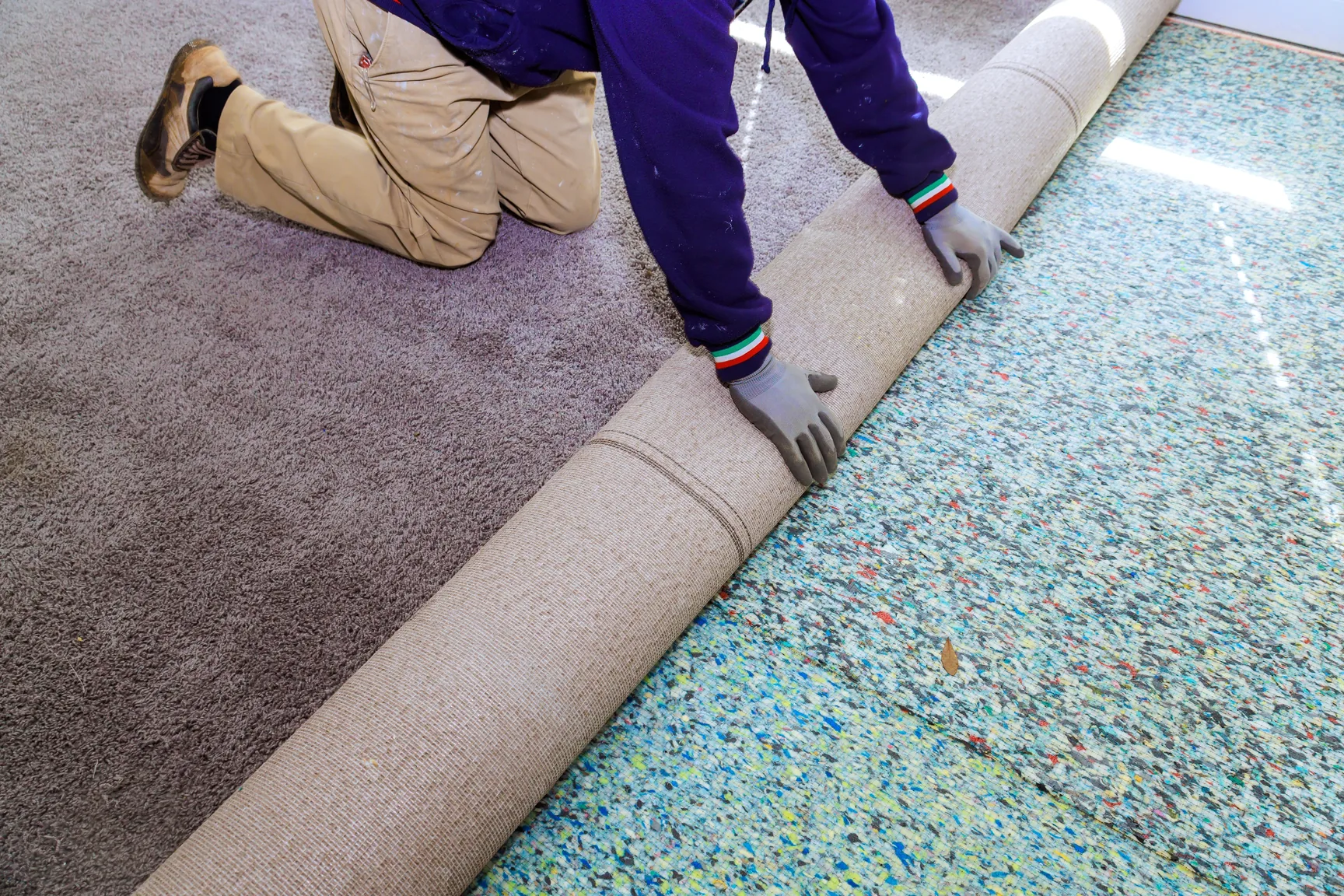
Florida licenses contractors statewide, yet flooring is not one of the licensed categories, and state law goes a step further by barring a city or county from requiring a license for flooring or tile installation, or for the permit that goes with it. What reaches a flooring business here instead is lead-safe renovation certification from EPA, a state asbestos program that speaks to resilient floor covering by name, and workers’ compensation that every contractor doing construction in the state must secure for its employees, placed with private insurers because Florida has no state fund.
Florida therefore turns the usual licensing question around. In many states a flooring owner asks which local office wants a registration; in Florida the statute answers that no local office may ask. The exceptions come from the work around the floor rather than the floor itself: a remodel that includes licensed tasks, old flooring that contains asbestos, painted trim in an older home, and a crew that has to be covered from the first hire.
What each policy does for a flooring business, in any state, is explained on the flooring contractor insurance page and the pages linked from it. This page keeps to Florida alone, for a residential flooring crew in occupied homes, a commercial flooring firm working under general contractors, a carpet installation company or a tile and stone setter.
Flooring sits outside Florida’s contractor licenses, and local licensing is ruled out too
Florida licenses contractors statewide through the Construction Industry Licensing Board, but flooring is not one of the licensed categories. The contracting law’s category list runs from general, building and residential contractors through roofing, sheet metal, air-conditioning, mechanical, pool, plumbing, underground utility, solar, pollutant storage and specialty contractors, and the same law names flooring among the job scopes that need no license.
Authority: Fla. Stat. § 489.105(3); § 489.113(6)(a); § 489.117(4)(a)
Florida does have a state license, and a busy one. What the finding records is that the list of licensed categories stops short of the work a flooring crew does. The registration section of the contracting law puts the point in its own terms:
“A person whose job scope does not substantially correspond to either the job scope of one of the contractor categories defined in s. 489.105 (3)(a)-(o), or the job scope of one of the certified specialty contractor categories established by board rule, is not required to register with the board.”
Florida’s board can also create specialty categories by rule, which raises a fair question for a tile or wood floor specialist: could a voluntary credential turn into a required one? The statute closes that door.
“a certified specialty contractor category established by board rule exists as a voluntary statewide licensing category and does not create a mandatory licensing requirement.”
The more unusual half of the finding is local. Plenty of states leave licensing to cities and counties; Florida instead writes flooring into a list of trades that local governments may not license at all.
“For purposes of this section, job scopes for which a local government may not require a license include, but are not limited to, painting; flooring; cabinetry; interior remodeling when the scope of the project does not include a task for which a state license is required; driveway or tennis court installation; handyman services; decorative stone, tile, marble, granite, or terrazzo installation; …”
“A local government may not require a state or local license to obtain a permit for such job scopes.”
Outside the state categories does not mean anything goes. Florida law bars a city or county from requiring a license for flooring or for decorative stone, tile, marble, granite or terrazzo installation, or from requiring a license to pull a permit for that work, but interior remodeling keeps that protection only when the project includes no task for which a state license is required. A job that also takes in licensed work needs a contractor licensed for that part.
Two things follow for a flooring owner. Flooring, tile, stone and terrazzo work does not come with a license number to print on a bid or a renewal date to track, and the permit for that work cannot be held up for lack of one. Yet the protection is tied to the scope of the job, not to the name of the company. A bathroom quote that grows to take in work from one of the licensed categories the headline lists, plumbing for instance, is no longer a flooring-only scope, and the obligation sentence above says that part needs a contractor licensed for it.
Some practical habits suit that arrangement:
- Write the scope of each job in plain terms on the proposal, so it is clear which parts are flooring and which, if any, belong to another trade.
- Where a remodel includes licensed work, name the licensed contractor handling that part and keep a copy of their license with the job file.
- Treat a request for a local flooring license as something to ask about politely rather than something to pay for quickly; the statute quoted above speaks directly to it.
The proof of insurance a general contractor expects before a commercial job, and the additional insured wording that often travels with it, is covered on the commercial flooring contractor insurance page. The homeowner side of the same question is on the residential page.
Lead paint near the floor: a Florida job answers to EPA alone
Florida has no lead renovation, repair and painting (RRP) program of its own; EPA administers it here, so the lead-safe certification a flooring firm needs for covered renovation work comes from EPA.
Authority: 40 CFR Part 745
Florida has no state lead-based paint certification program of its own. EPA also runs the lead abatement, inspection and risk assessment program in Florida, so both the renovation certification for flooring work that disturbs painted baseboards, trim or other surfaces in older homes and child-occupied facilities and any abatement certification come from EPA.
The finding rests on two lists that EPA keeps. The first names the places that run their own renovation programs, and Florida is not among them.
“EPA administers the RRP Program in most Tribes, states and territories, but has authorized the following to operate their own programs: Alabama, Delaware, Georgia, Iowa, Kansas, Massachusetts, Mississippi, North Carolina, Oklahoma, Oregon, Rhode Island, Utah, Vermont, Wisconsin and the Minnesota Chippewa Tribe-Boise Forte (Nette Lake).”
The second names the places where EPA itself runs the abatement, inspection and risk assessment program, and Florida is on that one.
“EPA administers the Lead-Based Paint Activities Program in Alaska, Arizona, Florida, Idaho, Montana, Nevada, New Mexico, New York, South Carolina, South Dakota and Wyoming, as well as the territories of American Samoa, Guam, the Northern Mariana Islands and the U.S. Virgin Islands, and most Tribal lands.”
Put side by side, the lists leave no state lead certificate for a Florida flooring firm to look for, in either direction. There is one set of lead paperwork here, and it is federal.
The obligation sentence names baseboards and trim for a reason. A floor seldom carries paint, but the edge of a room does, and a crew pulling baseboard so the new floor can run beneath it is touching a painted surface. Whether the federal rule reaches a particular job depends on the building and on what the crew disturbs, and this page does not decide that for you. It helps to settle a few questions at the walkthrough:
- Check the building’s age and use first. EPA’s program turns on the building, so the answer belongs on the estimate sheet.
- Is it a home where children live or a facility where they spend time? The obligation sentence names child-occupied facilities alongside older homes.
- Is your crew removing the painted trim, or is a carpenter or painter doing it first? Knowing which firm disturbs the paint tells you whose certification is in play.
- Is the person holding your firm’s certification assigned to this job?
Each of those questions gets harder in an older house, and the residential flooring contractor insurance page gives them room. A claim involving lead or another contaminant, and how a policy answers it, is a question for the general liability page.
Florida’s asbestos law and the flooring removal it names
Flooring removal is named outright in Florida’s own asbestos program. The Florida Department of Environmental Protection enforces the federal asbestos emission standard under state rules, which require a survey by a licensed asbestos consultant before a renovation or demolition at a covered facility, and the Department of Business and Professional Regulation licenses asbestos contractors and consultants. A flooring contractor does not need an asbestos license to remove asbestos-containing resilient floor covering or its adhesive when the material stays nonfriable during removal, the work follows OSHA’s construction asbestos standards, the removal is not subject to federal asbestos licensing, and written notice goes to the Department of Business and Professional Regulation before the removal.
Authority: Fla. Stat. § 469.002(3); § 469.003(3); Rule 62-257.301(1), F.A.C.
The asbestos finding reaches deepest into the trade, because Florida’s asbestos licensing law does not leave resilient flooring to inference. The general rule is a license for abatement work; the carve-out for floor covering and its adhesive is written as four conditions, and each one does real work. The first concerns the material itself.
“Licensure as an asbestos contractor or asbestos consultant is not required for the moving, removal, repair, maintenance, or disposal, or related inspections, of asbestos-containing resilient floor covering or its adhesive, if: (a) The resilient floor covering is a Category I nonfriable material as defined in NESHAP and remains a Category I nonfriable material during removal activity.”
The second ties the work to the federal construction standard.
“All such activities are performed in accordance with all applicable asbestos standards of the United States Occupational Safety and Health Administration under 29 C.F.R. part 1926.”
The third keeps the carve-out inside its lane: a removal that federal rules already bring under asbestos licensing does not qualify.
“The removal is not subject to asbestos licensing or accreditation requirements under federal asbestos NESHAP regulations of the United States Environmental Protection Agency.”
The fourth is paperwork, and it carries a duty that stays with the flooring company.
“Written notice of the time, place, and company performing the removal and certification that all conditions required under this subsection are met are provided to the Department of Business and Professional Regulation at least 3 days prior to such removal. The contractor removing such flooring materials is responsible for maintaining proof that all the conditions required under this subsection are met.”
All four have to hold. The first condition speaks of the material during removal, not only before it, which makes the removal method a planning decision rather than a choice left to whoever is holding the scraper. The notice runs to the Florida Department of Business and Professional Regulation, Asbestos Contractors and Consultants, the office the record shows handling asbestos licensing and the advance notice for resilient floor covering removal.
A separate duty sits with the Florida Department of Environmental Protection, and it comes before the tear-out rather than during it: as the finding at the top of this section records, the state rules require a survey by a licensed asbestos consultant before a renovation or demolition at a covered facility. On a commercial job, then, the useful first question is whether a survey has been done and what it found under the floor you are replacing.
Habits that keep a flooring company on the right side of those conditions:
- Before pricing a tear-out of old resilient flooring, ask the building owner or general contractor for any survey and read what it says about the floor and the adhesive.
- Spell out the removal method in the proposal, and stop to talk with the owner if the floor will not come up the way the method assumes.
- Diary the written notice when the job is scheduled, not when the crew arrives, and file a copy with the job.
- Keep the proof the statute asks the removing contractor to maintain in one place: the notice, the method and anything the crew recorded as the floor came up.
Asbestos claims under a policy, and the handling of finished work once the owner is using the space again, are covered on the general liability page. Commercial tear-out brings the contract’s own insurance requirements, which the commercial page takes up, and tile demolition raises its own version of these questions on the tile and stone page.
Florida workers’ compensation and the construction industry’s stricter line
Coverage is compulsory for Florida employers, and the construction industry is held to a stricter line than other businesses. Every employer the law covers must secure compensation through an insurer authorized to do business in Florida or with the Department of Financial Services’ authorization to pay compensation directly, and any contractor or subcontractor doing construction in the state must secure and maintain coverage for its employees. No state fund sells coverage in Florida; a residual-market plan of insurers covers employers that are entitled to coverage but cannot find it in the voluntary market.
Authority: Fla. Stat. § 440.10(1)(a); § 440.38(1)(a), (b); § 440.02(18)(b), (20)(b); § 627.311(5)(a)
Florida speaks to construction contractors directly in its compensation law, and the duty reaches subcontractors as well as the firms that hire them.
“Any contractor or subcontractor who engages in any public or private construction in the state shall secure and maintain compensation for his or her employees under this chapter”
The ordinary route for securing coverage is an authorized insurer, in the statute’s words:
“Every employer shall secure the payment of compensation under this chapter: (a) By insuring and keeping insured the payment of such compensation with any stock company or mutual company or association or exchange, authorized to do business in the state;”
The stricter line the headline mentions is written into the definition of employment. The statute sets one measure for private employment in general and a different one for the construction industry, and it is the construction measure a flooring employer should read:
“All private employments in which four or more employees are employed by the same employer or, with respect to the construction industry, all private employment in which one or more employees are employed by the same employer.”
Corporate officers in construction may elect an exemption, within a limit the statute sets:
“As to officers of a corporation who are engaged in the construction industry, no more than three officers of a corporation or of any group of affiliated corporations may elect to be exempt from this chapter”
The Division of Workers’ Compensation, Florida Department of Financial Services adds a point that matters to any flooring firm that brings in other installers:
“Contractors are required to make certain that all sub-contractors have the required workers' compensation insurance before they begin work on a project.”
For a company that subs out part of its work, that makes a subcontractor’s coverage a start-of-job question, not an audit-time one. How installers you pay as subcontractors are treated on your own policy, and how an underwriter looks at flooring payroll, is set out on the workers’ compensation page, because those are questions about the policy rather than about Florida.
A Florida employer cannot buy from a state fund, because none exists. What the state has is a residual-market plan of insurers, and the statute states what it is for:
“The purpose of the plan is to provide workers’ compensation and employer’s liability insurance to applicants who are required by law to maintain workers’ compensation and employer’s liability insurance and who are in good faith entitled to but who are unable to procure such insurance through the voluntary market.”
That plan is a backstop for employers the voluntary market will not take, not a first stop. Every rule quoted here is Florida’s own, so a crew working over the border meets the neighboring state’s rules on their own terms.
Where each Florida office fits for a flooring owner
The Florida Office of Insurance Regulation is Florida’s insurance regulator. You can confirm our agency’s license, or any other agency’s, on NIPR.com.
Every other office this page relies on is listed below with the role the record verified for it, and each link opens that office’s own site:
- Florida Department of Business and Professional Regulation: statewide contractor licensing through the Construction Industry Licensing Board (no flooring category) and asbestos contractor and consultant licensing
- Florida Department of Business and Professional Regulation, Asbestos Contractors and Consultants: asbestos contractor and consultant licensing and the advance notice for resilient floor covering removal
- Florida Department of Environmental Protection: state environmental agency
- Florida Department of Environmental Protection asbestos program: asbestos survey and notification rules and enforcement of the federal asbestos emission standard; asbestos licensing is the Department of Business and Professional Regulation’s
- Division of Workers’ Compensation, Florida Department of Financial Services: workers’ compensation administration, coverage compliance and construction exemptions
- U.S. Environmental Protection Agency: administers both the lead renovation (RRP) certification and the lead abatement, inspection and risk assessment certification in Florida; Florida runs no state lead program
Florida’s list reads differently from most. The contractor licensing office is on it, but for the categories flooring sits outside and for asbestos licensing, not for flooring itself; there is no state workers’ compensation fund; and no county or city office appears, because the statute keeps local licensing out of flooring work.
Florida’s largest metro areas, where state law settles the licensing question
Each card below is one of Florida’s largest metropolitan areas, with its Florida counties, from the delineation published by the U.S. Census Bureau. The licensing line on every card is the same, because it comes from state law rather than from any of these counties.
Miami-Fort Lauderdale-West Palm Beach, FL
Inside the metro: Broward County, Miami-Dade County and Palm Beach County.
Florida law bars these counties and their cities from requiring a license for flooring work or for its permit.
Tampa-St. Petersburg-Clearwater, FL
Inside the metro: Hernando County, Hillsborough County, Pasco County and Pinellas County.
Florida law bars these counties and their cities from requiring a license for flooring work or for its permit.
Orlando-Kissimmee-Sanford, FL
Inside the metro: Lake County, Orange County, Osceola County and Seminole County.
Florida law bars these counties and their cities from requiring a license for flooring work or for its permit.
Jacksonville, FL
Inside the metro: Baker County, Clay County, Duval County, Nassau County and St. Johns County.
Florida law bars these counties and their cities from requiring a license for flooring work or for its permit.
North Port-Bradenton-Sarasota, FL
Inside the metro: Manatee County and Sarasota County.
Florida law bars these counties and their cities from requiring a license for flooring work or for its permit.
Cape Coral-Fort Myers, FL
Inside the metro: Lee County.
Florida law bars these counties and their cities from requiring a license for flooring work or for its permit.
Turning the Florida findings into a flooring insurance program
Everything above locates Florida’s rules. The coverage behind the work is the familiar set of policies, and each has a page of its own:
- For injury and property damage to others, including tear-out and completed work, see general liability.
- For your employees, with the subcontracted-installer question treated in full, see workers’ compensation.
- For the stretchers, saws, sanders and stock that travel between jobs, see inland marine for contractors’ tools and equipment.
How much each matters depends on the floors you put in. Carpet installation crews and tile and stone setters see different jobs and different tear-outs, and the service pages take them one at a time. When your Florida work is mapped out, requesting a quote is the next step.
Residential Flooring Contractor Insurance
A panel for Florida in rows. Contractor license: no statewide license reaches this work. It connects to the General Liability page. Lead-safe renovation: the federal program applies in this state. It connects to the Residential Flooring Contractor Insurance page. Asbestos flooring and mastic: a state program reaches flooring removal. It connects to the General Liability page. Workers’ compensation: bought in the open market. It connects to the Workers Compensation page. Each row pairs a state rule with the page on this site that discusses it. No figures are shown.
Nearby states we also write
Related coverage and services
What we insure
Coverage lines
Outside authorities
- Florida Office of Insurance Regulation
- Florida Department of Business and Professional Regulation
- Florida Department of Environmental Protection
- Florida Department of Environmental Protection asbestos program
- Florida Department of Business and Professional Regulation, Asbestos Contractors and Consultants
- Division of Workers’ Compensation, Florida Department of Financial Services
- U.S. Environmental Protection Agency
Florida flooring contractor insurance questions
Can a Florida city or county make my flooring company get a license?
No. Florida law names flooring, and decorative stone, tile, marble, granite or terrazzo installation, among the job scopes for which a local government may not require a license, and a local government may not require a license to obtain a permit for that work either.
Is there a statewide Florida license a flooring installer has to hold?
Not for flooring. The Construction Industry Licensing Board licenses contractors statewide, but flooring is not one of its categories, and a person whose job scope does not match one of the listed categories or a board-rule specialty category is not required to register with the board. The board’s specialty categories are voluntary.
When does a Florida remodeling job with new floors need a licensed contractor?
When the project also takes in a task for which a state license is required. Interior remodeling keeps the protection from local licensing only when no such task is in the project, and a job that includes licensed work needs a contractor licensed for that part.
Where does a Florida flooring firm get lead-safe renovation certification?
From EPA. Florida has no state lead-based paint certification program of its own, and EPA also runs the lead abatement, inspection and risk assessment program in Florida.
Can my crew take up old asbestos resilient flooring in Florida without an asbestos license?
Florida law says it can, when four conditions are all met: the floor covering is and stays a Category I nonfriable material during removal, the work follows OSHA’s construction asbestos standards, the removal is not subject to federal asbestos licensing, and written notice goes to the Florida Department of Business and Professional Regulation before the removal. The contractor removing the flooring keeps the proof that the conditions were met.
Does Florida sell workers’ compensation through a state fund?
No. Florida has no state fund. An employer secures compensation through an insurer authorized to do business in the state or with the department’s authorization to pay compensation directly, and a residual-market plan of insurers covers employers that are entitled to coverage but cannot find it in the voluntary market.
Which Florida office regulates insurance, and which handles workers’ compensation?
The Florida Office of Insurance Regulation is the state’s insurance regulator. Workers’ compensation administration, coverage compliance and construction exemptions sit with the Division of Workers’ Compensation, Florida Department of Financial Services.
This page describes insurance for flooring contractors and installers operating in this state. It is general information, not legal advice and not a statement of coverage. Licensing, lead-safe and asbestos requirements change; verify current requirements with the agency named before relying on them.
Get a quote for your Florida flooring work
Tell us where in Florida your crews install, what comes up before the new floor goes down and how your company is set up, and we will fit a program to that work.