
Flooring Contractor Insurance by State
Alabama Flooring Contractor Insurance
Alabama’s Alabama Licensing Board for General Contractors licenses flooring as a building construction subclassification on larger commercial jobs, residential work answers to the Alabama Home Builders Licensure Board, and the state runs its own lead renovation certification.
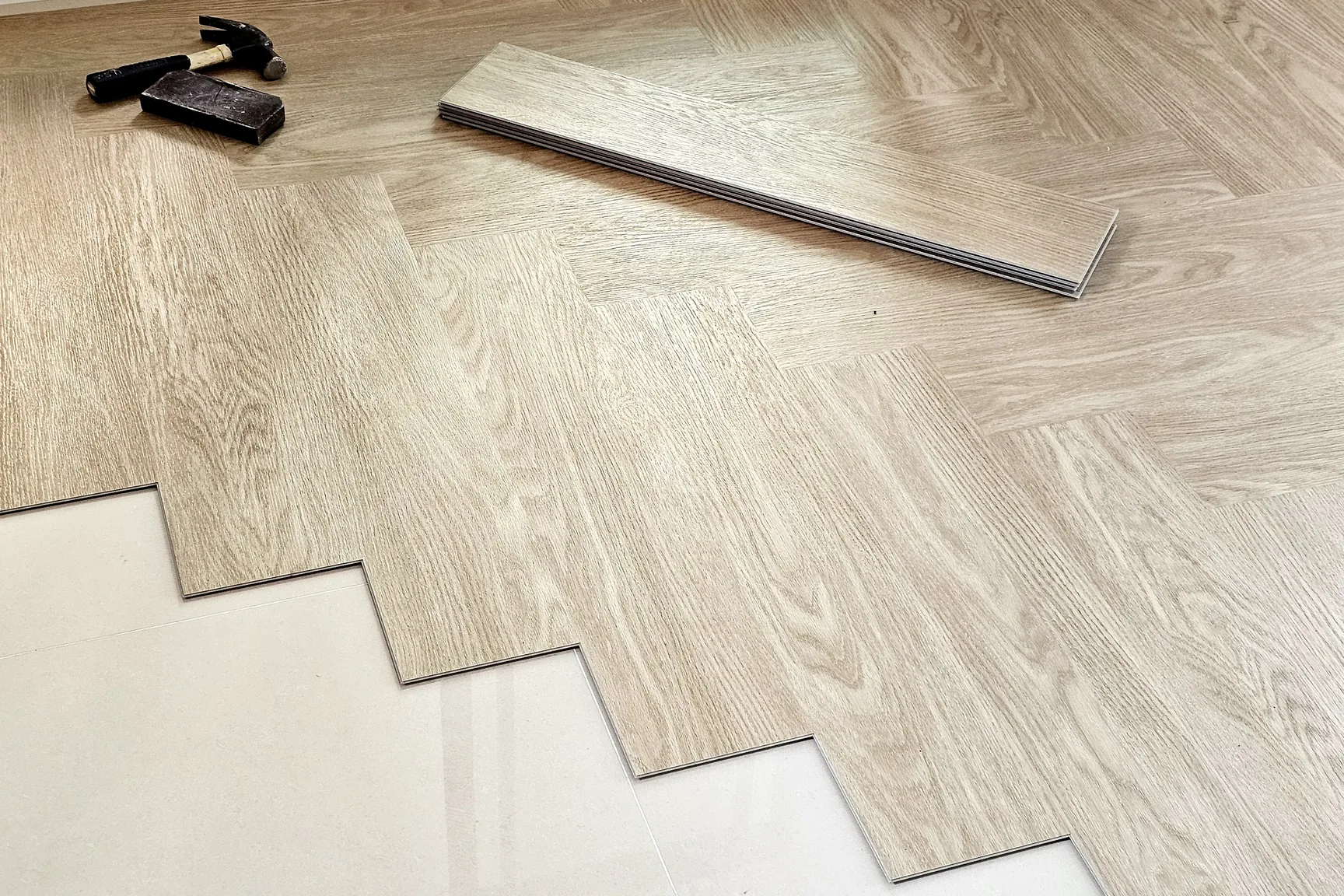
Alabama licenses flooring at the state level: the Alabama Licensing Board for General Contractors lists Flooring as a subclassification of building construction, and its license reaches both prime contractors and subcontractors on commercial and industrial projects whose cost meets the figure the contractor law prints. Houses sit outside that law, so residential flooring answers to a different body, the Alabama Home Builders Licensure Board, which licenses repair and improvement of a home for someone else above its own printed cost figure.
The state keeps more of the rulebook in its own hands besides. Lead renovation certification comes from the Alabama Department of Public Health rather than from EPA. The Alabama Department of Environmental Management names vinyl floor tile and mastic in its asbestos guidance and ties regulated removal to a survey and a certified abatement contractor. Workers’ compensation is compulsory for most employers, with a small-employer exemption that does not reach new home construction, and it is placed with private insurers or through self-insurance because Alabama has no state fund.
Policy mechanics are explained on the flooring contractor insurance page and the pages it links to. The focus here is Alabama, whether your firm runs a residential flooring crew, a commercial flooring operation working for builders, a carpet installation business or a tile and stone shop.
The Alabama contractor license that lists Flooring, and the separate board for homes
The Alabama Licensing Board for General Contractors licenses commercial and industrial contractors statewide, and flooring is one of the building construction subclassifications its license can carry. The board classifies each license by the types of work the holder may perform, and the law reaches both prime contractors and subcontractors once the cost of a project meets the threshold the statute prints. Houses and private dwellings are outside that law; residential work belongs to the Home Builders Licensure Board.
Authority: Code of Ala. §§ 34-8-1, 34-8-2, 34-8-7; Code of Ala. §§ 34-14A-2(16), 34-14A-5; Ala. Admin. Code r. 230-X-1-.24
Alabama’s license is sorted by kind of work rather than issued as one general permission. The statute gives the board that job in a single clause:
“The board shall classify contractors according to the type or types of contracts on which they may perform, within maximum bid limits”
On the board’s prime contractor application, the Flooring subclassification appears under Building Construction (BC). What pulls a job inside the licensing law, though, is the cost of the undertaking, and the statute defines a subcontractor by that measure:
“For the purpose of this chapter, a “subcontractor” is defined to be one who constructs, superintends, or engages in the construction, alteration, maintenance, repair, rehabilitation, remediation, reclamation, or demolition of any building, highway, sewer, structure, site work, grading, … or project or any improvement in the State of Alabama where the cost of the undertaking is one hundred thousand dollars ($100,000) or more under contract to a general contractor, as defined in subsection (a), or another subcontractor.”
A flooring subcontractor may bid a commercial job without the license but must hold it before it starts work on a project at or above the threshold, and a prime contractor that lets an unlicensed subcontractor begin is in violation along with it. On residential work, the Home Builders Licensure Board licenses anyone who builds, repairs or improves a house or small multi-unit building for someone else once the cost of the job passes the figure its law prints. The law’s amended exemptions list also places routine cleaning, stripping and waxing of floors outside the contractor license.
“A subcontractor is not required to be licensed at the time a project is bid, but must be licensed with the board prior to beginning work on the project.”
Put plainly, the license can arrive after the bid but never after the start date. Because the prime contractor shares the violation when an unlicensed subcontractor begins, have the license number ready well before the crew is scheduled.
The residential side works differently because the contractor chapter steps back from it. Its exemptions list, as amended, begins with houses:
“The construction or repair of any residence or private dwelling or any residential swimming pool.”
Stepping back is not the same as leaving homes unregulated. That work moves to the Alabama Home Builders Licensure Board, whose Home Builders License covers building, repairing or improving a house, or a building with a small number of residential units, for another person once the cost of the undertaking passes the figure the law prints; the board issues unlimited and limited licenses. Repairing and improving are in that reach alongside building, so settle which side of the cost line a residential job falls on at the estimate, not after the contract is signed.
The amended exemptions list carries one more line that speaks to floors directly:
“Routine cleaning, waste disposal, and janitorial services, including the cleaning, stripping, and waxing of floors.”
Installing a floor is not on it, so a firm that sells both maintenance and installation should not read the exemption as covering the second.
The board also keeps a rule under the title Carpet Installation (board rule). Its operative text is a single sentence:
“Carpet installation requires a license to comply with General Contractors Law as amended during the 1996 Regular Legislative Session.”
A carpet installation business reads that rule together with the licensing law and the cost threshold above.
Working habits that suit a licensing system split this way:
- Tag every estimate residential or commercial at the start, because that answer decides which board’s license the job is measured against.
- Look up the license of any installer you bring onto a commercial project before the start date, and file the result with the job.
What a builder asks to see on a commercial project, the certificate and additional insured wording, is on the commercial flooring contractor insurance page; what a homeowner may want to see is on the residential page.
Painted trim, older homes and Alabama’s own lead renovation certificate
Alabama’s lead renovation program is its own, authorized by EPA. The Alabama Department of Public Health certifies the firms that do lead-based paint renovation work in older housing and child-occupied facilities, and each certified firm needs at least one renovator accredited through the University of Alabama’s Safe State program.
Authority: Code of Ala. § 22-37A-1 et seq.; Ala. Admin. Code r. 420-3-29-.03(54), r. 420-3-29-.05(1); 40 CFR Part 745, Subpart Q
EPA has handed the renovation program to the state here, and the Alabama Lead Contractors Certification Program, Alabama Department of Public Health describes where its authority comes from and how far the program reaches:
“The Alabama Lead Contractors Certification Program is a statewide program authorized by Act No. 97-553. The Lead Reduction Act of 1997 established the procedures for certification of contractors or firms that perform lead-based paint inspections, risk assessments, abatement, and renovation activities in target housing (pre-1978) and child-occupied facilities.”
A flooring job that disturbs painted surfaces in covered housing or child-occupied facilities, such as pulling painted baseboards, trim or thresholds, is renovation under the state rule unless it stays within the rule’s minor repair and maintenance limits, so the firm needs state certification before it performs or even bids the work. EPA’s federal certificate is not the one Alabama asks for.
“Any firm which performs or offers to perform renovation activities as described in Rule 420-3-29-.10 must be certified by the Department prior to performing or offering to perform such work including bidding for lead-based paint renovation projects.”
Bidding is the word that changes the office routine: a firm cannot win the job first and certify afterward. If older homes or child-occupied facilities are part of your market, keep the certification on the firm’s standing paperwork rather than arranging it job by job.
Whether a given floor job is renovation at all turns on two sentences from the rule’s definitions:
“Renovation - the modification of any existing structure, or portion thereof, that results in the disturbance of painted surfaces, unless that activity is performed as part of an abatement as defined by Rule 420-3-29-.03(1).”
“The term renovation does not include minor repair and maintenance activities.”
Those lines frame the question a flooring crew actually faces: does the job disturb a painted surface, and if it does, is the disturbance within the rule’s limits for minor repair and maintenance? Check a job against those limits rather than estimating by eye. Certification also has a second layer:
“In order to be certified as Renovator Firm, the company must have at least one individual who is accredited by and registered with UA SafeState at the University of Alabama as a Renovator.”
Walkthrough questions for an older home:
- Is the building old enough to fall under the program, and is it housing or a facility where young children spend time? The state program’s own description above ties its reach to both.
- Who is pulling the baseboards, shoe molding and thresholds? If your crew is, the painted-surface question is yours to answer.
- Which person on this job holds the renovator accreditation, and is the firm’s certificate current?
Several of these questions meet in older homes, which is why the residential flooring contractor insurance page treats them at length. The general liability page works through how a policy treats a lead claim.
When old vinyl tile, mastic or felt-backed sheet flooring counts as regulated asbestos in Alabama
The Alabama Department of Environmental Management runs the state’s asbestos program, and its guidance names vinyl floor tile and mastic. Before a renovation or demolition, a regulated structure must be surveyed by an Alabama-accredited asbestos inspector; notice goes to the appropriate agency before regulated asbestos-containing material is disturbed on a project of the size the department prints; and that material must be removed by an ADEM-certified asbestos abatement contractor. Floor tile and mastic count as regulated material once they have become friable or will be sanded, ground, cut or abraded.
Authority: Ala. Admin. Code r. 335-3-11-.01, r. 335-3-11-.02(12), r. 335-3-11-.05; 40 CFR Part 61, Subpart M
The Alabama Department of Environmental Management puts flooring into its definition of regulated material in so many words:
“Category I nonfriable ACM such as vinyl floor tile and mastic, … gaskets and packing which have become friable or will be subject to sanding, grinding, cutting or abrading.”
By that definition, floor tile and mastic are not regulated simply for being old; their condition or the way they come up makes them so. Grinding mastic off a slab is a method the definition names.
“Please be aware that some older sheet vinyl (linoleum) has an asbestos-containing felt backing which can turn to powder (become friable) under certain circumstances.”
ADEM’s page warns that some older sheet vinyl has an asbestos-containing felt backing that can turn to powder, so older resilient flooring is worth testing before it comes up. Privately owned residential buildings with a small number of units are exempt while they stay residential, but not when they are part of a larger project, and Jefferson County and the City of Huntsville run their own asbestos offices, which ADEM’s page lists separately.
Before any of that, the department sets an order of work. The survey comes first:
“All regulated structures must be surveyed by an Alabama Accredited Asbestos Inspector before renovation or demolition or burning for training.”
Removal of material the survey finds to be regulated then belongs to a certified firm:
“RACM must be removed by an ADEM Certified Asbestos Abatement Contractor”
Without that certification, a flooring business faces a hand-off: if the survey finds regulated material, a certified abatement contractor takes it out before your crew installs anything. The exemption for homes is narrower than it first reads:
“Privately owned residential buildings of 4 or less units that remain residential property are exempt from asbestos regulations, but they must comply with State Solid Waste Regulations”
“This exemption does not apply to a residential property that is part of a larger project.”
That distinction is worth asking about when a builder or property manager sends a residential job your way.
Before a tear-out, a few habits help:
- Get the survey in hand before a commercial or multi-unit tear-out is priced, and read what it says about every layer, not only the top one.
- Describe the removal method in the proposal in words, and pause to talk with the owner if the method has to change once the floor is up.
- Treat felt-backed sheet goods with care even in a house, since the department’s own warning is about the backing turning to powder.
Asbestos questions on the policy side, including how finished work is handled after the owner moves back in, belong on the general liability page. Commercial demolition under a builder’s contract brings the contract’s own insurance terms, covered on the commercial page, and tile demolition has its own treatment on the tile and stone page.
Alabama workers’ compensation, the small-employer line and the new-home carve-out
Workers’ compensation in Alabama is compulsory for most employers, and the small-employer exemption has a construction carve-out. The law does not apply to an employer that regularly employs fewer than the number of employees it prints in any one business, but that exemption does not extend to the business of building, or assisting on site in building, new single-family detached homes. Coverage comes from an authorized insurer, a group self-insurance fund or approved self-insurance, because Alabama has no state fund.
Authority: Code of Ala. §§ 25-5-8, 25-5-9, 25-5-50
The small-employer rule is the part of Alabama’s law a young flooring firm reads first, and the statute writes its exception into the same sentence:
“This article and Article 2 of this chapter shall not be construed or held to apply to … an employer who regularly employs less than five employees in any one business, other than the business of constructing or assisting on-site in the construction of new single-family, detached residential dwellings”
A small flooring firm that installs floors in new single-family homes should read that carve-out before relying on the small-employer exemption. An employer that is required to secure coverage and fails to commits a misdemeanor, and a corporate officer or LLC member who opts out does so by filing a written election with the employer’s insurer, which leaves every other employee covered.
For an employer the law reaches, the chapter sets out the ways to secure payment. The first is insurance:
“An employer subject to this chapter may secure the payment of compensation under this chapter by insuring and keeping insured his or her liability in some insurance corporation, association, organization, insurance association, corporation, or association formed of employers and workers or formed by a group of employers to insure the risks under this chapter, operating by mutual assessment or other plans or otherwise.”
No route runs through a state fund, because Alabama has none. A flooring business places the coverage with an insurer authorized to write it in Alabama, joins a group self-insurance fund, or qualifies to self-insure, and the statute attaches a criminal consequence to doing none of them:
“An employer required to secure the payment of compensation under this section who fails to secure compensation shall be guilty of a misdemeanor”
Owners of small corporations and LLCs often ask whether they can leave themselves off the policy. The statute allows that by written election, and the election reaches only the person who files it:
“an officer of a corporation or individual limited liability company member may elect to be exempt from coverage by filing written certification of the election with the employer’s insurance carrier.”
Rating a flooring payroll, and deciding why the certificates of installers you pay as subcontractors matter to your own policy, are questions about the policy rather than Alabama, so the workers’ compensation page covers them. None of the findings here cross a state line; a crew working across the border meets that state’s law.
Which Alabama board or department to call about each rule
Alabama’s insurance regulator is the Alabama Department of Insurance, and its role in this picture reaches workers’ compensation: insurance regulator; approves the insurers and plans that may write workers’ compensation. Agency licenses, ours included, are listed on NIPR.com.
Each remaining office holds one piece of what this page describes. Names and roles below are the record’s, each linked to the body’s own site:
- Alabama Licensing Board for General Contractors: statewide licensing of commercial and industrial prime contractors and subcontractors, including the flooring subclassification
- Alabama Home Builders Licensure Board: licensing of residential home builders and remodelers, including repair and improvement of a residence for another above the law’s cost figure
- Alabama Lead Contractors Certification Program, Alabama Department of Public Health: state-run lead renovation firm certification (EPA-authorized) and lead abatement certification
- Alabama Department of Environmental Management: state environmental agency; runs the asbestos notification and abatement contractor certification program
- Asbestos Certification/Demolition, Alabama Department of Environmental Management: asbestos renovation and demolition notification and certification of asbestos abatement contractors, outside Jefferson County and the City of Huntsville
- Workers’ Compensation Division, Alabama Department of Labor: administration of the workers’ compensation law, including individual and group self-insurers and compliance inspections
Two licensing boards on one list is the Alabama pattern in brief: one for commercial and industrial work, one for homes. Missing from it is any state workers’ compensation fund, since Alabama has none.
Alabama metro areas and the counties each one takes in
Each card is one of the largest metropolitan areas with a principal city in Alabama, drawn from U.S. Census Bureau delineations, and lists the counties inside it. Both licenses on this page apply statewide by the cost of the job, so the licensing answer does not change from one metro to the next; the asbestos section names the local offices the department lists separately.
Birmingham, AL
Counties it takes in: Bibb County, Blount County, Chilton County, Jefferson County, St. Clair County, Shelby County and Walker County.
Commercial flooring here is licensed by the Alabama Licensing Board for General Contractors and home jobs by the Alabama Home Builders Licensure Board, each once a job’s cost reaches its statute’s figure.
Huntsville, AL
Counties it takes in: Limestone County and Madison County.
Commercial flooring here is licensed by the Alabama Licensing Board for General Contractors and home jobs by the Alabama Home Builders Licensure Board, each once a job’s cost reaches its statute’s figure.
Mobile, AL
Counties it takes in: Mobile County.
Commercial flooring here is licensed by the Alabama Licensing Board for General Contractors and home jobs by the Alabama Home Builders Licensure Board, each once a job’s cost reaches its statute’s figure.
Montgomery, AL
Counties it takes in: Autauga County, Elmore County, Lowndes County and Montgomery County.
Commercial flooring here is licensed by the Alabama Licensing Board for General Contractors and home jobs by the Alabama Home Builders Licensure Board, each once a job’s cost reaches its statute’s figure.
Tuscaloosa, AL
Counties it takes in: Greene County, Hale County, Pickens County and Tuscaloosa County.
Commercial flooring here is licensed by the Alabama Licensing Board for General Contractors and home jobs by the Alabama Home Builders Licensure Board, each once a job’s cost reaches its statute’s figure.
Daphne-Fairhope-Foley, AL
Counties it takes in: Baldwin County.
Commercial flooring here is licensed by the Alabama Licensing Board for General Contractors and home jobs by the Alabama Home Builders Licensure Board, each once a job’s cost reaches its statute’s figure.
From Alabama’s rules to the policies a flooring business carries
That settles where Alabama’s rules sit. Coverage for a job that goes wrong comes from the same set of policies a flooring business carries in any state, and each has its own page:
- Claims of injury or property damage from others, along with completed work and tear-out, fall to general liability.
- The crew, and the subcontracted-installer question, fall to workers’ compensation.
- Tools and stock that move between jobs, from saws and sanders to stretchers, fall to inland marine coverage for contractors’ tools and equipment.
How heavily each one counts turns on the flooring you do. Each service page, from carpet installation to tile and stone, treats its own jobs, owners and tear-outs on their own terms. When the Alabama side is sorted, a quote request is the next step.
Residential Flooring Contractor Insurance
A panel for Alabama in rows. Contractor license: a state license or registration can reach this work. It connects to the General Liability page. Lead-safe renovation: the state runs its own lead-safe program. It connects to the Residential Flooring Contractor Insurance page. Asbestos flooring and mastic: a state program reaches flooring removal. It connects to the General Liability page. Workers’ compensation: bought in the open market. It connects to the Workers Compensation page. Each row pairs a state rule with the page on this site that discusses it. No figures are shown.
Nearby states we also write
Related coverage and services
What we insure
Outside authorities
- Alabama Department of Insurance
- Alabama Licensing Board for General Contractors
- Alabama Home Builders Licensure Board
- Alabama Department of Environmental Management
- Asbestos Certification/Demolition, Alabama Department of Environmental Management
- Workers’ Compensation Division, Alabama Department of Labor
- Alabama Lead Contractors Certification Program, Alabama Department of Public Health
Alabama flooring contractor insurance questions
Which Alabama license does a flooring business need for commercial jobs?
A license from the Alabama Licensing Board for General Contractors, classified for the work. Flooring is one of the subclassifications listed under Building Construction (BC) on the board’s application. The law reaches prime contractors and subcontractors alike once the cost of the project meets the threshold the statute prints, and a subcontractor may bid without the license but must hold it before starting work.
Does putting new floors in an Alabama house need the general contractors board license?
No. The contractor licensing law exempts residences and private dwellings. Residential work belongs to the Alabama Home Builders Licensure Board, which licenses anyone who builds, repairs or improves a house or small multi-unit building for someone else once the cost of the job passes the figure its law prints.
Is stripping and waxing floors contractor work under Alabama’s licensing law?
The law’s amended exemptions list places routine cleaning, stripping and waxing of floors outside the contractor license. Installation is not named in that exemption.
Whose lead renovation certificate does an Alabama flooring firm need?
The Alabama Department of Public Health’s. EPA has authorized Alabama to run its own renovation program, and EPA’s federal certificate is not the one Alabama asks for. A firm that performs or offers to perform renovation in covered housing or child-occupied facilities needs the department’s certification before it bids the work, and it must have at least one renovator accredited through the University of Alabama’s Safe State program.
When does old vinyl floor tile become regulated asbestos in Alabama?
The Alabama Department of Environmental Management treats vinyl floor tile and mastic as nonfriable material that becomes regulated once it has become friable or will be sanded, ground, cut or abraded. Regulated material must be removed by a certified asbestos abatement contractor, and a regulated structure must be surveyed by an accredited inspector before renovation.
Do Alabama’s asbestos rules apply to a floor job in a private house?
Privately owned residential buildings with a small number of units are exempt while they stay residential, but not when they are part of a larger project. The department still warns that some older sheet vinyl has an asbestos-containing felt backing that can turn to powder, so older resilient flooring is worth testing before it comes up.
Does a small Alabama flooring company have to carry workers’ compensation?
Most employers must. The law does not apply to an employer that regularly employs fewer than the number of employees it prints, but that exemption does not extend to the business of building, or assisting on site in building, new single-family detached homes. Coverage comes from an authorized insurer, a group self-insurance fund or approved self-insurance, because Alabama has no state fund.
Which Alabama department oversees the insurers that write workers’ compensation?
The Alabama Department of Insurance, the state’s insurance regulator, approves the insurers and plans that may write it. The Workers’ Compensation Division, Alabama Department of Labor administers the workers’ compensation law itself, including self-insurers.
This page describes insurance for flooring contractors and installers operating in this state. It is general information, not legal advice and not a statement of coverage. Licensing, lead-safe and asbestos requirements change; verify current requirements with the agency named before relying on them.
Get a quote for your Alabama flooring work
Tell us whether your Alabama jobs are in homes or commercial buildings, which license your firm holds and what comes up before the new floor goes down, and we will shape a program around it.