
Flooring Contractor Insurance by State
Idaho Flooring Contractor Insurance
Idaho asks a flooring business to register rather than to be licensed, and the registration application itself asks for proof of workers’ compensation and general liability coverage.
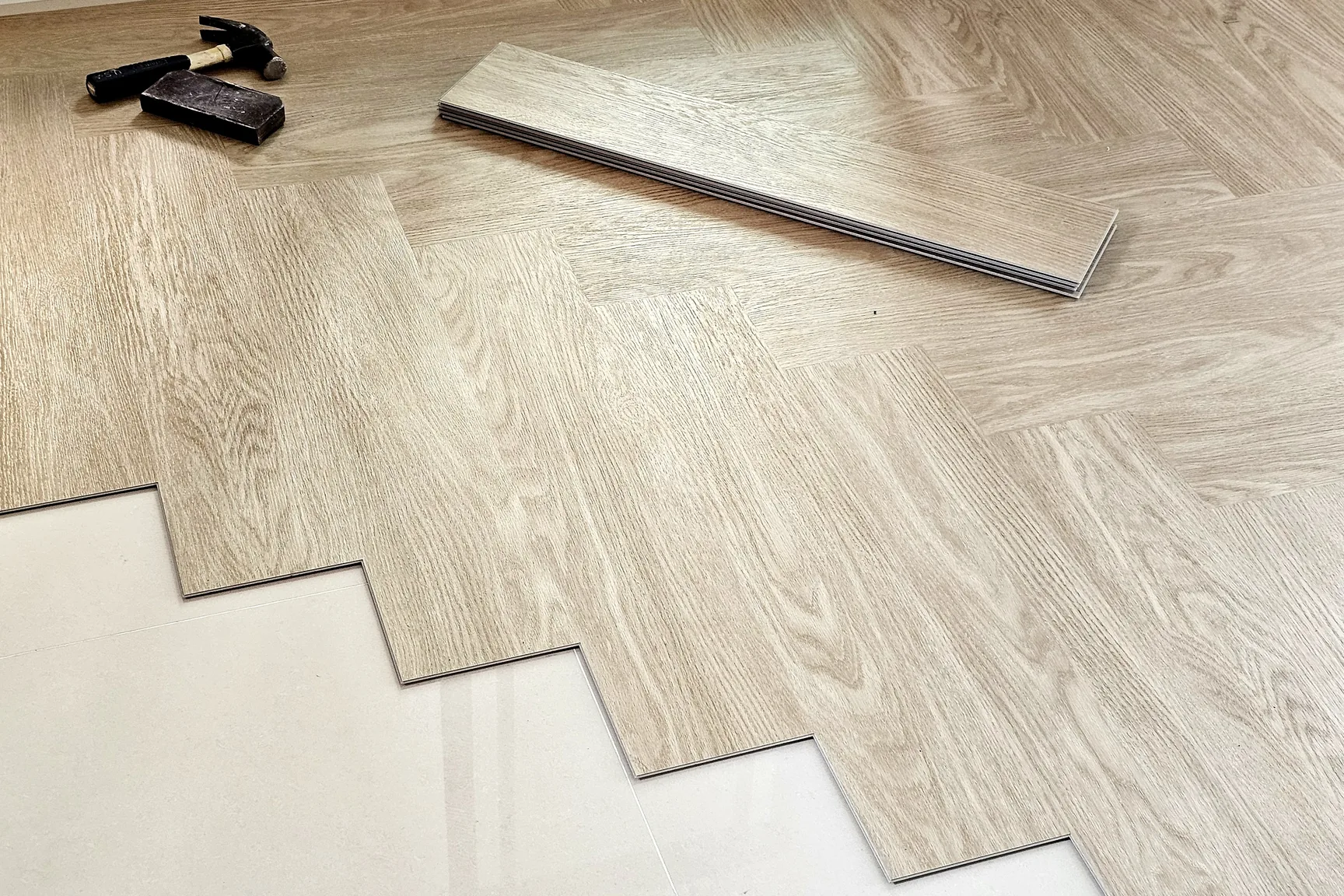
Idaho does not license flooring contractors; it registers them. Under the Idaho Contractor Registration Act, flooring work counts as construction, so a flooring business registers with the Idaho Contractors Board, Division of Occupational and Professional Licenses before it bids or works, the registration file carries proof of workers’ compensation and a general liability certificate, and a contractor who skips the step loses access to building permits and gives up lien rights. Beyond registration, lead-safe renovation certification comes from EPA rather than the state, asbestos in old floor tile and sheet vinyl falls under the federal emission standard with no state asbestos license, and workers’ compensation is compulsory for employers, secured through an authorized insurer or approved self-insurance.
The difference between a registration and a license is more than a word. The obligation sentence in the first section shows what the Idaho application asks for, and both of its central items are insurance documents, which makes Idaho a state where the insurance program and the right to work arrive in the same envelope. Below, every finding is printed as verified, backed by the statute or agency page it rests on, then turned into owner advice.
The policies themselves are explained on the flooring contractor insurance page and the pages it links to. Idaho’s particulars are the subject here, for crews doing residential flooring, commercial flooring, carpet installation or tile and stone.
Idaho registers flooring contractors instead of licensing them
Idaho has no flooring license and no contractor license as such, but it does require statewide contractor registration. Under the Idaho Contractor Registration Act, anyone who engages in the business of construction, which the law defines to include altering, repairing and improving a building, must be registered with the Idaho Contractors Board, and a flooring contractor falls inside that definition.
Authority: Idaho Code § 54-5203(2), (3)(a); Idaho Code § 54-5204(1), (2); Idaho Code § 54-5205(2)(f); Idaho Code § 54-5210(1)(d), (1)(e); Idaho Code § 54-1902(1)
The Division puts the distinction in a single line on its own answers page:
“The Act requires registration, not licensure.”
Start there, because a contractor arriving from another state may go looking for a license, and the headline above says Idaho has none as such. What it has is the duty to register, set in the statute’s plainest terms:
“On and after January 1, 2006, it shall be unlawful for any person to engage in the business of, or hold himself out as, a contractor within this state without being registered as required in this chapter.”
Flooring is not named in that section. It arrives through the definition of construction, which is broad enough to take in nearly anything a flooring crew does to a building:
“"Construction" means the performance of building, altering, repairing, adding to, subtracting from, improving, reconstructing, moving, excavating, wrecking or demolishing any building, highway, road, bridge, or other structure, project, development or improvement to real property, or to do any part thereof”
Altering, repairing, improving and reconstructing describe a floor replacement about as well as any phrase could, and the closing words, any part thereof, help explain why the headline places a flooring contractor inside the definition.
Before bidding or working, a flooring business registers with the Idaho Contractors Board, unless the job is small enough to fit the exemption quoted below and is not part of a larger project. Registration asks for proof of workers’ compensation coverage, or a statement of why it is not required, and a certificate of general liability insurance, including products and completed operations, at the limit quoted below. A general contractor may not hire an unregistered flooring subcontractor, and an unregistered contractor cannot obtain a building permit and gives up lien rights. Public works projects need a separate public works contractor license from the same division.
The obligation sentence mentions a small-job exemption. Here it is in the statute’s own words, with the record’s note that it does not apply when the work is part of a larger construction project:
“A person performing work on one (1) undertaking or project considered casual, minor, or inconsequential, whether by one (1) or more contracts, the aggregate contract price of which, for labor and materials and all other items, is less than two thousand dollars ($2,000).”
The part of the Idaho rule that reads most like an insurance requirement is the application itself. Two of its items are certificates:
“A certificate issued by an insurance company authorized to do business in the state of Idaho or other satisfactory proof that the applicant has procured and has in effect worker’s compensation insurance or a statement by the contractor as to why such certificate or coverage is not required for the applicant”
“A certificate issued by an insurance company authorized to do business in the state of Idaho that the applicant has procured and has in effect a general liability policy, including products and completed operations insurance covering the applicant’s construction operations in the sum of not less than three hundred thousand dollars ($300,000) single limit.”
So the general liability policy, including its products and completed operations coverage, is part of the registration file, and so is workers’ compensation or the statement of why it does not apply. A lapse on the insurance side is therefore worth treating as a registration question too. What those coverages do once a claim arrives is on the general liability and workers’ compensation pages.
Registration also travels up the contracting chain. The statute makes it the general contractor’s problem as well as yours:
“It shall be unlawful for a contractor to engage any other contractor who is required by this chapter to be registered as a contractor unless such other contractor furnishes satisfactory proof to the contractor that he is duly registered under the provisions of this chapter.”
And the Division’s list of penalties for working unregistered includes two that land squarely on a flooring business’s cash flow:
“No Building Permits – You cannot obtain a building permit.”
“No Lien Rights – You waive any right to a lien on real property.”
A few habits follow from all of this:
- Keep a copy of your registration with every bid package, so a general contractor asking for proof gets it the same day.
- Put the renewal date of your registration and the renewal dates of both certificates on one calendar, since the application ties them together.
- Before a public works bid, check the separate public works license the obligation sentence describes rather than assuming the registration reaches that work.
- If you hire another flooring business as a subcontractor, ask for its proof of registration before it starts, for the same reason a general contractor asks for yours.
For additional insured wording and the other paperwork a general contractor attaches to a commercial job, see the commercial flooring contractor insurance page.
Idaho flooring crews and painted trim: EPA holds the lead-safe certification
Idaho has no state agency that certifies lead-safe renovation firms. In Idaho the renovation, repair and painting (RRP) rule is administered by EPA directly, so a flooring company that disturbs paint on covered work holds its firm certification from EPA.
Authority: 40 CFR Part 745
Idaho is missing from EPA’s list of authorized renovation programs, and it is named on the agency’s list of places where EPA runs lead abatement, inspection and risk assessment itself:
“EPA administers the Lead-Based Paint Activities Program in Alaska, Arizona, Florida, Idaho, Montana, Nevada, New Mexico, New York, South Carolina, South Dakota and Wyoming, as well as the territories of American Samoa, Guam, the Northern Mariana Islands and the U.S. Virgin Islands, and most Tribal lands.”
Together they leave no state lead credential for a flooring business to chase. The certification that matters is the federal one, and the requirement is set out this way:
“EPA's RRP Rule requires that anyone paid to perform work that disturbs painted surfaces in homes, childcare facilities and preschools built before 1978 be certified and their employees be trained (either as a certified renovator or on-the-job by a certified renovator) in the use of lead-safe work practices that minimize occupants’ exposure to lead hazards.”
In housing or a child-occupied facility covered by the federal rule, taking up painted baseboards, shoe molding, thresholds or door casings counts as renovation work: the firm is certified by EPA, a certified renovator is assigned to the job or trains the crew, and the rule’s work practices apply, with the building-age threshold quoted below as printed. EPA also runs lead abatement, inspection and risk assessment certification in Idaho, so no state lead license stands in for the federal one.
Paint rarely sits on the floor itself; it sits on the trim, and the obligation sentence names exactly the pieces a flooring crew takes off. At the walkthrough, ask:
- The year the building went up, since the quote above turns on its age; put the answer on the estimate.
- Is it a child-occupied facility, such as a childcare center or preschool, rather than a home?
- Who removes the trim, your crew or another trade? If your crew takes up painted baseboards or casings, the obligation sentence counts that as renovation work.
- Who in your business is the certified renovator, and will that person be on this job or train the crew that is?
These questions come up most often in older homes, and the residential flooring contractor insurance page spends time on them; lead claims under a liability policy are a matter for the general liability page.
Old resilient flooring in Idaho falls under the federal asbestos standard
Idaho has no state asbestos license or certification for companies or workers. Asbestos in renovation and demolition is governed by the federal emission standard, which EPA’s regional office enforces at homes, shops, offices and other nonmajor facilities; the Idaho Department of Environmental Quality oversees asbestos work only at the major facilities in its first permit tier, under authority delegated by EPA.
Authority: 40 CFR Part 61, Subpart M; 40 CFR § 61.141; IDAPA 58.01.01.107 (incorporation by reference of 40 CFR Part 61)
The state environmental agency describes its own limited role first:
“EPA delegated regulatory authority to DEQ to oversee the abatement and disposal of asbestos-containing materials at Tier 1 major facilities.”
And on the same page it sends everything else to the federal regional office:
“EPA Region 10 has jurisdiction over all nonmajor facilities (e.g., public, commercial, and institutional structures); therefore, all Asbestos NESHAP 10-Day Renovation and Demolition Notification Forms representing qualifying asbestos activities occurring at nonmajor facilities must be submitted to EPA.”
Here is what matters most to a flooring business. The homes, shops and offices where floors get replaced are among the nonmajor facilities the headline describes, so the notices for that work go to EPA, not to the Idaho Department of Environmental Quality. There is no Idaho asbestos card to carry, but the absence of a state credential is not the absence of a rule.
The federal standard speaks to flooring directly. It defines the material:
“Resilient floor covering means asbestos-containing floor tile, including … vinyl floor tile, and sheet vinyl floor covering containing more than 1 percent asbestos”
And it names the methods that turn that material into regulated material:
“Category I nonfriable ACM that will be or has been subjected to sanding, grinding, cutting, or abrading”
Under the federal standard, resilient floor tile and sheet flooring that contain asbestos become regulated material when they will be sanded, ground, cut or abraded, and a renovation that disturbs regulated material above the federal quantity threshold needs written notice before work starts. In Idaho that notice goes to EPA’s regional office for nonmajor facilities and to the Department of Environmental Quality for major facilities in its first permit tier, and every demolition needs one. Asbestos waste goes only to a landfill approved to accept it. Federal worker-safety rules apply on top of the emission standard.
Read together, the definitions make the removal method part of the bid: the method can change what the material is under the standard, so settle it before the price. Some habits help:
- On a tear-out of old tile or sheet vinyl, ask what is known about the floor before you quote it, and write down the answer.
- Make the tear-out method a written line item, and if a second layer nobody mentioned turns up, talk to the owner before the method changes.
- Know which office takes the notice for this building, the federal regional office or the state department for one of its major facilities, before the crew is scheduled.
Asbestos claims against a liability policy, and the treatment of finished work once the room is in use again, are policy questions handled on the general liability page. Tile demolition brings its own version of them on the tile and stone page.
Securing workers’ compensation before an Idaho flooring crew’s first hire
Under Idaho’s worker’s compensation law, each covered employer secures the payment of compensation, either with an insurer authorized by the Department of Insurance or by self-insuring with the Industrial Commission’s approval. The Industrial Commission says coverage must be in place before the first employee is hired, and failing to secure it is a misdemeanor.
Authority: Idaho Code § 72-301(1)(a), (1)(b); Idaho Code § 72-319(1); Idaho Code § 72-212(6); Idaho Code § 72-322
The first of the statute’s ways to meet the duty is the one most flooring businesses use:
“By insuring and keeping insured with a policy of worker’s compensation insurance as defined in section 41-506 (d), Idaho Code, the payment of compensation with any insurer, as defined in section 41-103 , Idaho Code, authorized by the director of the department of insurance to transact such insurance”
The Idaho Industrial Commission states the timing in practical terms on its employer page:
“Employers with one or more full-time, part-time, seasonal, or occasional employees are required to maintain a workers’ compensation policy unless specifically exempt from the law. Workers’ Compensation is required to be in place before the first employee is hired.”
Coverage for an Idaho flooring contractor with employees comes from an authorized insurer, bought through an agent; an employer that cannot find coverage in the ordinary market can apply to the assigned risk system, which guarantees coverage to an applicant not in default on premiums. The owner of a sole proprietorship, working partners and working members of a limited liability company, and certain owner-officers of a corporation are outside the law unless they elect coverage. An uninsured employer can be personally liable for an injured worker’s benefits, owes a daily penalty and can be ordered to stop operating.
The owners who sit outside the law unless they elect coverage are listed in the statute this way:
“Employment as the owner of a sole proprietorship; employment of a working member of a partnership or a limited liability company; employment of an officer of a corporation who at all times during the period involved owns not less than ten percent (10%) of all of the issued and outstanding voting stock of the corporation and, if the corporation has directors, is also a director thereof.”
And for a flooring business that cannot find coverage in the ordinary market, the assigned risk system carries this guarantee:
“Such system shall be so drawn as to guarantee that such an applicant, if not in default on worker’s compensation premiums, shall, following his application to the assigned risk system and tender of required premium, be covered by worker’s compensation insurance or his coverage guaranteed.”
Going without is not a quiet option. The Commission puts the exposure plainly:
“If one of your employees is injured and you do not have workers’ compensation insurance in effect at the time of the injury, you can be personally liable for all benefits, including medical and wage loss, provided under the Workers’ Compensation Law.”
Registration ties this back to the first section: the application carries proof of coverage or a statement of why none is required, so the decision is made before the first bid. Payroll classes and subcontracted installers are underwriting matters for the workers’ compensation page.
The Idaho offices behind each finding on this page
Start with the Idaho Department of Insurance. Described in the record’s words, its job: insurance regulator; authorizes the insurers that write workers’ compensation and general liability in Idaho, and its director may put the workers’ compensation assigned risk system into effect. Our agency license, and any other agency’s, can be looked up on NIPR.com.
The other bodies the findings draw on, each linked to its own site, with the role the record verified:
- Idaho Contractors Board, Division of Occupational and Professional Licenses, which registers construction contractors under the Idaho Contractor Registration Act; the same division licenses public works contractors
- U.S. Environmental Protection Agency, which administers both the lead renovation (RRP) certification and the lead abatement, inspection and risk assessment certification in Idaho; Idaho runs no state lead program
- U.S. Environmental Protection Agency, which enforces the federal asbestos emission standard and receives renovation and demolition notices for all nonmajor facilities in Idaho
- Idaho Department of Environmental Quality, which oversees asbestos abatement and disposal at the major facilities in its first permit tier under authority delegated by EPA, and receives the notices for those facilities
- Idaho Industrial Commission, which administers the worker’s compensation law: approves insurers and self-insured employers, enforces coverage and handles injury reports and claims
The federal agency appears twice on purpose: outside the state department’s major facilities, both older-building questions run to EPA.
Idaho metro areas where registered flooring contractors work
These cards list the metropolitan areas on Idaho’s list that have a principal city in the state, as the U.S. Census Bureau delineates them; a metro that crosses a state line shows only its Idaho counties.
Boise City, ID
Counties in this metro: Ada County, Boise County, Canyon County, Gem County and Owyhee County.
Registration with the Idaho Contractors Board, Division of Occupational and Professional Licenses is statewide, so the same registration duty applies to flooring work in every county on this card.
Coeur d’Alene, ID
Counties in this metro: Kootenai County.
Registration with the Idaho Contractors Board, Division of Occupational and Professional Licenses is statewide, so the same registration duty applies to flooring work in every county on this card.
Idaho Falls, ID
Counties in this metro: Bonneville County, Butte County and Jefferson County.
Registration with the Idaho Contractors Board, Division of Occupational and Professional Licenses is statewide, so the same registration duty applies to flooring work in every county on this card.
Twin Falls, ID
Counties in this metro: Jerome County and Twin Falls County.
Registration with the Idaho Contractors Board, Division of Occupational and Professional Licenses is statewide, so the same registration duty applies to flooring work in every county on this card.
Pocatello, ID
Counties in this metro: Bannock County.
Registration with the Idaho Contractors Board, Division of Occupational and Professional Licenses is statewide, so the same registration duty applies to flooring work in every county on this card.
Lewiston, ID-WA
This metro’s Idaho county list: Nez Perce County.
Registration with the Idaho Contractors Board, Division of Occupational and Professional Licenses is statewide, so the same registration duty applies to flooring work in every county on this card.
Linking an Idaho registration file to its coverage pages
In Idaho the registration file already names two of the policies, so the program and the paperwork are best built together:
- General liability, with products and completed operations, for claims from others over injury, damage and finished floors.
- Workers’ compensation, the policy the application asks you to prove, for your crew.
- For the saws, sanders and stock in the truck, inland marine coverage for contractors’ tools and equipment.
Carpet work and stone work differ enough that the carpet installation and tile and stone pages treat them apart. Ready to assemble the Idaho pieces? Request a quote.
Residential Flooring Contractor Insurance
A panel for Idaho in rows. Contractor license: a state license or registration can reach this work. It connects to the General Liability page. Lead-safe renovation: the federal program applies in this state. It connects to the Residential Flooring Contractor Insurance page. Asbestos flooring and mastic: federal rules only for this work. It connects to the General Liability page. Workers’ compensation: bought in the open market. It connects to the Workers Compensation page. Each row pairs a state rule with the page on this site that discusses it. No figures are shown.
Nearby states we also write
Related coverage and services
What we insure
Idaho flooring contractor insurance questions
Is Idaho contractor registration the same thing as a license?
No. The Idaho Contractors Board, Division of Occupational and Professional Licenses answers that question in its own words: the Act requires registration, not licensure. Idaho has no flooring license, but anyone who engages in the business of construction, which the law defines to include altering, repairing and improving a building, must register, and a flooring contractor falls inside that definition.
Which insurance certificates go with an Idaho contractor registration?
Two. The application asks for proof of workers’ compensation coverage, or a statement of why it is not required, and for a certificate of general liability insurance, including products and completed operations, at the single limit the statute sets. Each certificate is one issued by an insurance company authorized to do business in Idaho, and for workers’ compensation other satisfactory proof is also accepted.
What happens to an Idaho flooring contractor who works without registering?
The Idaho Contractors Board, Division of Occupational and Professional Licenses lists the penalties, among them that an unregistered contractor cannot obtain a building permit and waives any right to a lien on real property. A general contractor also may not engage a contractor who must register unless that contractor furnishes proof that it is registered.
Is there an Idaho state lead certification a flooring firm has to hold?
No. EPA administers the renovation, repair and painting program in Idaho directly, and it also runs lead abatement, inspection and risk assessment certification there, so a flooring firm that disturbs paint on covered work holds its firm certification from EPA and no state lead license stands in for it.
Who receives the asbestos notice for an Idaho flooring tear-out?
For homes, shops, offices and other nonmajor facilities, EPA’s regional office. The Idaho Department of Environmental Quality oversees asbestos work only at the major facilities in its first permit tier, under authority delegated by EPA. Every demolition needs a notice, and Idaho has no state asbestos license or certification for companies or workers.
Can a one-owner Idaho flooring business go without workers’ compensation?
The owner of a sole proprietorship, working partners and working members of a limited liability company, and certain owner-officers of a corporation are outside the law unless they elect coverage. Once there are employees, the Idaho Industrial Commission says coverage must be in place before the first employee is hired, and the registration application asks for proof of coverage or a statement of why it is not required.
Where does an Idaho employer get workers’ compensation if the ordinary market turns it down?
Coverage comes from an insurer authorized by the Idaho Department of Insurance, bought through an agent. An employer that cannot find coverage in the ordinary market can apply to the assigned risk system, which guarantees coverage to an applicant not in default on premiums. Self-insuring with the Idaho Industrial Commission’s approval is the other route the law allows.
This page describes insurance for flooring contractors and installers operating in this state. It is general information, not legal advice and not a statement of coverage. Licensing, lead-safe and asbestos requirements change; verify current requirements with the agency named before relying on them.
Get a quote for your Idaho flooring work
Send us your Idaho registration details, the metros your crews travel to and what comes up before the new floor goes down, and we will shape the program around them.