
Flooring Contractor Insurance by State
Utah Flooring Contractor Insurance
Utah’s licensing rule has a Carpentry and Flooring Contractor specialty for wood, laminate and tile, and lists carpet and vinyl installation as exempt work; lead and asbestos certification are the state’s own, and comp is compulsory.
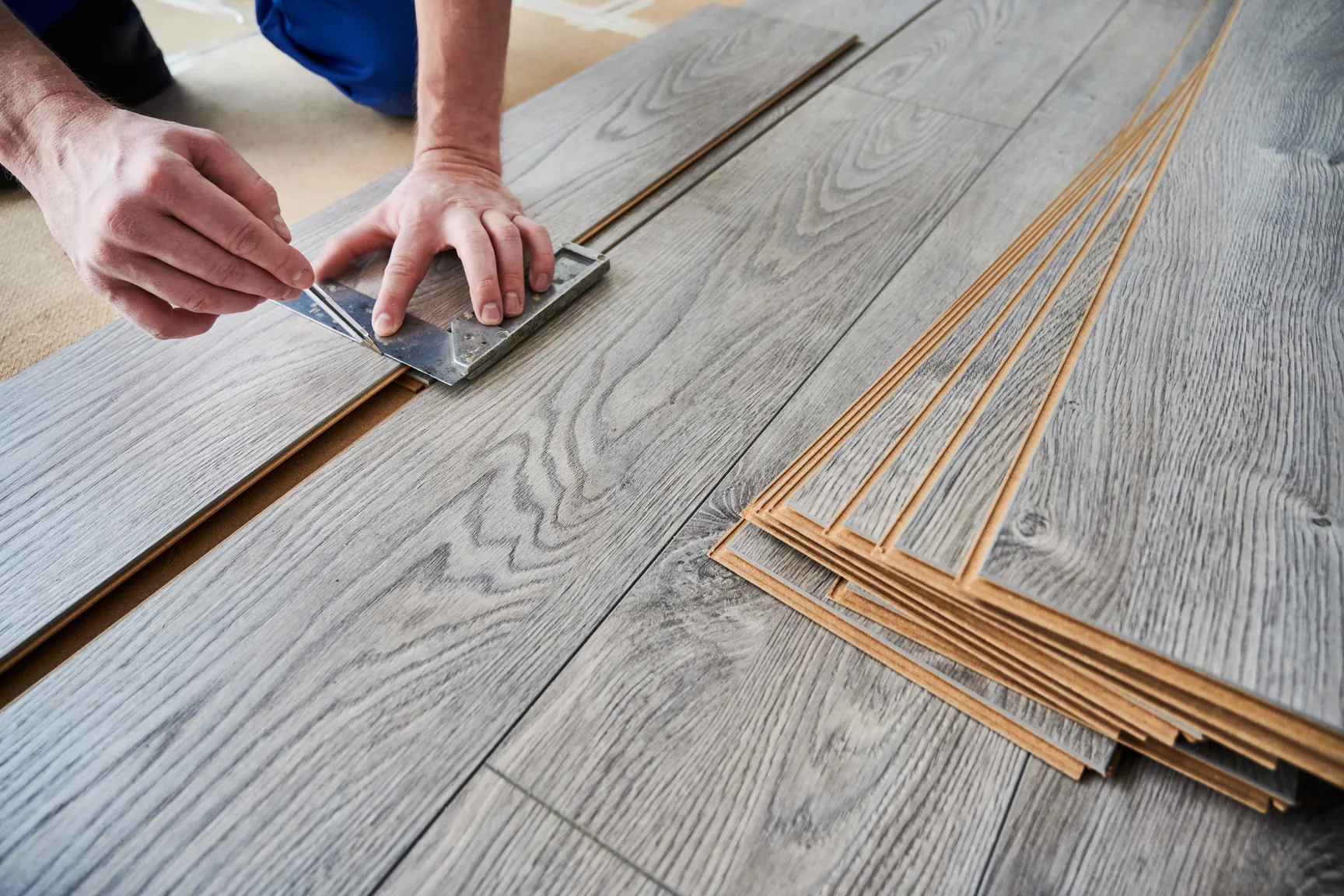
Utah’s contractor licensing rule writes flooring into its own specialty: hardwood, laminate, tile and similar hard flooring, along with sanding and finishing, call for a state license carrying the Carpentry and Flooring Contractor specialty, while that same rule lists carpet, vinyl sheet tile and vinyl plank installation as work that needs no contractor license. Around the license, Utah certifies lead-safe renovation firms itself under EPA authorization, requires an asbestos inspection before most tear-outs of old resilient flooring, and makes workers’ compensation compulsory, secured through an authorized insurer or approved self-insurance.
So a single Utah shop can sit on both sides of the license line depending on the product it lays that week. Every section below gives a verified finding, quotes the rule or statute behind it and turns it into practical steps. For the policies themselves, start at the flooring contractor insurance page, then go to the page for your kind of work: residential flooring, commercial flooring, carpet installation or tile and stone.
Utah’s Carpentry and Flooring Contractor specialty, and the carpet and vinyl work it leaves out
Statewide contractor licensing in Utah runs through the Division of Professional Licensing, and its rule names the trade: the Carpentry and Flooring Contractor specialty license covers laminate, tile, cement, wood, synthetic wood and similar flooring, including sanding, staining and finishing, the underlayment and subfloors. The same rule puts carpet, vinyl sheet tile and vinyl plank installation on its list of activities that need no contractor license.
Authority: Utah Code § 58-55-102 (specialty contractor); Utah Code § 58-55-301(1)(a), (2)(x); Utah Code § 58-55-305(1)(h)(i), (1)(i); Utah Admin. Code R156-55a-301c(2)(a)(i); R156-55a-301z; R156-55a-301af(1)(b); R156-55a-301am(2); R156-55a-301an(1)(o); R156-55a-302d(1)
Start with the statute. Licensing comes first, then the work:
“A person engaged in the construction trades licensed under this chapter, as a contractor regulated under this chapter, … shall become licensed under this chapter before engaging in that trade or contracting activity in this state unless specifically exempted from licensure …”
The specialty’s scope, as the Division’s rule prints it, runs from the finished surface down through the layers beneath it:
“… laminate, tile, cement, wood, synthetic wood, or similar flooring product, including prefinished and unfinished material, sanding, staining and finishing of new and existing flooring, the underlayment, and subfloors …”
Sanding and refinishing an existing floor is named in that list, so a refinisher who never installs new boards is still inside it. The exemption is written into the same rule:
“The following activities are determined to not significantly impact the public health, safety, and welfare, and therefore do not require a contractor license: … carpet, vinyl sheet tile, or vinyl plank floor installation;”
A Utah flooring business that installs hardwood, laminate, tile or similar hard flooring, or sands and finishes floors, holds a Division of Professional Licensing contractor license carrying the Carpentry and Flooring Contractor specialty, or a general building classification whose scope takes in every specialty, before engaging in the work, and the license application includes proof of liability insurance at the limits quoted below and either workers’ compensation coverage or a coverage waiver. Specialty licensees are confined to the scope of their classification; tile and stone also appear in the masonry specialty’s scope. A business that only installs carpet, vinyl sheet tile or vinyl plank is on the rule’s exempt list, and the statute separately exempts small alteration and repair jobs below the contract value quoted below, subject to its own conditions.
“… a person engaged in the alteration, repair, remodeling, or addition to or improvement of a building with a contracted or agreed value of less than $7,000, including both labor and materials, and including all changes or additions to the contracted or agreed upon work …”
That exemption carries conditions of its own in the statute, so read the whole subsection before leaning on it for a small job. A specialty license does not stretch past its written scope:
“Specialty Contractors shall be confined to the field and scope of work designated in this rule.”
Tile setters have a second place to look. The masonry specialty lists tile and stone among its materials:
“… natural or synthetic stone, onyx, ceramic, granite, … marble, tile, gypsum tile, glass block, clay tile, copings, plastic refractories, and castables …”
And a contractor holding the general building classification already has the flooring scope, since that classification takes in every specialty:
“all scopes of work relating to specialty contractor licenses issued under Subsection 58-55-301(2)(x) and described under Sections R156-55a-301w through R156-55a-301al”
Insurance enters the picture at the application. The rule asks for proof up front:
“Under Subsection 58-55-302(2)(b), an applicant for licensure shall file with the Division proof of liability insurance and workers compensation insurance described in this section.”
“… coverage amounts of at least $1,000,000 for each incident and $2,000,000 in total;”
Running a shop under this split, an owner can:
- Sort your jobs by product. A crew that splits its weeks between plank vinyl and engineered hardwood is exempt for one and licensed for the other.
- File a copy of the license next to the insurance proof the Division received, and swap in the new certificate whenever a policy renews.
- Before adding a product line, compare it with the specialty’s list; stone and tile work may point to the masonry entry instead.
General contractors ask for certificates and additional insured wording that sit apart from the license; the commercial flooring contractor insurance page works through them, and the carpet installation page speaks to shops whose work is on the exempt list.
Utah runs its own lead-safe renovation certification for flooring crews
EPA has authorized Utah to run its own lead renovation, repair and painting (RRP) program, so the Utah Department of Environmental Quality’s Division of Air Quality, not EPA, certifies renovation firms and renovators working in Utah. The state rule applies to renovations performed for compensation in target housing and child-occupied facilities, and a firm may not perform covered renovations without certification from the director.
Authority: Utah Admin. Code R307-840-2; R307-841-1; R307-841-2(1)(b)(ii); 40 CFR Part 745
The authorization shows on EPA’s own list of programs it has handed to states and tribes, and Utah appears on it:
“EPA administers the RRP Program in most Tribes, states and territories, but has authorized the following to operate their own programs: Alabama, Delaware, Georgia, Iowa, Kansas, Massachusetts, Mississippi, North Carolina, Oklahoma, Oregon, Rhode Island, Utah, Vermont, Wisconsin and the Minnesota Chippewa Tribe-Boise Forte (Nette Lake).”
That shifts the paperwork to the Utah Department of Environmental Quality, Division of Air Quality, Lead-Based Paint Program. The state rule spells out the firm-level duty:
“On or after April 8, 2010, no firm may perform, offer, or claim to perform renovations without certification from the director under R307-841-7 in target housing or child-occupied facilities, unless the renovation qualifies as one of the exceptions identified in R307-841-3(1).”
Flooring jobs rarely disturb paint across a wall, but the rule’s definition does not ask how much:
“"Renovation" means the modification of an existing structure, or portion thereof, that results in the disturbance of painted surfaces, unless that activity is performed as part of an abatement as defined by R307-840-2.”
Painted baseboards, shoe molding, thresholds or door casings pulled in older housing or a child-occupied facility are disturbed painted surfaces, which the state rule treats as renovation, so a flooring company doing that work holds Utah firm certification and the work is directed by a Utah-certified renovator following the rule’s lead-safe work practices; the housing age that defines target housing is quoted below as printed.
“"Target housing" means any housing constructed prior to 1978, except housing for the elderly or persons with disabilities …”
Settle these on the first site visit:
- Does the building’s age put it inside the target-housing definition, and do young children spend regular time there?
- Does the job pull painted base, shoe or casing, or does another trade remove the trim first?
- Is a Utah-certified renovator from your firm assigned to the job and on site to direct it?
Occupied older homes are where these questions come up most, and the residential flooring contractor insurance page spends time on that work. How a liability policy answers a lead claim is a question for the general liability page.
Utah’s asbestos rule, resilient flooring and the inspection before a tear-out
Utah’s asbestos rule reaches flooring work. The Division of Air Quality’s rule covers contractors for hire doing renovation in regulated facilities, including homes they do not live in, names resilient floor coverings as Category I non-friable material, and treats that material as regulated once it has become friable or is sanded, ground, cut or abraded. Contractors must have an asbestos inspection by a Utah-certified inspector before the work, subject to the rule’s exceptions for newer small residential buildings.
Authority: Utah Admin. Code R307-801-1; R307-801-2(1)(a); R307-801-3; R307-801-5(1); R307-801-6(1); R307-801-9(1); R307-801-10(3); R307-801-11(2)(a); R307-801-13(8); R156-55a-301an(2)(b)
Resilient flooring is named in the rule’s first category of non-friable material:
“"Category I Non-Friable Asbestos-Containing Material" means asbestos-containing packings, gaskets, resilient floor coverings, …”
Intact is not the end of the analysis. The definition of regulated material turns on what the crew does to the floor:
“"Regulated Asbestos-Containing Material (RACM)" means friable ACM, Category I non-friable ACM that has become friable, Category I non-friable ACM that will be or has been subjected to sanding, grinding, cutting, or abrading, or Category II non-friable ACM that has a high probability of becoming or has become crumbled, pulverized, or reduced to powder by the forces expected to act on the material in the course of demolition or renovation project operations.”
The rule’s reach into homes is broad. It covers work in houses and apartments the worker does not live in:
“Persons who perform regulated work activities or renovation projects in single or multifamily residential structures where they do not live or intend to live immediately after the regulated work activity or renovation project is complete.”
And the inspection comes before the work:
“Contractors shall have an asbestos inspection performed by a Utah certified asbestos inspector working for a Utah certified asbestos company.”
Newer homes get the rule’s two exceptions, and even the narrower one keeps resilient flooring and mastic on the list of materials to identify:
“Residential facilities with four or fewer units that are not otherwise subject to the Asbestos NESHAP, built on or after January 1, 1992, do not need to be inspected for asbestos before renovation or demolition.”
“Residential facilities built on or after January 1, 1981, are only required to identify all accessible sprayed-on or painted-on ceiling treatment that contained or may contain asbestos fiber, asbestos cement siding or roofing materials, resilient flooring products including vinyl asbestos tile, sheet vinyl products, resilient flooring backing material, whether attached or unattached, and mastic, …”
Old resilient tile, sheet vinyl, backing or mastic comes out only after a Utah flooring contractor has the job inspected by a Utah-certified asbestos inspector working for a certified company unless one of the rule’s residential exceptions applies. Intact flooring stays outside the regulated category, but once it is friable or is sanded, ground, cut or abraded, removal above the rule’s small-scale amount calls for a certified company, certified individuals, notification and the rule’s work practices, including its splash-guard method for mechanical mastic removal. The contractor licensing rule leaves asbestos removal regulated by the Department of Environmental Quality outside the contractor license.
Grinding old adhesive off a slab is the step the rule addresses directly, with its own containment method:
“For asbestos-containing mastic removal projects using mechanical means, for example, a power buffer, to loosen or remove mastic from the floor, in lieu of two layers of polyethylene sheeting on the walls, splash guards of six mil or thicker polyethylene sheeting shall be placed from the floor level at least three feet up the walls.”
The contractor license is no substitute for asbestos certification. The licensing rule sends that work to the environmental agency:
“The following activities are determined to not significantly impact the public health, safety and welfare beyond the regulations by other agencies, and therefore do not require a contractor license: … asbestos removal regulated by the Department of Environmental Quality;”
Working habits that match the rule:
- Get the inspector’s report in hand before pricing removal, and check its findings on the tile, sheet goods, backing and adhesive you will lift.
- Spell out in the bid whether the old floor comes up by hand or by machine, and who calls a halt if that has to change after the floor is open.
- Brief the crew on which tools stay in the truck on a floor the report flags; sanders, grinders and saws are the ones the definition turns on.
Asbestos and completed-work questions under a liability policy are covered on the general liability page. Commercial tear-outs bring contract insurance terms of their own, taken up on the commercial page, and tile demolition has its angle on the tile and stone page.
Utah workers’ compensation for flooring employers and the installers they hire
Utah’s Workers’ Compensation Act requires every employer to secure workers’ compensation for its employees, either by insuring with an insurer authorized under the state Insurance Code or by approval as a self-insured employer. A person that regularly employs workers in the same business, independent contractors included, is an employer under the Act, apart from the exceptions it lists.
Authority: Utah Code § 34A-2-201; Utah Code § 34A-2-103(2)(a), (7)(a)(ii), (7)(e); Utah Code § 31A-22-1014
The Act offers two routes. Most flooring businesses take the first:
“An employer shall secure the payment of workers' compensation benefits for its employees by: … insuring, and keeping insured, the payment of this compensation with an insurer authorized under Title 31A, Insurance Code , to transact the business of workers' compensation insurance in this state; or”
“obtaining approval from the division in accordance with Section 34A-2-201.5 to pay direct compensation as a self-insured employer …”
Utah has no state fund selling this coverage; the policy comes from an insurer licensed to write it. The definition of an employer is wide enough to take in a small installer who hires help:
“each person, including each public utility and each independent contractor, that regularly employs one or more workers or operatives in the same business, or in or about the same establishment, under any contract of hire, express or implied, oral or written, is considered an employer under this chapter …”
Owners who rely on subcontracted installers should read the next section of the Act slowly:
“If an employer procures any work to be done wholly or in part for the employer by a contractor over whose work the employer retains supervision or control, and this work is a part or process in the trade or business of the employer, the contractor, all persons employed by the contractor, all subcontractors under the contractor, and all persons employed by any of these subcontractors, are considered employees of the original employer for the purposes of this chapter …”
“… if the employer who procures work to be done by the contractor or subcontractor obtains and relies on either: … a valid certification of the contractor's or subcontractor's compliance with Section 34A-2-201 …”
Subcontracting installation while keeping supervision or control over the work means a flooring contractor can be treated as the employer of the subcontractor and its workers unless it obtains and relies on proof that the subcontractor has secured coverage or, for an owner or partner with no employees, a coverage waiver. The Labor Commission says a construction contractor organized as a corporation that contracts out its work cannot use the officers’ exclusion filing and should apply for a waiver instead, and that an employer that fails to keep coverage faces penalties, injunctions against continued operations and loss of the exclusive-remedy protection.
“It should be noted that corporations that contract out their work, for example construction contractors, are not eligible for this exclusion filing, those corporations should apply for a workers’ compensation coverage waiver.”
The Utah Labor Commission, Industrial Accidents Division lists what follows a lapse, including this:
“Injunctions prohibiting continued business operations; and”
Collect each subcontractor’s proof of coverage or waiver before the first day on site, and keep it with the job file. Payroll, installers and their certificates are underwriting questions answered on the workers’ compensation page.
Utah agencies for the license, the lead and asbestos rules and the comp law
Insurance in Utah answers to the Utah Insurance Department, which licenses the insurers authorized to write workers’ compensation there. Our agency’s license, or any other agency’s, can be checked on NIPR.com.
The remaining bodies, each linked to its own site with the role the record verified:
- Utah Division of Professional Licensing: statewide construction trades licensing, including the Carpentry and Flooring Contractor specialty license
- Utah Department of Environmental Quality, Division of Air Quality, Lead-Based Paint Program: EPA-authorized state RRP program: renovation firm and renovator certification and lead-safe work practices; also lead-based paint activities
- Utah Department of Environmental Quality, Division of Air Quality, Asbestos Program: asbestos company and individual certification, inspection and notification rules, and work practices for renovation and abatement
- Utah Labor Commission, Industrial Accidents Division: administers workers’ compensation coverage compliance, coverage waivers, self-insurance and penalties for employers without coverage
Lead and asbestos certification both run through the same environmental division, so one office answers both of a flooring firm’s older-building questions.
Utah metro areas for flooring work and the counties inside them
The cards list every metropolitan area on Utah’s list as the U.S. Census Bureau delineates it. Each has a principal city in Utah, and where a metro reaches into another state only its Utah counties appear.
Salt Lake City-Murray, UT
Counties in this metro: Salt Lake County and Tooele County.
The Utah Division of Professional Licensing licenses contractors here as everywhere in Utah: hard flooring needs the Carpentry and Flooring Contractor specialty, while carpet and vinyl plank installation stays on the exempt list.
Provo-Orem-Lehi, UT
Counties in this metro: Juab County and Utah County.
The Utah Division of Professional Licensing licenses contractors here as everywhere in Utah: hard flooring needs the Carpentry and Flooring Contractor specialty, while carpet and vinyl plank installation stays on the exempt list.
Ogden, UT
Counties in this metro: Davis County, Morgan County and Weber County.
The Utah Division of Professional Licensing licenses contractors here as everywhere in Utah: hard flooring needs the Carpentry and Flooring Contractor specialty, while carpet and vinyl plank installation stays on the exempt list.
St. George, UT
Counties in this metro: Washington County.
The Utah Division of Professional Licensing licenses contractors here as everywhere in Utah: hard flooring needs the Carpentry and Flooring Contractor specialty, while carpet and vinyl plank installation stays on the exempt list.
Logan, UT-ID
The Utah side of this metro: Cache County.
The Utah Division of Professional Licensing licenses contractors here as everywhere in Utah: hard flooring needs the Carpentry and Flooring Contractor specialty, while carpet and vinyl plank installation stays on the exempt list.
Linking Utah flooring work to its coverage pages
- General liability: claims from third parties for injury or damage, including tear-out and completed floors.
- Workers’ compensation: the payroll you carry, plus subcontracted installers the Act can attach to you.
- Sanders, saws, stretchers and stock riding between jobs: inland marine coverage for contractors’ tools and equipment.
Licensed hard-floor work and exempt carpet work look different to an underwriter, so the tile and stone and carpet installation pages handle them separately. To put the Utah pieces together, request a quote.
Residential Flooring Contractor Insurance
A panel for Utah in rows. Contractor license: a state license or registration can reach this work. It connects to the General Liability page. Lead-safe renovation: the state runs its own lead-safe program. It connects to the Residential Flooring Contractor Insurance page. Asbestos flooring and mastic: a state program reaches flooring removal. It connects to the General Liability page. Workers’ compensation: bought in the open market. It connects to the Workers Compensation page. Each row pairs a state rule with the page on this site that discusses it. No figures are shown.
Related coverage and services
What we insure
Outside authorities
Utah flooring contractor insurance questions
Which Utah license covers hardwood, laminate and tile installation?
The Carpentry and Flooring Contractor specialty, issued by the Utah Division of Professional Licensing. Its scope reaches laminate, tile, cement, wood, synthetic wood and similar flooring, including sanding, staining and finishing, the underlayment and subfloors. A general building classification also takes in every specialty scope, and tile and stone appear in the masonry specialty as well.
Do carpet and vinyl plank installers in Utah need a contractor license?
Not for that work alone. The Division’s rule lists carpet, vinyl sheet tile and vinyl plank floor installation among the activities that do not require a contractor license. A business that also lays wood, laminate or tile is back inside the flooring specialty for that work.
What insurance does the Utah license application ask a flooring contractor to prove?
Liability insurance at the limits the rule prints, and either workers’ compensation coverage or a coverage waiver. The Division’s own page says every active contractor license must maintain general liability insurance and financial responsibility.
Who certifies a Utah flooring firm to disturb painted trim in an older home?
The Utah Department of Environmental Quality, Division of Air Quality, Lead-Based Paint Program. EPA has authorized Utah to run its own renovation, repair and painting program, so a firm doing covered renovations for pay in target housing or child-occupied facilities holds certification from the state director, not from EPA.
Must a Utah flooring contractor get an asbestos inspection before pulling old resilient flooring?
In most cases, yes. The Utah Department of Environmental Quality, Division of Air Quality, Asbestos Program rule requires contractors to have the job inspected by a Utah-certified asbestos inspector working for a certified company, apart from its exceptions for newer small residential buildings. It reaches renovation in homes the contractor does not live in, and sanding, grinding, cutting or abrading resilient flooring makes it regulated material.
Can a Utah flooring company be treated as the employer of the installers it subcontracts?
Yes. When the company keeps supervision or control over subcontracted work that is part of its business, the Workers’ Compensation Act treats the subcontractor and its workers as the company’s employees, unless the company obtains and relies on proof that the subcontractor has secured coverage or, for an owner or partner with no employees, a coverage waiver.
Where does a Utah employer buy workers’ compensation?
From an insurer authorized under the state Insurance Code to write the coverage in Utah, or by approval as a self-insured employer. Utah has no state fund that sells it; the Utah Insurance Department regulates the insurers, and the Utah Labor Commission, Industrial Accidents Division handles compliance, waivers and penalties.
This page describes insurance for flooring contractors and installers operating in this state. It is general information, not legal advice and not a statement of coverage. Licensing, lead-safe and asbestos requirements change; verify current requirements with the agency named before relying on them.
Get a quote for your Utah flooring work
Tell us which Utah specialty you hold or which exempt work you do, which metros your crews cover and how the old floor comes out, and we will build the program from there.