
Flooring Contractor Insurance by State
Arizona Flooring Contractor Insurance
Arizona’s contractor law names floor covering contractors in its own definition, so flooring work needs a license from the Arizona Registrar of Contractors; lead certification stays with EPA and workers’ compensation is compulsory.
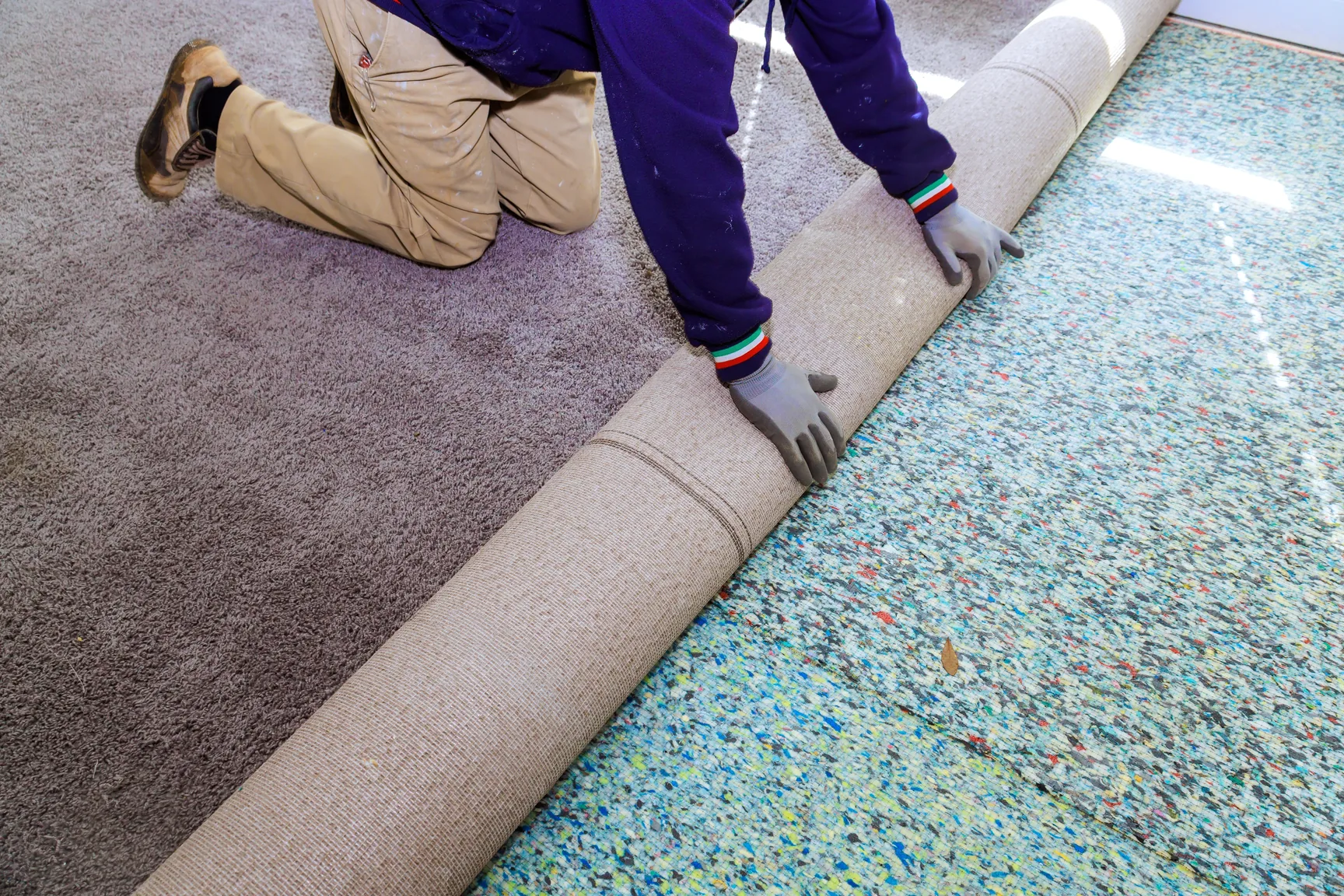
Arizona writes flooring into its contractor law by name: the statute’s own definition of a contractor includes floor covering contractors, so a flooring business that bids or installs for pay needs a license from the Arizona Registrar of Contractors unless a narrow exemption fits the job. Around that license, lead-safe renovation certification comes from EPA rather than a state office, old resilient flooring falls under the federal asbestos standard that state and county agencies enforce, and workers’ compensation is compulsory, bought from private carriers now that the former state fund is a private mutual insurer.
Policy mechanics live on the flooring contractor insurance page and the pages it links to. Arizona’s statutes, and the federal rules applied there, are the only subject below, whether you run a residential flooring crew, a commercial flooring subcontractor, a carpet installation company or a tile and stone shop.
Arizona’s contractor statute names floor covering, and the Registrar licenses it
Arizona licenses contractors statewide, and its contractor law names flooring outright: the statute’s definition of a contractor includes floor covering contractors, alongside subcontractors and specialty contractors. The Arizona Registrar of Contractors issues the license, and the law sorts it into commercial, residential and dual classes, each with a specialty tier for work that calls for a particular trade or craft.
Authority: A.R.S. §32-1101(A)(3)(b); A.R.S. §32-1102(5)–(7); A.R.S. §32-1151; A.R.S. §32-1121(A)(4); A.R.S. §32-1121(A)(14); A.R.S. §32-1103
Plenty of contractor laws leave a flooring owner to argue from general words like alter or improve. Arizona’s does not; the trade appears in the definition itself:
“Includes subcontractors, specialty contractors, floor covering contractors, hardscape contractors and consultants who represent that they are able to supervise or manage a construction project for the property owner's benefit, including hiring and firing specialty contractors, scheduling work on the project and selecting and purchasing construction material.”
Read that clause beside the chapter’s limiting sentence, and the reach of the license is settled from both directions:
“Only contractors as defined in this section are licensed and regulated by this chapter.”
Floor covering work is inside the definition, so it is inside the chapter, which then sorts licenses by the kind of property and skill involved. Its commercial specialty tier reads:
“Specialty commercial contracting, which is engaging in the contracting business in the performance of construction work requiring special skill and involving the use of specialized construction trades or crafts other than residential contracting.”
The Registrar’s own list names the work outright. “Floor Covering” is a classification of its own, issued for homes and for commercial work alike, and tile setting has its own, “Ceramic, Plastic and Metal Tile”. The floor covering classification reads:
“This classification allows the licensee to prepare a surface as required for the licensee to install and repair the following floor covering materials”
A dual license covers both sides of that line. Check the classification against the work you actually sell, homes, commercial space or both, before you apply.
A flooring business that bids, offers or performs installation work for pay holds an Arizona contractor’s license in good standing in its own name before it acts as a contractor, unless an exemption in the chapter covers it. The small-job exemption is narrow, and its dollar ceiling is quoted below as printed: the work must be casual or minor, it is lost when the job needs a local building permit or is split into smaller contracts to stay under the ceiling, and an unlicensed person who advertises must say “not a licensed contractor” in the advertisement. A retailer that installs the flooring it sells stays exempt only within the separate ceiling its own paragraph prints.
“It is unlawful for any person, firm, partnership, corporation, association or other organization, or a combination of any of them, to engage in the business of, submit a bid or respond to a request for qualification or a request for proposals for construction services as, act or offer to act in the capacity of or purport to have the capacity of a contractor without having a contractor's license in good standing in the name of the person, firm, partnership, corporation, association or other organization as provided in this chapter, unless the person, firm, partnership, corporation, association or other organization is exempt as provided in this chapter.”
Bidding is named in that section alongside doing the work, so a proposal sent before the license arrives is already the problem. Owners starting out sometimes lean on the small-job exemption instead. Its opening paragraph reads:
“Any person other than a licensed contractor engaging in any work or operation on one undertaking or project by one or more contracts, for which the aggregate contract price, including labor, materials and all other items, … is less than $1,000. The work or operations that are exempt under this paragraph shall be of a casual or minor nature. This exemption does not apply:”
Three exceptions follow, and each one tends to reach flooring work:
“(a) In any case in which the performance of the work requires a local building permit.”
“(b) In any case in which the work or construction is only a part of a larger or major operation, whether undertaken by the same or a different contractor, or in which a division of the operation is made in contracts of amounts less than $1,000, … for the purpose of evasion of this chapter or otherwise.”
“(c) To a person who uses any form of advertising to the public in which the person's unlicensed status is not disclosed by including the words "not a licensed contractor" in the advertisement.”
Splitting a room-by-room remodel into separate invoices does not keep the job small in the statute’s eyes, and neither does being one trade on a larger project. Stores that sell and install flooring have a paragraph of their own:
“Any materialman, manufacturer or retailer that furnishes finished products, materials or articles of merchandise and that does not install or attach such items or installs or attaches such items if the total value of the sales contract or transaction involving such items and the cost of the installation or attachment of such items to a structure does not exceed $1,000, including labor, materials and all other items, …”
Around a license that reaches the whole trade, a few habits pay off:
- Put the license number on proposals and invoices, and keep the firm’s standing current before any bid goes out.
- Check each subcontracted installer’s license too, since the definition counts subcontractors as contractors.
- Treat any job that needs a building permit as licensed work from the first conversation, whatever its size.
Certificate and additional insured wording, which builders ask for before a commercial start, are covered on the commercial flooring contractor insurance page.
Lead-safe renovation on Arizona floor jobs stays with EPA
No state lead renovation program operates in Arizona. EPA runs the renovation, repair and painting (RRP) program in Arizona, and it also runs the lead-based paint activities program there, so the firm certification a flooring contractor needs for paid work that disturbs paint in older homes and child-occupied facilities comes from EPA.
Authority: 40 CFR Part 745, Subpart E (EPA Renovation, Repair and Painting Rule)
Arizona’s absence from the list below is the finding. States that took over the renovation program are named; Arizona is not one of them:
“EPA administers the RRP Program in most Tribes, states and territories, but has authorized the following to operate their own programs: Alabama, Delaware, Georgia, Iowa, Kansas, Massachusetts, Mississippi, North Carolina, Oklahoma, Oregon, Rhode Island, Utah, Vermont, Wisconsin and the Minnesota Chippewa Tribe-Boise Forte (Nette Lake).”
A flooring firm that pulls painted baseboards, trim or door casings in housing or a child-occupied facility built before the federal cutoff year holds EPA firm certification and puts the work under a certified renovator; the rule reaches every paid firm, sole proprietors included. The Arizona Department of Health Services works on childhood lead poisoning and blood lead testing, not contractor certification.
Floors themselves seldom carry paint, so the lead question on an Arizona job usually arrives with the trim. Baseboards, shoe molding and door casings come off so the new floor can run under them, and the federal page states plainly who that reaches:
“In general, anyone who is paid to perform work that disturbs paint in housing and child-occupied facilities built before 1978 must be certified. This includes all firms, even sole proprietorships.”
“Firms cannot advertise or perform renovation activities covered by the RRP Rule in homes or child-occupied facilities built before 1978 without firm certification.”
Advertising is in that second sentence, which matters for a firm that markets older-home remodels. Useful questions at the walkthrough:
- Was the building put up early enough to fall under the rule, and is it housing or a place where young children spend time?
- Will your crew pull the painted trim, or will a carpenter or painter handle it before you arrive?
- Who on this job is the certified renovator, and is the firm certificate current?
Older homes gather several of these questions at once, which is why the residential flooring contractor insurance page treats them at length, and the general liability page works through how a policy responds to a lead claim.
Resilient flooring, mastic and the asbestos standard Arizona agencies enforce
Asbestos oversight in Arizona runs through the federal asbestos emission standard, which EPA has delegated to the Arizona Department of Environmental Quality and to the air agencies of Maricopa, Pima and Pinal counties. That standard reaches flooring work directly: it lists resilient floor covering as a nonfriable asbestos material, treats it as regulated once it becomes friable or is sanded, ground, cut or abraded, and requires an asbestos inspection before any renovation of a covered building.
Authority: 40 CFR §61.04(b)(4); 40 CFR §61.04(c)(9)(i); 40 CFR §61.141; 40 CFR §61.145(a); A.R.S. §32-1128(B)
Arizona’s part comes through delegation. The federal rule gives the state its own delegation table, with the asbestos row marked for the state department and the county agencies:
“Table 6 to Paragraph ( c )(9)( i )—Delegation Status for National Emission Standards for Hazardous Air Pollutants for Arizona”
That table is why a flooring crew in some counties deals with a county air office while one working elsewhere deals with the Arizona Department of Environmental Quality. The standard itself is identical in either place, and it names the material a flooring crew lifts:
“Category I nonfriable asbestos-containing material (ACM) means asbestos-containing packings, gaskets, resilient floor covering, and …”
Nonfriable is where resilient floor covering starts. How it comes up decides where it ends:
“Regulated asbestos-containing material (RACM) means (a) Friable asbestos material, (b) Category I nonfriable ACM that has become friable, (c) Category I nonfriable ACM that will be or has been subjected to sanding, grinding, cutting, or abrading, or …”
In a commercial, public or multi-unit residential building, the area is inspected for asbestos, nonfriable floor covering included, before old resilient flooring or mastic comes up. Removal methods that sand, grind, cut or abrade asbestos-containing floor covering turn it into regulated material with notification and work-practice duties; which agency takes the notice depends on the county. Arizona law also has the Registrar hand every licensee an asbestos pamphlet with each license and renewal.
A floor lifted whole is a different job from one ground off the slab. The standard puts the inspection ahead of either:
“prior to the commencement of the demolition or renovation, thoroughly inspect the affected facility or part of the facility where the demolition or renovation operation will occur for the presence of asbestos, including Category I and Category II nonfriable ACM.”
Which buildings the standard counts is set by its definition of a facility, and the carve-out at its end is the one flooring owners ask about:
“Facility means any institutional, commercial, public, industrial, or residential structure, installation, or building (including any structure, installation, or building containing condominiums or individual dwelling units operated as a residential cooperative, but excluding residential buildings having four or fewer dwelling units)”
Condominiums and larger residential, commercial and public buildings fall inside it; houses and other small residential buildings do not. Arizona’s own statute adds one more touchpoint, tied to the license rather than the job:
“The registrar shall distribute asbestos educational pamphlets with each contractor's license or license renewal.”
Before a commercial or multi-unit tear-out:
- Ask for the inspection before pricing, and read what it says about every layer and the adhesive, not just the top floor.
- Describe in the proposal how the floor will come up, and stop to talk with the owner if a floor meant to lift clean has to be ground instead.
- Confirm with the building owner which agency the notice goes to for that county before work is scheduled.
Asbestos on the policy side, including how finished work is treated after the owner moves back in, belongs on the general liability page. Under a builder’s contract, commercial demolition carries the contract’s own insurance terms, set out on the commercial page.
Arizona workers’ compensation: a compulsory law, an open market and an employee’s right to reject
Arizona’s workers’ compensation law is compulsory. Any employer with workers regularly employed in its business is subject to the law and must secure compensation, either by insuring with a carrier the Department of Insurance and Financial Institutions authorizes to write the coverage or by proving to the Industrial Commission its financial ability to pay, alone or through an approved pool. The coverage is sold in a competitive market; the state’s former fund was turned by statute into a private mutual insurer, which the law says is not a state agency, so it is described here by what it does rather than by name.
Authority: A.R.S. §23-902(A); A.R.S. §23-961(A); A.R.S. §23-961(B); A.R.S. §23-907(A); A.R.S. §23-906(A); A.R.S. §23-906(B); SB 1045 (ch. 268, Forty-ninth Legislature, Second Regular Session), §4
Arizona’s law reaches an employer by the kind of employment rather than by a size test written into the definition:
“Employers subject to this chapter are the state, each county, city, town, municipal corporation and school district and every person who employs any workers or operatives regularly employed in the same business or establishment under contract of hire, including covered employees pursuant to a professional employer agreement, except domestic servants.”
Regularly employed is the phrase that decides it for a small flooring shop. Once that fits, the chapter lists the ways to comply:
“Employers shall secure workers' compensation to their employees in one of the following ways:”
“By insuring and keeping insured the payment of such compensation with an insurance carrier authorized by the director of the department of insurance and financial institutions to write workers' compensation insurance in this state.”
“By furnishing to the commission satisfactory proof of financial ability to pay the compensation directly or through a workers' compensation pool approved by the commission in the amount and manner and when due as provided in this chapter.”
The second route belongs to employers able to prove to the Industrial Commission of Arizona they can pay benefits themselves or through an approved pool. Nothing else counts, and the law says so in terms aimed at the products sold:
“An employer may not secure compensation to comply with this chapter by any mechanism other than as provided in this section. No insurance, combination or other program may be marketed, offered or sold as workers' compensation that does not comply with this section.”
Compensation is secured before employees start work, through an authorized carrier or approved self-insurance; no substitute program may be sold as workers’ compensation. Failing to secure it costs an employer the benefits of the chapter; such an employer can be sued by an injured worker without the defenses of assumption of risk or contributory negligence, and faces the Commission’s special-fund recovery against it. Arizona law also lets an employee reject the compensation law in writing before any injury and keep the right to sue.
“Employers who are subject to and who fail to comply with section 23-961 or 23-962 shall not be entitled to the benefits of this chapter during the period of noncompliance, but shall be liable in an action under any other applicable law of the state. In such action the defendant shall not avail himself of the defenses of assumption of risk or contributory negligence.”
Losing those two defenses is what makes a gap in coverage expensive after an injury. Arizona also keeps an unusual provision on the employee side:
“but it shall be optional with employees to accept compensation as provided by this chapter or to reject the provisions of this chapter and retain the right to sue the employer as provided by law.”
Read that as the employee’s choice about how to be compensated, not a way for the business to opt out. The securing section quoted above allows only the two routes it lists, so an employee’s written rejection is no substitute for the employer’s own coverage.
Payroll rating and the certificates of installers you pay as subcontractors are policy questions rather than Arizona ones; the workers’ compensation page covers them. The findings here stop at the state line, and a crew working across it meets that state’s law.
Arizona offices a flooring owner may need, and what each handles
Oversight of insurance here belongs to the Arizona Department of Insurance and Financial Institutions, and its reach into this page runs through workers’ compensation: insurance regulator; its director authorizes the carriers that write workers’ compensation insurance in Arizona and sets the rules they follow. Agency licenses, ours included, can be looked up on NIPR.com.
Every other body named on this page is listed below with its role as the record states it. Links point to the statute or federal page that establishes or describes each one:
- Arizona Registrar of Contractors: statewide contractor licensing, which reaches floor covering contractors, in commercial, residential and dual classes
- U.S. Environmental Protection Agency (Renovation, Repair and Painting Program): administers RRP firm and renovator certification in Arizona, and the lead-based paint activities program; Arizona runs neither
- Arizona Department of Health Services: childhood lead poisoning prevention and blood lead surveillance; no contractor certification
- Arizona Department of Environmental Quality: state environmental agency; implements and enforces the delegated federal asbestos emission standard outside the counties that hold their own delegation
- Arizona Department of Environmental Quality, with the Maricopa County, Pima County and Pinal County air agencies (federal asbestos emission standard, delegated): asbestos renovation and demolition oversight under the federal emission standard, delegated to the state department and three county agencies
- Industrial Commission of Arizona: administers the workers’ compensation chapter, approves self-insured employers and pools, and runs the special fund that pays injured workers of uninsured employers
Since the Registrar’s license sits under every bid, it is the office to keep closest track of. Absent from the list is any state workers’ compensation fund; that coverage now comes from the open market.
Where Arizona flooring crews work: metro areas and their counties
These cards show the largest metropolitan areas on Arizona’s list, drawn from U.S. Census Bureau delineations, with the counties each one takes in. Because the contractor license is statewide, its answer does not change from metro to metro; the asbestos section above is where the county can change which office takes a notice.
Phoenix-Mesa-Chandler, AZ
Takes in: Maricopa County and Pinal County.
Flooring jobs here need the same statewide license from the Arizona Registrar of Contractors.
Tucson, AZ
Takes in: Pima County.
Flooring jobs here need the same statewide license from the Arizona Registrar of Contractors.
Prescott Valley-Prescott, AZ
Takes in: Yavapai County.
Flooring jobs here need the same statewide license from the Arizona Registrar of Contractors.
Lake Havasu City-Kingman, AZ
Takes in: Mohave County.
Flooring jobs here need the same statewide license from the Arizona Registrar of Contractors.
Yuma, AZ
Takes in: Yuma County.
Flooring jobs here need the same statewide license from the Arizona Registrar of Contractors.
Flagstaff, AZ
Takes in: Coconino County.
Flooring jobs here need the same statewide license from the Arizona Registrar of Contractors.
What each Arizona finding means for the policies on a flooring account
With the Arizona rules located, the coverage that answers when a job goes wrong is the same set of policies a flooring business carries anywhere, and each has its own page:
- Injury or property damage claims from others, finished work and tear-out go to general liability.
- Your crew, and the question of subcontracted installers, go to workers’ compensation.
- Tools and stock riding between jobs, from saws and sanders to stretchers, go to inland marine coverage for contractors’ tools and equipment.
Weighting among them depends on the floors you put down, and each service page, from carpet installation to tile and stone, handles its own jobs. Once the Arizona picture is clear, a quote request is the natural next step.
Residential Flooring Contractor Insurance
A panel for Arizona in rows. Contractor license: a state license or registration can reach this work. It connects to the General Liability page. Lead-safe renovation: the federal program applies in this state. It connects to the Residential Flooring Contractor Insurance page. Asbestos flooring and mastic: a state program reaches flooring removal. It connects to the General Liability page. Workers’ compensation: bought in the open market. It connects to the Workers Compensation page. Each row pairs a state rule with the page on this site that discusses it. No figures are shown.
Nearby states we also write
Related coverage and services
What we insure
Outside authorities
- Arizona Department of Insurance and Financial Institutions
- Arizona Registrar of Contractors
- Arizona Department of Environmental Quality
- Arizona Department of Environmental Quality, with the Maricopa County, Pima County and Pinal County air agencies (federal asbestos emission standard, delegated)
- U.S. Environmental Protection Agency (Renovation, Repair and Painting Program)
- Arizona Department of Health Services
- Industrial Commission of Arizona
Arizona flooring contractor insurance questions
Does an Arizona floor installer have to be a licensed contractor?
Yes, unless an exemption applies. Arizona’s definition of a contractor expressly includes floor covering contractors, and the law makes it unlawful to bid, offer or act as a contractor without a license in good standing in the business’s own name. The Arizona Registrar of Contractors issues the license.
When does Arizona’s small-job exemption stop protecting an unlicensed flooring installer?
The exemption covers only casual or minor work under the dollar ceiling the statute prints. It is lost when the job needs a local building permit, when the work is part of a larger operation or split into smaller contracts to stay under the ceiling, and when the person advertises without including the words “not a licensed contractor”.
Can an Arizona flooring retailer install the products it sells without a contractor’s license?
Only within a separate ceiling. The retailer exemption covers a seller that installs what it sells when the combined value of the sale and the installation stays within the figure its own paragraph prints, labor and materials included.
Is lead-safe renovation certification for Arizona flooring firms run by the state?
No. Arizona is not on EPA’s list of states authorized to run the renovation program, so certification comes from the U.S. Environmental Protection Agency (Renovation, Repair and Painting Program). EPA also administers the lead-based paint activities program in Arizona. The Arizona Department of Health Services works on childhood lead poisoning and blood lead testing, not contractor certification.
Who enforces the asbestos rules on a flooring tear-out in Arizona?
EPA has delegated the federal asbestos emission standard to the Arizona Department of Environmental Quality and to the air agencies of the counties that hold their own delegation, so which agency takes the notice depends on the county. The standard lists resilient floor covering as nonfriable material and treats it as regulated once it is friable or is sanded, ground, cut or abraded.
Can an Arizona flooring employer skip workers’ compensation if an employee agrees to it?
No. Arizona law lets an employee reject the compensation law in writing before any injury and keep the right to sue, but the employer’s duty to secure coverage stands: the statute allows only an authorized carrier or approved self-insurance, and an employer that fails to secure it loses the chapter’s benefits and key defenses in a lawsuit.
Is there still a state workers’ compensation fund in Arizona?
No. The state’s former fund was turned by statute into a private mutual insurer that the law says is not a state agency. Coverage is bought from carriers the Arizona Department of Insurance and Financial Institutions authorizes, or an employer qualifies with the Industrial Commission of Arizona to self-insure.
This page describes insurance for flooring contractors and installers operating in this state. It is general information, not legal advice and not a statement of coverage. Licensing, lead-safe and asbestos requirements change; verify current requirements with the agency named before relying on them.
Get a quote for your Arizona flooring work
Say which Arizona metros your crews cover, what the Registrar has licensed your firm for and what sits under the old floor, and we will put a program together to match.