
Flooring Contractor Insurance by State
New Mexico Flooring Contractor Insurance
In New Mexico the contractor license and workers’ compensation are linked: install floors for pay and you need a New Mexico Regulation and Licensing Department, Construction Industries Division license, and that license brings the coverage duty with it.
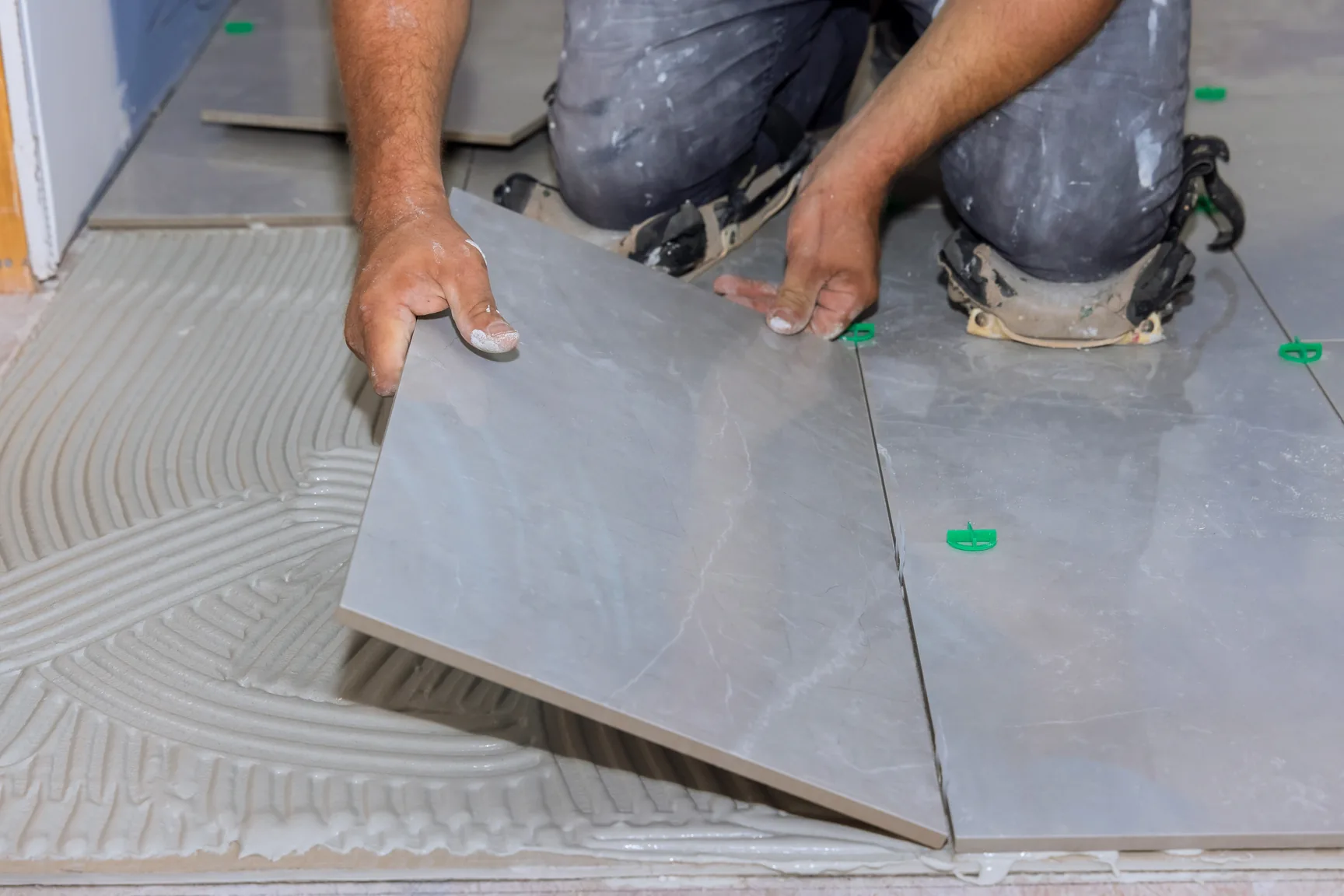
New Mexico ties two obligations together: flooring installation in a building is contracting that needs a license from the New Mexico Regulation and Licensing Department, Construction Industries Division, and the state’s workers’ compensation law reaches every employer in a licensed activity no matter how few people it employs. So a flooring business that hires even one installer carries both the license and the coverage, while lead-safe renovation certification comes from EPA and old resilient flooring falls under the federal asbestos standard that the New Mexico Environment Department and, around Albuquerque, a county program administer.
General questions about how each policy responds are answered on the flooring contractor insurance page and the pages linked from it. What follows stays with New Mexico, and it applies whether you run a residential flooring crew in occupied houses, a commercial flooring firm that subcontracts to general contractors, a carpet installation company or a tile and stone shop.
A Construction Industries Division license covers New Mexico flooring work by definition
New Mexico licenses construction contractors statewide through the Construction Industries Division of the Regulation and Licensing Department. The Construction Industries Licensing Act defines contracting as constructing, altering, repairing, installing or demolishing any building or other structure, and no one may act as a contractor without a division license classified for the work. The division’s classification rule names no floor covering classification; it sends any specialty it does not list to a catch-all general specialty classification.
Authority: NMSA 1978, § 60-13-2(A); NMSA 1978, § 60-13-3(A); NMSA 1978, § 60-13-3(B); NMSA 1978, § 60-13-3(D)(14); NMSA 1978, § 60-13-3(D)(18); NMSA 1978, § 60-13-12(A); NMSA 1978, § 60-13-49(B); 14.6.6.9 NMAC
Nowhere does the licensing act use the word flooring. It does not need to, because its definition of contracting is written around verbs that describe a flooring job from start to finish:
“Contracting includes constructing, altering, repairing, installing or demolishing any:”
The object of those verbs is broad enough to take in every house, store and office a flooring crew walks into:
“building, stadium or other structure;”
And a business that only ever works under a general contractor does not slip out of the definition by being second in line:
“includes subcontractor and specialty contractor;”
Put those three pieces next to the license section and the result for a flooring company is plain:
“No person shall act as a contractor without a license issued by the division classified to cover the type of work to be undertaken.”
Installation work in New Mexico buildings calls for a Construction Industries Division license whose classification covers that work, held before the business bids, and the license is issued to a business that employs or is owned by a qualifying party certified by the division. The license also needs a license bond, the proof of responsibility quoted below as printed, and the division says workers’ compensation coverage is required for every licensed entity. The statute’s handyman exemption for casual, minor work has a yearly ceiling quoted below as printed, it does not reach a job that is part of a larger operation, and it is lost by advertising as a contractor; a separate exemption covers short-term repairs to commercial property for items outside the adopted building codes, again under a ceiling quoted as printed.
Licensing runs through the business, with a certified individual standing behind it, as the division explains on its application page:
“CID issues licenses to qualified business entities that employ or are owned by one or more Qualifying Parties (QP) who are validly certified by CID to perform the scope of work in which the licensee intends to engage.”
The bond requirement, quoted exactly as the statute prints it:
“Proof of responsibility shall be a bond of ten thousand dollars ($10,000) acceptable to the director and underwritten by a corporate surety authorized to transact business in New Mexico.”
The handyman exemption is the one owner-operators ask about most. Its core reads:
“an individual who works on one undertaking or project at a time that, in the aggregate or singly, does not exceed seven thousand two hundred dollars ($7,200) compensation a year, the work being casual, minor or inconsequential, such as handyman repairs;”
It then attaches conditions, among them these two:
“the work is not part of a larger or major operation undertaken by the same individual or different contractor;”
“the individual does not advertise or maintain a sign, card or other device which would indicate to the public that he is qualified to engage in the business of contracting;”
A flooring business with a truck sign, a website or a business card is advertising, and a floor laid during a remodel can be part of a larger operation, so treat the exemption as the rare case rather than the plan. The commercial repair exemption is narrower still in subject matter:
“a person who performs work consisting of short-term depreciable improvements to commercial property to provide needed repairs and maintenance for items not covered by building codes adopted by the construction industry commission if the total amount paid the person for the work on a single undertaking, including materials, services and wages of those who work for him, does not exceed the sum of five thousand dollars ($5,000).”
On the open question of classification: the division’s rule, read in full for this page, lists no floor covering classification, and we do not name one here. Before you apply or renew, ask the New Mexico Regulation and Licensing Department, Construction Industries Division which classification it will issue for the work you actually do, and keep that answer with your license file. Habits that help:
- Hold the license in the business’s own name before you bid, not just before you start; the obligation sentence above puts the license ahead of the bid.
- If the person whose certification supports the license leaves, treat that as a licensing event and call the division before the next job.
- Keep a copy of the license, the bond and your coverage certificate together, because a general contractor onboarding you is likely to ask for all three in one email.
Additional insured wording, and the certificate of insurance a general contractor requests, are explained on the commercial flooring contractor insurance page; what homeowners tend to ask for is on the residential page.
No New Mexico lead license: EPA certifies flooring firms directly
Lead renovation in New Mexico is a federal matter only. The renovation, repair and painting (RRP) rule is administered there by EPA directly, and it runs the lead abatement, inspection and risk assessment program there as well, so a flooring company that disturbs paint on covered work holds its firm certification from EPA.
Authority: 40 CFR Part 745
The U.S. Environmental Protection Agency lists New Mexico among the places where it keeps the whole lead program in its own hands:
“EPA administers the Lead-Based Paint Activities Program in Alaska, Arizona, Florida, Idaho, Montana, Nevada, New Mexico, New York, South Carolina, South Dakota and Wyoming, as well as the territories of American Samoa, Guam, the Northern Mariana Islands and the U.S. Virgin Islands, and most Tribal lands.”
Under the federal rule, taking out painted thresholds, baseboards, shoe molding or door casings in covered housing or a child-occupied facility is renovation work: the firm is certified by EPA, a certified renovator is assigned to the job, and the rule’s work practices apply, with the building-age threshold quoted below as printed. No New Mexico lead license stands in for the federal one.
Small shops sometimes assume a certification rule is meant for large renovation firms. EPA addresses that directly:
“In general, anyone who is paid to perform work that disturbs paint in housing and child-occupied facilities built before 1978 must be certified. This includes all firms, even sole proprietorships.”
Painted floors are uncommon. Painted trim is not, and a floor replacement usually means pulling baseboard, shoe molding, thresholds or casing so the new surface can run beneath them. A few ways to keep that from becoming a surprise:
- Ask the construction year on the first call and write it on the estimate; the federal line in the quote above depends on it.
- Note who lives or spends time in the space. A rental, a family home or a room where young children are cared for each changes how the rule reads.
- Agree in writing who removes painted trim when another trade is on the job, so it is clear which firm is disturbing paint.
Occupied older homes are the setting where these questions pile up, which is why the residential flooring contractor insurance page spends time on them. How a liability policy treats lead and other contaminant claims is a policy matter, handled on the general liability page.
Old resilient flooring and New Mexico’s two asbestos administrators
Asbestos oversight for New Mexico renovation work runs through the federal asbestos emission standard, which the state has adopted by rule and EPA has delegated to the New Mexico Environment Department everywhere outside Bernalillo County and to the Albuquerque-Bernalillo County Air Quality Control Board inside it. The standard reaches flooring work directly: it lists resilient floor covering as a nonfriable asbestos material, treats it as regulated once it becomes friable or is sanded, ground, cut or abraded, and requires an asbestos inspection before any renovation of a covered building.
Authority: 20.2.78.2 NMAC; 20.2.78.9 NMAC; 20.11.64.2 NMAC; 40 CFR §61.04(c)(6); 40 CFR §61.141; 40 CFR §61.145(a)
Where a job sits on the map decides which office you deal with. The federal delegation table splits New Mexico in two:
“The New Mexico Environment Department (NMED) has been delegated the following part 61 standards promulgated by the EPA, as amended in the Federal Register through January 15, 2017.”
“The Albuquerque-Bernalillo County Air Quality Control Board (ABCAQCB) has been delegated the following part 61 standards promulgated by EPA, as amended through January 23, 2017.”
Inside Bernalillo County, part of the Albuquerque metro, the local program describes its own reach this way:
“The Air Quality Program issues permits for stationary sources of air pollution and open burning, and also oversees the regulated processes for fugitive dust, asbestos removal, and demolition activities.”
The federal definitions are where flooring enters the picture. Old vinyl tile and sheet goods are named outright:
“Category I nonfriable asbestos-containing material (ACM) means asbestos-containing packings, gaskets, resilient floor covering, and …”
Nonfriable does not mean exempt. The material becomes regulated as soon as a crew does what tear-out crews usually do to it:
“Regulated asbestos-containing material (RACM) means (a) Friable asbestos material, (b) Category I nonfriable ACM that has become friable, (c) Category I nonfriable ACM that will be or has been subjected to sanding, grinding, cutting, or abrading, or …”
The standard applies to a wide range of buildings, with one residential carve-out written into the definition itself:
“Facility means any institutional, commercial, public, industrial, or residential structure, installation, or building (including any structure, installation, or building containing condominiums or individual dwelling units operated as a residential cooperative, but excluding residential buildings having four or fewer dwelling units)”
And for those buildings, an inspection comes before the work, not during it:
“prior to the commencement of the demolition or renovation, thoroughly inspect the affected facility or part of the facility where the demolition or renovation operation will occur for the presence of asbestos, including Category I and Category II nonfriable ACM.”
Asbestos inspection of the work area comes first in a commercial, public or multi-unit residential building, nonfriable floor covering included, before old resilient tile, sheet flooring or mastic comes up. When a renovation disturbs regulated asbestos material above the notification threshold quoted below as printed, the Air Quality Bureau is notified, or the Albuquerque-Bernalillo County Air Quality Program inside Bernalillo County, and the Environment Department says every contractor who removes asbestos materials must be licensed by the Construction Industries Division.
The New Mexico Environment Department, Air Quality Bureau (asbestos) is clear that a flooring contractor cannot leave all of this to the building owner:
“NESHAP requirements apply to both the facility owner and to the contractor and states that renovation and/or demolition notices be submitted to the Air Quality Bureau when certain conditions are met.”
Its notice trigger for renovations is quoted as the department prints it:
“For renovations when the quantity of Regulated Asbestos Containing Material is greater than 260 linear feet, 160 square feet or 35 cubic feet.”
And removal itself ties back to the same licensing division as the rest of this page:
“All contractors who remove asbestos materials must be licensed by the New Mexico Construction Industries Division, …”
Practical steps for crews who lift old floors in New Mexico:
- On commercial, public or multi-unit work, ask for the asbestos inspection before you price, and read the part about floors and adhesive rather than stopping at pipe insulation.
- Work out at the bid stage whether the job falls inside Bernalillo County, since that decides which office receives any notice.
- Where the inspection finds regulated material, write the removal into the proposal as a separate scope for a properly licensed removal contractor, and keep your crew off it.
How asbestos claims and finished work are treated under a liability policy is covered on the general liability page. Tear-out performed under a general contractor brings that contract’s insurance terms into play, which the commercial page explains.
New Mexico workers’ compensation follows the contractor license, not the headcount
New Mexico’s Workers’ Compensation Act applies to employers above a minimum headcount, quoted below as printed, and to every employer engaged in work that the Construction Industries Licensing Act requires to be licensed, whatever its number of employees. A flooring contractor is therefore covered from its first employee, and the employer secures the coverage through an authorized insurer or a self-insurance certificate from the director. A statute-created insurer also writes that coverage; its statute organizes it as a domestic mutual insurance company and says it is not a state agency, so it is described here by what it does rather than by name.
Authority: NMSA 1978, § 52-1-6(A); NMSA 1978, § 52-1-6(B); NMSA 1978, § 52-1-4(A); NMSA 1978, § 52-5-1.2; NMSA 1978, § 52-9-4; NMSA 1978, § 52-9-15(A); NMSA 1978, § 52-9-21
This is the section that makes New Mexico different. The Act sets a general headcount, then sets it aside for licensed construction work:
“The provisions of the Workers' Compensation Act shall apply to employers of three or more workers; provided that act shall apply to all employers engaged in activities required to be licensed under the provisions of the Construction Industries Licensing Act [Chapter 60, Article 13 NMSA 1978] regardless of the number of employees.”
The New Mexico Workers’ Compensation Administration puts contractors at the head of its list of businesses that need the insurance:
“Contractors engaged in contracting or licensed under the New Mexico Construction Industries Licensing Act.”
The licensing division says the same from its side of the counter:
“NOTE: Workers Compensation coverage is required for all licensed entities.”
A New Mexico flooring contractor with employees has workers’ compensation in place before the first job, with its insurer filing the certificate of coverage with the Workers’ Compensation Administration. A partner or self-employed owner is not automatically covered and may elect coverage by filing with the director, and the Administration’s Employer Compliance Bureau lists contractors under the licensing act first among the businesses that need the insurance.
Proof of coverage moves from the insurer to the state, not from you:
“Every employer subject to the Workers' Compensation Act shall direct his insurance carrier to file, and the insurance carrier shall file, in the office of the director evidence of workers' compensation insurance coverage in the form of a certificate containing that information required by regulation of the director.”
And that insurer has to be one authorized to do business under the Insurance Code:
“The required certificate must be provided by an authorized insurer as defined in Section 59A-1-8 NMSA 1978.”
A financially solvent employer has the alternative of a certificate from the director:
“In case any employer is able to show to the satisfaction of the director that he is financially solvent and that providing insurance coverage is unnecessary, the director shall issue him a certificate to that effect, which shall be filed in lieu of the certificate of insurance.”
Owners are a separate question from employees. A partner or self-employed person comes under the Act only by choosing to:
“An election to be subject to the Workers' Compensation Act by employers of private domestic servants or farm and ranch laborers, by persons for whom the services of qualified real estate sales persons are performed or by a partner or self-employed person may be made by filing, in the office of the director, either a sworn statement to the effect that the employer accepts the provisions of the Workers' Compensation Act or an insurance or security undertaking as required by Section 52-1-4 NMSA 1978.”
The statute-created insurer mentioned in the finding above is one option among the authorized insurers, not a requirement, and this page describes it by what it does rather than by name. Which payroll class fits a flooring crew, and how per-job installers show up at audit, are policy questions answered on the workers’ compensation page.
Where New Mexico’s flooring rules are administered
The state’s insurance regulator is the New Mexico Office of Superintendent of Insurance. Anyone checking an insurance agency’s license, ours included, can search NIPR.com.
Every other office named on this page appears below, each linked to its own site with the role the record verified for it:
- New Mexico Regulation and Licensing Department, Construction Industries Division: statewide contractor licensing under the Construction Industries Licensing Act, which reaches building alteration and installation work, flooring included; also permits and inspections
- New Mexico Workers’ Compensation Administration: administers the Workers’ Compensation Act: receives insurers’ coverage certificates, enforces employer compliance and runs the Uninsured Employers’ Fund
- New Mexico Environment Department: state environmental agency; its Air Quality Bureau implements the delegated federal asbestos emission standard outside Bernalillo County
- New Mexico Environment Department, Air Quality Bureau (asbestos): asbestos renovation and demolition notifications under the federal emission standard the state has adopted, everywhere outside Bernalillo County
- Albuquerque-Bernalillo County Air Quality Program (City of Albuquerque Environmental Health Department): oversees asbestos removal and demolition inside the City of Albuquerque and Bernalillo County, under the county board’s adoption of the federal standards
Two names on that list deserve a second look. The licensing division appears in the asbestos section as well as the licensing one, and the workers’ compensation office cares whether you hold a license, so a change in one file is worth checking against the other two.
New Mexico metro areas under the statewide license
These cards list each metropolitan area the U.S. Census Bureau delineates for New Mexico, largest first, with the New Mexico counties in each one. Because one state division issues the license, every card carries the same licensing line.
Albuquerque, NM
Counties in this metro: Bernalillo County, Sandoval County, Torrance County and Valencia County.
Flooring work in these counties falls under the same statewide license from the New Mexico Regulation and Licensing Department, Construction Industries Division.
Las Cruces, NM
Counties in this metro: Doña Ana County.
Flooring work in these counties falls under the same statewide license from the New Mexico Regulation and Licensing Department, Construction Industries Division.
Santa Fe, NM
Counties in this metro: Santa Fe County.
Flooring work in these counties falls under the same statewide license from the New Mexico Regulation and Licensing Department, Construction Industries Division.
Farmington, NM
Counties in this metro: San Juan County.
Flooring work in these counties falls under the same statewide license from the New Mexico Regulation and Licensing Department, Construction Industries Division.
Assembling a New Mexico flooring insurance plan around these rules
New Mexico’s rules decide which license, certification and notice you need. The policies that sit underneath them are the usual ones, each with its own page:
- Damage or injury to others, including completed floors and tear-out: general liability.
- Your employees and the installers you pay by the job: workers’ compensation.
- Trowels, saws, rollers and material in transit between sites: inland marine coverage for contractors’ tools and equipment.
Substrates and tear-outs differ between carpet work and tile setting, so the carpet installation and tile and stone pages handle each separately. Pricing New Mexico work starts with a quote request.
Residential Flooring Contractor Insurance
A panel for New Mexico in rows. Contractor license: a state license or registration can reach this work. It connects to the General Liability page. Lead-safe renovation: the federal program applies in this state. It connects to the Residential Flooring Contractor Insurance page. Asbestos flooring and mastic: a state program reaches flooring removal. It connects to the General Liability page. Workers’ compensation: bought in the open market. It connects to the Workers Compensation page. Each row pairs a state rule with the page on this site that discusses it. No figures are shown.
Related coverage and services
What we insure
Outside authorities
- New Mexico Office of Superintendent of Insurance
- New Mexico Regulation and Licensing Department, Construction Industries Division
- New Mexico Environment Department
- New Mexico Environment Department, Air Quality Bureau (asbestos)
- Albuquerque-Bernalillo County Air Quality Program (City of Albuquerque Environmental Health Department)
- U.S. Environmental Protection Agency
- New Mexico Workers’ Compensation Administration
New Mexico flooring contractor insurance questions
Does a flooring installer in New Mexico need a state contractor license?
Yes. The Construction Industries Licensing Act counts installing, altering or repairing in any building as contracting, a contractor includes a subcontractor or specialty contractor, and no one may act as a contractor without a license from the New Mexico Regulation and Licensing Department, Construction Industries Division classified for the work. The narrow handyman and commercial repair exemptions have conditions and ceilings of their own.
Which license classification does the New Mexico division issue for floor covering work?
The division’s classification rule names no floor covering classification. It sends any specialty it does not list to a catch-all decided case by case, and its residential and general building classifications include all of the general specialty work. Which classification the division issues for a flooring business is a question to put to the division itself.
My New Mexico flooring company has only one employee. Do we still need workers’ compensation?
Yes. The Workers’ Compensation Act reaches every employer engaged in work that must be licensed under the Construction Industries Licensing Act, whatever its number of employees, and the division says coverage is required for every licensed entity. A partner or self-employed owner is not covered automatically and may elect coverage by filing with the director.
Who certifies New Mexico flooring firms for work that disturbs old paint?
EPA. New Mexico runs no state lead program, and EPA administers both renovation certification and lead abatement, inspection and risk assessment there, so a firm removing painted trim in covered housing or a child-occupied facility holds EPA firm certification.
Who handles asbestos notices for flooring tear-out in Albuquerque?
Inside Bernalillo County the federal asbestos standard is delegated to the county’s air quality board and overseen by the Albuquerque-Bernalillo County Air Quality Program (City of Albuquerque Environmental Health Department). Everywhere else in New Mexico, renovation notices go to the New Mexico Environment Department, Air Quality Bureau (asbestos).
Can old vinyl floor tile be an asbestos issue in a New Mexico commercial building?
It can. The federal standard New Mexico has adopted lists resilient floor covering as a nonfriable asbestos material, treats it as regulated once it is sanded, ground, cut or abraded, and requires an asbestos inspection before a renovation of a covered building starts.
Which New Mexico office regulates insurance companies?
The New Mexico Office of Superintendent of Insurance is the state’s insurance regulator, and the authorized insurers that file workers’ compensation certificates are authorized under the Insurance Code it administers.
This page describes insurance for flooring contractors and installers operating in this state. It is general information, not legal advice and not a statement of coverage. Licensing, lead-safe and asbestos requirements change; verify current requirements with the agency named before relying on them.
Get a quote for your New Mexico flooring work
Tell us where your New Mexico license stands, which old floors you plan to lift and who installs for you, and we will match the coverage to that picture.