
Flooring Contractor Insurance by State
Louisiana Flooring Contractor Insurance
Louisiana licenses flooring at the state level, under a trade its contractor board names, and sorts home jobs into their own licenses, so the first question on a Louisiana bid is which license the job sits under.
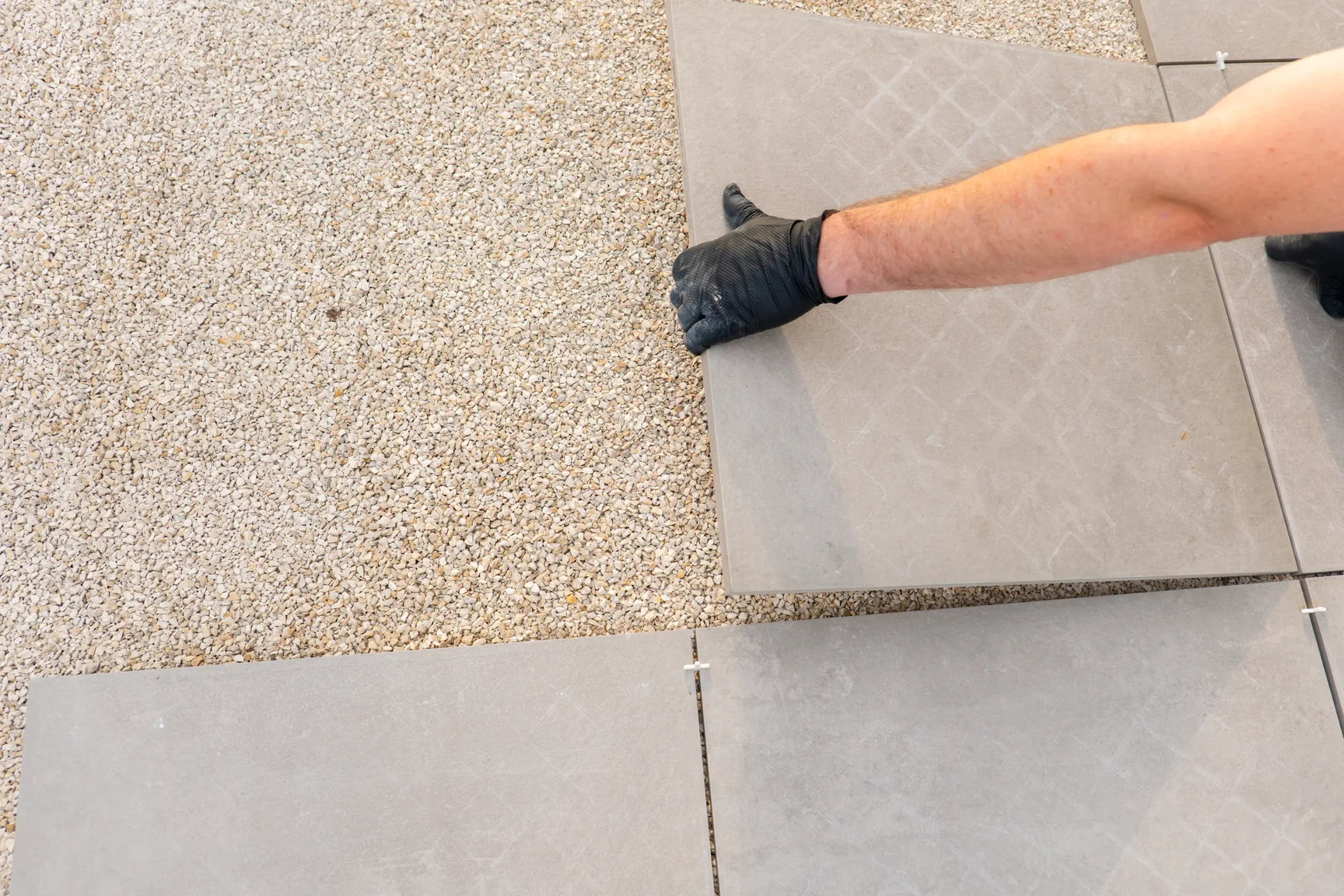
Louisiana gives flooring a licensed trade of its own: the Louisiana State Licensing Board for Contractors names Flooring and Decking as a subclassification of its Building Construction license, and on existing homes a flooring firm that contracts with the owner works under a home improvement license or, on the larger jobs the statute prints, a residential construction license. Around that state license, lead-safe renovation certification comes from EPA, the Louisiana Department of Environmental Quality’s asbestos rule names resilient floor covering, and workers’ compensation is compulsory from the first employee, secured through an authorized insurer, a group self-insurance fund or approved self-insurance, with no state fund.
Here the license is issued in one place, the trade has a name in the board’s rules, and a building permit depends on it. What varies is which license a given job calls for, and that turns on whether the work is commercial or on a home and on what the whole project is worth.
General questions about the policies are answered on the flooring contractor insurance page and the pages linked from it. Below is only what is particular to Louisiana, whether you run a residential flooring crew in occupied homes, a commercial flooring firm bidding under general contractors, a carpet installation company or a tile and stone setter.
Flooring and Decking: the trade Louisiana licenses by name
The State Licensing Board for Contractors issues Louisiana’s contractor licenses, and its rules give flooring its own trade: Flooring and Decking is a subclassification of the Building Construction license that covers stone, resilient flooring, ceramic tile, terrazzo, carpeting and floor underlayments. On homes, a flooring firm that contracts with the owner works under a home improvement license, or under a residential construction license on the larger jobs the statute prints.
Authority: La. R.S. 37:2150.1(3), (4)(a), (11); La. R.S. 37:2156.1(E); La. R.S. 37:2157(A)(17), (18); La. R.S. 37:2160(B), (D); La. R.S. 37:2163(A)(1); LAC 46:XXIX.301(C), (F)
Before a flooring firm bids or performs commercial work at the project value the statute prints, it holds the Flooring and Decking subclassification or a Building Construction license, and project value counts labor, materials and every direct and indirect expense, whoever pays them. On an existing home it holds a home improvement license once a job reaches the lower figure the statute prints and a residential construction license above the upper one; both license applications carry certificates of workers’ compensation and liability coverage. A flooring subcontractor working for a residential construction licensee, or doing home improvement work for a Building Construction licensee, is exempt from licensure, and a local building department may not issue a permit to anyone without the license the work calls for.
The board’s rule does not bury flooring inside a general building scope; it writes out the materials:
“Flooring and Decking: the installation, maintenance, or repair of all types of stone, marble, granite, slate and resilient flooring and flooring systems (vinyl, bamboo, parquet, rubber, polyethylene, cork, linoleum, etc.), ceramic tile, terrazzo systems and slabs carpeting, and decking, poured and sealed concrete or …”
“as well as floor underlayments, etc. Does not include flooring materials used on walls and ceilings, etc. Flooring and decking is a subclassification of building construction.”
Note the last limit in that definition: tile on a floor is inside the subclassification, and the same tile on a wall or ceiling is not, which a tile and stone business should weigh before quoting a bathroom floor to ceiling.
Whether the subclassification is needed on a commercial job depends on the value of the work, measured the way the statute measures it. The definition of a contractor carries the commercial line:
“Any building, highway, road, railroad, sewer, grading, excavation, pipeline, public utility structure, project development, housing, or housing development, improvement, or any other construction undertaking for which the project value is fifty thousand dollars or more when the property is to be used for commercial purposes.”
The measure is the project, not your invoice line, so when a general contractor asks only for an installation price, learn the full project value before deciding which license the bid sits under.
Homes run on a different track. Work on an existing house that reaches the statute’s lower value is home improvement work, and the statute defines the contractor who does it this way:
“"Home improvement contractor" means any person who undertakes or attempts to undertake or submits a price or bid or offers to construct, supervise, superintend, oversee, direct, perform, or in any manner assume charge of a home improvement project for which the project value is at least seven thousand five hundred dollars but less than fifty thousand dollars.”
Above that band the work moves to the residential construction license. On both residential licenses, insurance appears in the licensing law itself, because the application comes with proof of coverage attached:
“Residential construction and its subclassifications, mold remediation, and home improvement applicants shall be required to submit certificates evidencing workers' compensation coverage in compliance with Title 23 of the Louisiana Revised Statutes of 1950, and liability insurance in a minimum amount of one hundred thousand dollars …”
That ties the workers’ compensation and liability program to the license file, so treat a lapse in either as a licensing question too.
Subcontracting changes the picture again. A flooring crew that works for a residential construction licensee is in an exemption the statute writes out:
“Any person performing work as a subcontractor for a residential construction license holder, except for electrical, mechanical, plumbing, mold remediation, asbestos, or hazardous materials scopes of work.”
Read the exceptions in that sentence closely. Flooring is not among them, but asbestos and hazardous materials are, which matters to a crew whose job includes taking up an old floor; the asbestos section below covers when a tear-out becomes that kind of work. Finally, the permit desk enforces the license, and Louisiana does not leave that check to each parish’s discretion:
“A local building department shall not issue a building permit to any person who does not hold an active license in the appropriate classification for the scope of work for which the permit is issued.”
- Settle two answers before the bid: is the job commercial or on a home, and what is the whole project worth by the statute’s measure? Together they decide the license, and the license decides whether the permit issues.
- Working as a subcontractor, ask what license the firm hiring you holds. The exemptions run through the hiring firm’s license, so its classification is a fact your bid depends on.
- Read your scope against the Flooring and Decking definition before quoting wall tile, and agree who handles the wall work if the job carries both.
Proof of insurance for a general contractor, including the additional insured wording that often travels with it, is covered on the commercial flooring contractor insurance page; what a homeowner may ask to see is on the residential page.
Louisiana leaves lead-safe renovation certification to EPA
For renovation, repair and painting (RRP) work in Louisiana, EPA runs the program itself, so a flooring firm gets its lead-safe firm certification and renovator training from EPA. The state’s own lead program, run by the Department of Environmental Quality, covers abatement rather than renovation, and says it has no authority over the renovation rule.
Authority: 40 CFR Part 745, Subpart E; LAC 33:III.2809
The finding has two parts, and both are useful. Louisiana does run a lead program; it aims it at abatement, not at the renovation work a flooring crew does. For renovation the certification is federal, and EPA’s own page states who needs it:
“In general, anyone paid to perform work that disturbs paint in housing and child-occupied facilities built before 1978 must be certified in lead-safe work practices. This includes all firms, even sole proprietorships.”
The state agency says the same thing from its side, which settles where a flooring firm’s certification comes from:
“This federal regulation applies to companies that perform renovations, remodeling, repairs, and painting in target housing and child-occupied facilities. LDEQ does not have authority over this program.”
When painted baseboards, shoe molding, trim or door casings come up in older homes or child-occupied facilities, the flooring job comes under EPA’s renovation rule: the firm is EPA-certified, a certified renovator directs or trains the crew, and lead-safe work practices apply. Abatement, by contrast, is its own licensed line of work in Louisiana, with individuals accredited by the Department of Environmental Quality and abatement contractors licensed by the State Licensing Board for Contractors.
For flooring, paint is usually at the edges: the baseboards, shoe molding and casings the obligation sentence names. Put the build date and whether children use the space on the estimate sheet, and know which certified renovator is assigned before the first board comes off.
Older homes raise this question alongside the asbestos one, which is why the residential flooring contractor insurance page treats them together. How a liability policy handles a claim involving lead or other contaminants is worked through on the general liability page.
Louisiana’s asbestos rule names resilient floor covering and its mastic
Louisiana’s asbestos program belongs to the state, and its rule speaks to flooring by name. The Department of Environmental Quality’s asbestos emission standard lists resilient floor covering as nonfriable material and makes resilient floor covering and its asbestos-containing mastic regulated material once they are scraped, sanded, abraded, bead blasted, cut or ground by hand or machine. Taking tile or sheeting up intact with dry ice, heat, wet methods or chemicals keeps it out of that definition, though a larger intact removal still has notification and handling steps.
Authority: LAC 33:III.5151(B), (F)(1), (F)(1)(g), (F)(1)(h), (F)(1)(j), (F)(1)(l), (F)(3); LAC 46:XXIX.301(F); La. R.S. 37:2150.1(4)(c)
Under the rule the Asbestos Program, Louisiana Department of Environmental Quality oversees, regulated material turns on what the crew does to the floor, not only on what the floor contains:
“resilient floor covering or the asbestos-containing mastic used to attach it to the floor surface that is scraped, sanded, abraded, bead blasted, cut, ground, crumbled, pulverized, or reduced to powder by any means, either hand or mechanical equipment. This definition does not include resilient floor covering removed by using dry ice, heat, wet methods, and chemicals where the tiles or sheeting are removed intact (minor tears or minor breakage is acceptable where, for all intents and purposes, the flooring is considered whole) or asbestos-containing mastic that has been removed by chemical or other means that results in the asbestos fibers in ACWM being bound within a macro substrate and cannot reasonably become airborne unless further forces are applied.”
Put plainly, the verbs in the first sentence describe the ordinary way a tile floor comes up, and the second sentence describes the alternative. Tile or sheeting taken up whole, with dry ice, heat, wet methods or chemicals, stays out of the regulated definition; grinding or scraping brings it in. So the removal method is part of the regulatory answer, and it belongs in the proposal.
Before renovation work at a regulated building, the owner or operator either assumes regulated asbestos is present or has an accredited inspector check the work area, including floor coverings. A tear-out that turns asbestos flooring or mastic into regulated material needs Department-accredited workers and supervisors, a contractor licensed by the State Licensing Board for Contractors for asbestos abatement, and a notification form received by the Department before work begins. Homes with the small number of dwelling units the rule prints sit outside it unless the work is part of a commercial or public project.
Once regulated material is in play, the job is no longer an ordinary tear-out, and the notice has to reach the Department first:
“An asbestos renovation or demolition project, or ACDA shall not begin until an asbestos notification of renovation and demolition form AAC-2 is received by the department, except in the case of an emergency.”
Asbestos work is also one of the exceptions to the subcontractor exemption, and the obligation sentence says a tear-out that creates regulated material needs a contractor the board licenses for asbestos abatement. A flooring firm without that license has every reason to settle the method, and who performs any regulated removal, before it signs. Homes are treated differently, within limits the rule draws itself:
“Residential buildings that have four or fewer dwelling units are exempt from the provisions of this Subchapter, except those residential structures that are intentionally demolished or renovated as part of a commercial or public project, such as urban renewal or highway right-of-way projects and those that are intentionally burned.”
Keep in mind what kind of exemption this is. It lifts a state rule; it says nothing about what is under an old floor. On a commercial or public building, ask whether the area was inspected or assumed to contain regulated material, put the agreed removal method on paper, and brief whoever runs the crew on both.
Whether a liability policy responds to a claim involving asbestos, and how completed flooring is treated once the space is back in use, are questions for the general liability page. Contract insurance terms on commercial removals are covered on the commercial page, and old tile demolition on the tile and stone page.
Louisiana workers’ compensation for a flooring crew, from the first hire
Every Louisiana employer must secure workers’ compensation. The Workers’ Compensation Act requires every employer to secure compensation for its employees, by insuring with a stock corporation, mutual association or other concern authorized to write the coverage, through a group self-insurance fund, or by proving to the state that it can pay benefits itself, and the Office of Workers’ Compensation Administration says employers must carry the insurance or be approved to self-insure. A statute-created nonprofit mutual insurer also writes the coverage and serves as the state’s residual market; it is described here by what it does rather than by name.
Authority: La. R.S. 23:1035(A); La. R.S. 23:1061(A)(1); La. R.S. 23:1168(A); La. R.S. 23:1170(A); La. R.S. 23:1291(A); La. R.S. 23:1393(A); La. R.S. 23:1394(A)
A flooring business secures coverage from its first employee, and an employer that fails to is assessed a civil penalty by a workers’ compensation judge. Corporate officers, partners, limited liability company members with the ownership share the statute prints, and sole proprietors may elect out only by written agreement with their insurer or group fund. A general contractor that hires a flooring subcontractor for part of its own work can be the statutory employer of that subcontractor’s crew, which is why general contractors ask subcontractors for proof of coverage.
The Act opens the duty with a plain instruction, and the first route it lists is the one most flooring businesses use:
“An employer shall secure compensation to his employees in one of the following ways:”
“By insuring and keeping insured the payment of such compensation with any stock corporation, mutual association, or other concern authorized to transact the business of workers' compensation insurance in this state.”
The insurer the statute created writes the coverage alongside the private market and serves as the residual market, as the headline says. It is one of the insurers a Louisiana employer can buy from, not a state fund, and this page describes it by what it does rather than by name.
For a subcontracting flooring firm, the provision that matters most is the statutory employer rule. A general contractor that brings you in for part of its own work can be made answerable for your crew:
“the principal, as a statutory employer, shall be granted the exclusive remedy protections of R.S. 23:1032 and shall be liable to pay to any employee employed in the execution of the work or to his dependent, any compensation under this Chapter which he would have been liable to pay if the employee had been immediately employed by him”
That is why general contractors ask subcontractors for proof of coverage, as the obligation sentence says. For how payroll and subcontracted installers figure in your own policy, see the workers’ compensation page.
The Louisiana offices behind each rule on this page
Insurance is regulated by the Louisiana Department of Insurance; its role, as the record states it, is insurance regulator; performs the functions of the commissioner of insurance, including the authorization of insurers that write workers’ compensation. Our own agency license, like any agency’s, is listed on NIPR.com.
Beyond insurance, these offices hold the rules discussed above, each role as verified:
- Role of the Louisiana State Licensing Board for Contractors here: statewide contractor licensing, including the Flooring and Decking subclassification of Building Construction, the residential construction and home improvement licenses, and the asbestos abatement subclassification
- Role of the U.S. Environmental Protection Agency here: administers the renovation, repair and painting program in Louisiana; the Department of Environmental Quality runs only the state lead abatement accreditation program and says it has no authority over the renovation rule
- Role of the Louisiana Department of Environmental Quality here: state environmental agency; runs the asbestos program under its air rules and accredits lead abatement professionals
- Role of the Asbestos Program, Louisiana Department of Environmental Quality here: asbestos renovation and demolition oversight, notifications, and accreditation of asbestos workers, supervisors, inspectors, management planners and project designers
- Role of the Office of Workers’ Compensation Administration, Louisiana Works here: administers the Workers’ Compensation Act, monitors employers’ compliance with the coverage requirement and hears disputed claims
Unlike a local-licensing state, the office that decides whether a flooring firm may bid is one statewide board, and the permit desk in each parish checks its license. Missing from the roster is any state workers’ compensation fund; the record found none.
Louisiana metro markets and the parishes in each
Louisiana’s largest metropolitan areas, as the U.S. Census Bureau delineates them, fill the cards below. Louisiana’s county equivalents are parishes, so each card lists the parishes in its metro, and since the contractor license is issued statewide, the same license and permit line appears on every card.
New Orleans-Metairie, LA
Parishes in this metro: Jefferson Parish, Orleans Parish, Plaquemines Parish, St. Bernard Parish, St. Charles Parish, St. James Parish and St. John the Baptist Parish.
The state contractor license applies here as everywhere in Louisiana, and a local building department issues a permit only to a holder of the license the work calls for.
Baton Rouge, LA
Parishes in this metro: Ascension Parish, Assumption Parish, East Baton Rouge Parish, East Feliciana Parish, Iberville Parish, Livingston Parish, Pointe Coupee Parish, St. Helena Parish, West Baton Rouge Parish and West Feliciana Parish.
The state contractor license applies here as everywhere in Louisiana, and a local building department issues a permit only to a holder of the license the work calls for.
Lafayette, LA
Parishes in this metro: Acadia Parish, Lafayette Parish, St. Martin Parish and Vermilion Parish.
The state contractor license applies here as everywhere in Louisiana, and a local building department issues a permit only to a holder of the license the work calls for.
Shreveport-Bossier City, LA
Parishes in this metro: Bossier Parish, Caddo Parish and De Soto Parish.
The state contractor license applies here as everywhere in Louisiana, and a local building department issues a permit only to a holder of the license the work calls for.
Slidell-Mandeville-Covington, LA
Parishes in this metro: St. Tammany Parish.
The state contractor license applies here as everywhere in Louisiana, and a local building department issues a permit only to a holder of the license the work calls for.
Lake Charles, LA
Parishes in this metro: Calcasieu Parish, Cameron Parish and Jefferson Davis Parish.
The state contractor license applies here as everywhere in Louisiana, and a local building department issues a permit only to a holder of the license the work calls for.
Where the coverage side of a Louisiana flooring program is explained
Louisiana’s rules sit where the sections above place them; the coverage itself is the familiar set, one page each:
- Third-party injury, property damage, completed work and tear-out sit with general liability.
- Crew injuries, and the question of subcontracted installers, sit with workers’ compensation.
- Saws, trowels, tile cutters and stock moving between jobs: inland marine coverage for contractors’ tools and equipment.
Emphasis shifts with the work: carpet installation and tile and stone meet different jobs, owners and removals, and their service pages take each separately. Once the Louisiana pieces are clear, request a quote.
Residential Flooring Contractor Insurance
A panel for Louisiana in rows. Contractor license: a state license or registration can reach this work. It connects to the General Liability page. Lead-safe renovation: the federal program applies in this state. It connects to the Residential Flooring Contractor Insurance page. Asbestos flooring and mastic: a state program reaches flooring removal. It connects to the General Liability page. Workers’ compensation: bought in the open market. It connects to the Workers Compensation page. Each row pairs a state rule with the page on this site that discusses it. No figures are shown.
Nearby states we also write
Related coverage and services
What we insure
Outside authorities
Louisiana flooring contractor insurance questions
Is there a Louisiana license written for flooring work specifically?
Yes. The Louisiana State Licensing Board for Contractors names Flooring and Decking as a subclassification of its Building Construction license, covering stone, resilient flooring, ceramic tile, terrazzo, carpeting and floor underlayments. A flooring firm bidding commercial work at the project value the statute prints holds that subclassification or a full Building Construction license.
Which license covers replacing floors in an existing Louisiana home?
A flooring firm that contracts with the homeowner holds a home improvement license once the job reaches the lower value the statute prints, and a residential construction license above the upper one. Project value counts labor, materials and every direct and indirect expense, whoever pays them.
We install floors as a subcontractor in Louisiana. Do we still need our own license?
Not always. A subcontractor working for a residential construction licensee, or doing home improvement work for a Building Construction licensee, is exempt from licensure; the exceptions the statute lists are electrical, mechanical, plumbing, mold, asbestos and hazardous materials work, none of them flooring. Commercial specialty trades at the printed project value are licensed.
Can a parish or city building department issue a permit to an unlicensed flooring contractor?
No. Louisiana law bars a local building department from issuing a permit to anyone without an active license in the classification the work calls for, and the contractor chapter preempts local examination of licensees.
Does the Louisiana Department of Environmental Quality certify renovators for lead-safe work?
No. EPA runs the renovation, repair and painting program in Louisiana, and the Louisiana Department of Environmental Quality says it has no authority over that rule. The Department accredits people who perform lead abatement, and abatement contractors are licensed by the Louisiana State Licensing Board for Contractors.
What makes a Louisiana floor tear-out an asbestos project?
The method. Under the Louisiana Department of Environmental Quality’s rule, resilient floor covering or its asbestos-containing mastic becomes regulated material once it is scraped, sanded, abraded, bead blasted, cut or ground. Tile or sheeting taken up intact with dry ice, heat, wet methods or chemicals stays outside that definition, though a larger intact removal still carries notification and handling steps.
When does a Louisiana flooring business need workers’ compensation, and is there a state fund?
From its first employee, and there is no state fund. Coverage comes from an insurer authorized to write it in Louisiana, a group self-insurance fund or approved self-insurance; a statute-created nonprofit mutual insurer also writes the coverage and serves as the residual market. The Office of Workers’ Compensation Administration, Louisiana Works administers the law.
This page describes insurance for flooring contractors and installers operating in this state. It is general information, not legal advice and not a statement of coverage. Licensing, lead-safe and asbestos requirements change; verify current requirements with the agency named before relying on them.
Get a quote for your Louisiana flooring work
Tell us which Louisiana parishes you work in, which license your jobs sit under and what comes up before the new floor goes down, and we will shape the program around it.