
Flooring Contractor Insurance by State
Maine Flooring Contractor Insurance
Maine licenses no flooring contractor, yet its asbestos rule names flooring among the trades it reaches, spells out how old tile may come up, and a home construction law shapes the residential contract.
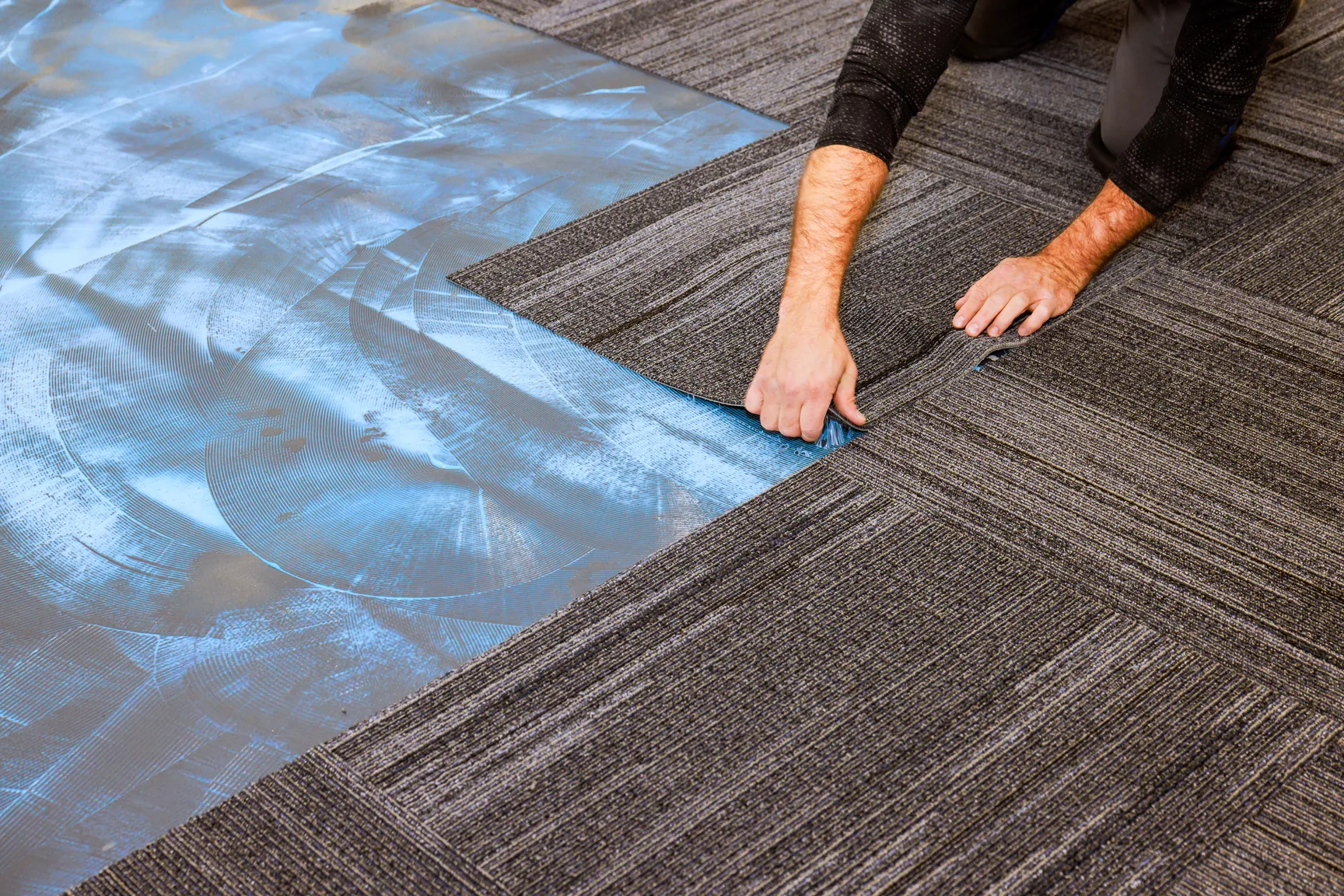
Maine’s asbestos rule speaks to a flooring business by name: the Maine Department of Environmental Protection lists flooring among the trades whose work may require an asbestos abatement contractor license, lets intact tile come up whole under heat without that license, except felt-backed sheet flooring, leaves intact mastic alone so long as no one sands or grinds it, and treats scraping old tile up as aggressive removal that does need the license. Beside that rule, Maine issues no state contractor license, its home construction contracts law reaches carpeting and other nonstructural work on a home, EPA certifies lead-safe renovation, and workers’ compensation is required of nearly every employer.
Put plainly, the floor coming out matters more in Maine than the floor going in. Installing new plank, tile or carpet meets no state credential at all, while the tear-out that comes first can turn on whether the crew holds a heat gun or a scraper. From here on, each finding is printed as verified, beside its source’s wording and a note on what it changes for an owner. Coverage itself, policy by policy, is explained from the flooring contractor insurance page, which branches to residential flooring, commercial flooring, carpet installation and tile and stone work.
No Maine contractor license, but a Maine contract law for floors in homes
A flooring business in Maine meets no statewide contractor license or registration. The Maine Attorney General states that general contractors and building trades are not licensed or regulated in Maine, and the state licensing office’s list of professions carries plumbers, electricians and other single trades, with no general, building or flooring contractor license.
Authority: 10 M.R.S. §1486(4), (5); 10 M.R.S. §1487 (opening paragraph and sub-§13); 10 M.R.S. §1490(1)
The Attorney General’s own consumer page puts the licensing point in one line:
“In Maine, general contractors - and trades such as roofing and framing - are not licensed or regulated.”
So a Maine bid carries no state license number, and no state board renews or disciplines flooring work. That absence is real, but it is not the end of the state’s interest in a residential job. The duty sits in the contract instead of the contractor:
Maine still puts duties on a flooring business without a state license. Maine’s home construction contracts law treats carpeting and other nonstructural work on a home as home construction, so a residential flooring job above the dollar figure quoted below needs a written contract, signed by the contractor and the homeowner, that carries the parts the law lists, including the statutory warranty, change-order and dispute-resolution statements and the Attorney General’s consumer protection addendum. A violation counts as evidence of an unfair trade practice. Commercial buildings are outside that law.
Carpeting is named outright in the statute’s definition:
“"Home construction contract" means a contract to build, remodel or repair a residence, including not only structural work but also electrical, plumbing and heating work; carpeting; window replacements; and other nonstructural work.”
Hardwood, resilient plank and tile are not listed one by one, but the definition closes with other nonstructural work, which is the category a finished floor falls in. The same section then draws the line around the kind of building the law reaches:
“"Residence" means a dwelling with 3 or fewer living units and garages, if any. Buildings used for commercial or business purposes are not subject to this chapter.”
A flooring firm that splits its week between houses and storefronts therefore works under two regimes, and only the house jobs bring the contract law with them. The writing requirement is the core of it:
“Any home construction contract for more than $3,000 in materials or labor must be in writing and must be signed by both the home construction contractor and the homeowner or lessee. Both the contractor and the homeowner or lessee must receive a copy of the executed contract prior to any work performance.”
The statute goes on to list what the contract must carry, and the obligation sentence above names the parts a flooring owner is most likely to overlook, among them the Attorney General’s addendum. The consequence of getting it wrong is stated in a separate section:
“Any violation of this chapter shall constitute prima facie evidence of a violation of the Unfair Trade Practices Act, Title 5, chapter 10”
Some office habits make that law easier to live with:
- Keep one residential contract form, reviewed against the statute’s list, and use it for every home job that could cross the value the statute sets, so no one has to decide under pressure whether this one counts.
- Attach the Attorney General’s addendum to the form itself rather than to a checklist, so it travels with every copy the homeowner signs.
- Make sure both signed copies change hands before the crew unloads anything, because the quoted section ties the copies to the start of the work.
- Label every estimate residence or commercial at the walkthrough; that answer decides whether the contract law follows the job.
On storefront and office jobs, a general contractor’s certificate and additional insured requests are a different conversation, taken up on the commercial flooring contractor insurance page; what a homeowner may want to see is on the residential page.
Maine flooring firms and the federal lead renovation rule, with the state holding abatement
Lead-safe renovation certification is not run by Maine itself. In Maine it is EPA that administers the renovation, repair and painting (RRP) rule, so a flooring company that disturbs paint on covered work holds its firm certification from EPA. Maine’s own lead law, run by the Department of Environmental Protection, licenses lead abatement and inspection, and it expressly leaves renovation and remodeling out.
Authority: 40 CFR Part 745; 38 M.R.S. §1291(1), (26); 38 M.R.S. §1292(1)
Maine’s absence from EPA’s list of authorized renovation programs is where that finding starts:
“EPA administers the RRP Program in most Tribes, states and territories, but has authorized the following to operate their own programs: Alabama, Delaware, Georgia, Iowa, Kansas, Massachusetts, Mississippi, North Carolina, Oklahoma, Oregon, Rhode Island, Utah, Vermont, Wisconsin and the Minnesota Chippewa Tribe-Boise Forte (Nette Lake).”
The federal duty that follows from that omission reads this way on EPA’s page:
“EPA's RRP Rule requires that anyone paid to perform work that disturbs painted surfaces in homes, childcare facilities and preschools built before 1978 be certified and their employees be trained (either as a certified renovator or on-the-job by a certified renovator) in the use of lead-safe work practices that minimize occupants’ exposure to lead hazards.”
Where the federal rule covers the housing or child-occupied facility, removing painted baseboards, shoe molding, thresholds or door casings counts as renovation work: the firm is certified by EPA, a certified renovator is assigned to the job or trains the crew, and the rule’s work practices apply, with the building-age threshold quoted below as printed. Work whose purpose is to permanently eliminate lead-based paint hazards is abatement, and in Maine that needs a license or certification from the Department of Environmental Protection.
Maine’s own lead statute is narrower than its name suggests. It licenses the people who abate lead hazards and inspect for them, and its definition of abatement shuts the door on ordinary remodeling:
“"Abatement" does not include renovation and remodeling as defined in subsection 26”
Floors seldom carry paint, so the federal rule usually reaches a flooring crew at the walls: the baseboard pried loose so new plank can run underneath, the threshold swapped at a doorway, the casing trimmed to clear a thicker floor. Coverage under the rule turns on the building and its use, facts only the site visit supplies. Add these to the walkthrough sheet:
- What year does the owner believe the house or facility was built? The federal rule quoted above turns on it.
- Is any part of the building a childcare facility or preschool, even part of the week?
- Which trade pulls the painted trim: your installers, or a carpenter or painter ahead of them?
- Which certified renovator from your firm is assigned to this job, or trains the crew that works it?
Older housing gets its own treatment on the residential flooring contractor insurance page, and lead or contaminant claims under a liability policy on the general liability page.
Maine’s asbestos rule, the heat-lift exception and the scraper that needs a license
Maine’s state asbestos program reaches the removal of flooring. Under Maine law no one may engage in asbestos abatement unless licensed or certified by the Department of Environmental Protection, and the department’s rule names flooring among the trades whose work may require an Asbestos Abatement Contractor license.
Authority: 38 M.R.S. §1273(1), (2); Maine Department of Environmental Protection rules, ch. 425 (Asbestos Management Regulations), §1(N), §2(D), §2(F)(1), §2(F)(7), §4(B)(1)(a), §6(A)
Maine’s rule does not leave a flooring contractor to infer whether the trade is meant. Its licensing note reads:
“Some activities that may require a valid Asbestos Abatement Contractor license are electric, electronic, plumbing, roofing, siding, flooring, heating, carpentry, masonry, and HVAC activities.”
Whether a job reaches that license starts with what counts as abatement, and the rule sets a small quantity floor beneath it:
“For purposes of this rule, "asbestos abatement activity" means any activity involving the removal, demolition, enclosure, repair, encapsulation, or handling of asbestos-containing materials in an amount greater than 3 square feet or 3 linear feet.”
Before a renovation that impacts flooring or other materials likely to contain asbestos, the owner or operator has the building inspected by a department-certified asbestos inspector or presumes the materials contain asbestos. Removing asbestos-containing floor tile or sheet goods above the rule’s quantity threshold is asbestos abatement, which takes a department-licensed abatement contractor, notice to the department and the rule’s work practices. The rule sets two narrow exceptions a flooring contractor should know as printed below: intact flooring lifted whole with an infrared tile lift machine or heat guns, which excludes felt-backed sheet flooring, and intact mastics and adhesives that are not sanded, ground, abraded or machine-cut. Scraping tile up is aggressive removal and needs the license.
The inspection comes before any of it, and the rule names flooring among the materials that call for one:
“Prior to conducting a renovation or demolition activity that impacts any building material likely to contain asbestos (such as those used in roofing, flooring, siding, ceiling, and wall systems) or any component likely to contain asbestos (such as heating, ventilation, air conditioning, and plumbing systems), the owner or operator must have an inspection conducted for the presence of asbestos-containing materials.”
Next come the two exceptions, which are written closely enough that a crew lead should be able to recite them. The first is about the tile itself:
“The removal and containerization of intact asbestos-containing flooring except for felt-backed sheet flooring products, in a non-aggressive method, using infrared tile lift machine or heat guns, where the flooring is removed in a sufficiently heated state whereby the intact flooring comes up whole.”
Every condition in that sentence carries weight: the flooring is intact, the method is not aggressive, the tool is an infrared lift machine or a heat gun, and the tile comes up whole. Felt-backed sheet flooring is carved out of the exception entirely. The department then closes off the most familiar tool in the trade:
“Removing asbestos-containing flooring products with an ice scraper is an aggressive removal method and therefore subject to the work practice requirements set forth in Section 7 of this rule; performing this activity requires licensure as an asbestos abatement contractor.”
The second exception covers what lies under the tile:
“The removal and containerization of intact asbestos-containing latex, … or petroleum-based materials including but not limited to mastics, glues, cements, sealants, coatings, and adhesives provided they are not sanded, grinded, abraded or cut with a mechanical cutter.”
Read together, the exceptions describe a narrow path rather than a general pass. A crew that heats tile up whole and leaves the adhesive intact may stay outside the rule; the same crew reaching for a scraper on the tile, or a sander or grinder on the adhesive, has stepped outside both exceptions. And where an inspection finds or assumes asbestos in the area being renovated, the department’s inspection page puts the order of work plainly:
“Similarly, if any ACM is identified or assumed in areas of a building that will undergo renovation, the ACM must be removed by a DEP-licensed Asbestos Abatement Contractor before the renovation occurs.”
For a flooring owner, several habits follow:
- Get the inspection report, or the owner’s written presumption, in hand before pricing any tear-out, and read what it says about the layers under the floor you are replacing.
- Price heat lift and licensed abatement as separately named methods in the proposal, so the bid and the crew’s tools agree.
- Train crew leads to stop when tile cracks instead of lifting whole, or when a felt backing shows. Either one takes the job outside the exception the proposal was priced on.
- One job file should hold the inspection, the proposal and any change order, showing what was known and when the method changed.
For the coverage side of a tear-out, see the general liability page on asbestos claims and finished work back in use, the commercial page on a general contractor’s added terms, and the tile and stone page on tile demolition.
Maine workers’ compensation for flooring employers, and who may go without it
Under Maine’s Workers’ Compensation Act, every private employer, including an independent contractor who hires and pays employees, secures the payment of compensation by buying a workers’ compensation policy or by self-insuring. The Bureau of Insurance says the law requires almost all public and private employers to have the coverage.
Authority: 39-A M.R.S. §401(1); 24-A M.R.S. §3711(1)
The Act states the duty in a single sentence, and it names the independent contractor who hires help:
“Every private employer, including an independent contractor who hires and pays employees, is subject to this Act and shall secure the payment of compensation with respect to all employees by purchasing a workers' compensation policy or self-insuring as set forth in section 403”
A Maine flooring contractor with employees buys a workers’ compensation policy or self-insures; an employer that cannot find coverage in the voluntary market can get it from the statute-created insurer, which the law directs to cover employers otherwise entitled to coverage who do not buy it in that market. A sole proprietor without employees and the owners of a limited liability company are not required to carry coverage for themselves, and a bona fide corporate owner at the stock threshold the guide prints may waive it in writing. An employer without required coverage loses the defense the Act otherwise gives it in an injured employee’s lawsuit, and the Workers’ Compensation Board may impose penalties.
An installer who works alone and an owner who adds a helper for a busy season stand on opposite sides of that sentence. The Bureau of Insurance’s guide speaks to the first case directly:
“A sole proprietor without employees is not required to have coverage under the Workers’ Compensation Act.”
Owners of limited liability companies get similar treatment for themselves:
“"Owners" of limited liability companies are not required to be covered by workers’ compensation insurance and do not need to fill out waiver forms.”
None of those exceptions reaches the employees themselves. An employer that leaves its crew uncovered gives up something the Act would otherwise keep for it in court:
“A private employer who has not secured the payment of compensation by purchasing a workers' compensation policy or self-insuring as set forth in section 403 is not entitled, in a civil action brought by an employee or the employee's representative for personal injuries or death arising out of and in the course of employment, to the defense set forth in section 103”
Where coverage comes from is the last piece. The Act’s two routes are a policy or self-insurance, and for an employer that cannot place a policy in the voluntary market, the statute directs an insurer it created to write it:
“… the company shall provide workers' compensation and incidental employers' liability coverage to employers otherwise entitled to coverage, but not able to or not electing to purchase coverage in the voluntary insurance market, and not authorized, either individually or as part of a group, to self-insure.”
That insurer is a mutual insurance company, not a state fund, and its statute says it is not a state agency, so it is described here by what it does rather than by name. Payroll underwriting, and the treatment of installers you pay as subcontractors, belong on the workers’ compensation page, because they are policy questions rather than Maine ones.
The Maine offices behind licensing, lead, asbestos and comp
The Maine Bureau of Insurance regulates insurance in the state; its role, as verified, is insurance regulator for Maine; publishes the employer’s guide to workers’ compensation insurance in Maine, including who must carry coverage and who may waive it. NIPR.com lets anyone check an insurance agency’s license, ours among them.
Beyond insurance, these offices appear on this page, linked to their own sites with roles as verified:
- Office of Professional and Occupational Regulation: licenses Maine’s regulated professions and trades, including plumbers and electricians; it issues no general, building or flooring contractor license
- Maine Attorney General: publishes the consumer protection information that a home construction contract must carry as an addendum, and enforces the unfair trade practices law that a home construction contract violation evidences
- Maine Department of Environmental Protection: licenses asbestos abatement contractors and certifies asbestos professionals, receives abatement notifications and enforces the state asbestos rule
- Maine Department of Environmental Protection: licenses and certifies lead abatement contractors and professionals under the state lead abatement law; it does not certify renovation firms
- Maine Workers’ Compensation Board: administers the Workers’ Compensation Act: enforces coverage, handles claims and offers an employer insurance coverage search
Lead renovation certification, per the section above on it, comes from the U.S. Environmental Protection Agency. Absent from the list: a statewide contractor board, for the licensing section’s reason, and any state workers’ compensation fund. Twice listed: the environmental department, once per role, since the record keeps asbestos and lead abatement on separate pages.
Maine metropolitan areas and their counties
Shown in full below is Maine’s list of metropolitan areas from the U.S. Census Bureau. All of them have their principal cities in Maine. Because the home construction contracts law is statewide, the same contract duty follows a residential job into every one of them.
Portland-South Portland, ME
Metro counties, all in Maine: Cumberland County, Sagadahoc County and York County.
Home jobs here above the statute’s value carry Maine’s written-contract duty under the home construction contracts law; no state contractor license applies.
Bangor, ME
Metro county, in Maine: Penobscot County.
Home jobs here above the statute’s value carry Maine’s written-contract duty under the home construction contracts law; no state contractor license applies.
Lewiston-Auburn, ME
Metro county, in Maine: Androscoggin County.
Home jobs here above the statute’s value carry Maine’s written-contract duty under the home construction contracts law; no state contractor license applies.
Maine flooring work matched to its coverage pages
That locates the Maine rules; the policies behind the work are the ones any flooring business carries, each with its own page:
- Third-party injury or property damage, completed work and tear-out included: general liability.
- Employees, and the subcontracted-installer question: workers’ compensation.
- Heat guns, tile lift machines, saws and material moving between jobs: inland marine coverage for contractors’ tools and equipment.
Your mix of work sets the weighting. A carpet installation crew laying tile squares in an office and a tile and stone shop resetting an old kitchen floor face different owners and different tear-outs, and the service pages treat each on its own terms. Once the Maine side is settled, request a quote.
Residential Flooring Contractor Insurance
A panel for Maine in rows. Contractor license: no statewide license reaches this work. It connects to the General Liability page. Lead-safe renovation: the federal program applies in this state. It connects to the Residential Flooring Contractor Insurance page. Asbestos flooring and mastic: a state program reaches flooring removal. It connects to the General Liability page. Workers’ compensation: bought in the open market. It connects to the Workers Compensation page. Each row pairs a state rule with the page on this site that discusses it. No figures are shown.
Nearby states we also write
Related coverage and services
What we insure
Maine flooring contractor insurance questions
May a flooring crew without an asbestos license lift old tile in Maine?
Sometimes, and the method decides it. The Maine Department of Environmental Protection’s rule leaves out intact asbestos-containing flooring lifted whole with an infrared tile lift machine or heat guns, though not felt-backed sheet flooring, and intact mastics and adhesives that are not sanded, ground, abraded or machine-cut. Taking tile up with an ice scraper is aggressive removal, and the rule says that work requires an asbestos abatement contractor license.
What has to happen before a Maine renovation disturbs an old floor?
The owner or operator has the building inspected by an asbestos inspector certified by the Maine Department of Environmental Protection, or presumes the materials contain asbestos. Where asbestos-containing material is found or assumed in the area being renovated, a department-licensed abatement contractor removes it before the renovation goes ahead.
Is a Maine contractor license needed to install floors?
No. The Maine Attorney General says general contractors and building trades are not licensed or regulated in Maine, and the Office of Professional and Occupational Regulation’s list of professions has no general, building or flooring contractor license on it.
Does Maine’s home construction contracts law apply to a carpet or hardwood job in a house?
It can. The law treats carpeting and other nonstructural work on a residence as home construction, so a residential flooring job above the value the statute sets needs a written contract signed by the contractor and the homeowner, carrying the parts the law lists, including the Attorney General’s consumer protection addendum. Buildings used for commercial or business purposes are outside it.
Who certifies a Maine flooring company for lead-safe renovation?
EPA. Maine is not among the states EPA has authorized to run the renovation program, and the state’s own lead law, run by the Maine Department of Environmental Protection, licenses lead abatement and inspection while expressly leaving renovation and remodeling out.
Does a small Maine flooring business have to carry workers’ compensation?
A flooring contractor with employees does, by buying a policy or self-insuring. A sole proprietor without employees and the owners of a limited liability company are not required to carry coverage for themselves, and a qualifying corporate owner may waive it in writing.
What if no insurer will write a Maine flooring employer’s workers’ compensation?
The statute directs the insurer it created to cover employers otherwise entitled to coverage that do not buy it in the voluntary market. That insurer is a mutual insurance company, and its statute says it is not a state agency.
Which body supervises insurers in Maine, and which runs comp?
The Maine Bureau of Insurance, which also publishes the state’s employer guide to workers’ compensation insurance. The Maine Workers’ Compensation Board administers the Workers’ Compensation Act itself, including coverage enforcement and claims.
This page describes insurance for flooring contractors and installers operating in this state. It is general information, not legal advice and not a statement of coverage. Licensing, lead-safe and asbestos requirements change; verify current requirements with the agency named before relying on them.
Get a quote for your Maine flooring work
Tell us which Maine counties your crews cover, how they take up old tile and whether the floors go into homes or businesses, and we will build the program from there.