
Flooring Contractor Insurance by State
Virginia Flooring Contractor Insurance
Virginia licenses contractors statewide and its regulations name a flooring and floor covering specialty, so the license comes before the bid; lead certification stays with EPA and workers’ compensation is compulsory.
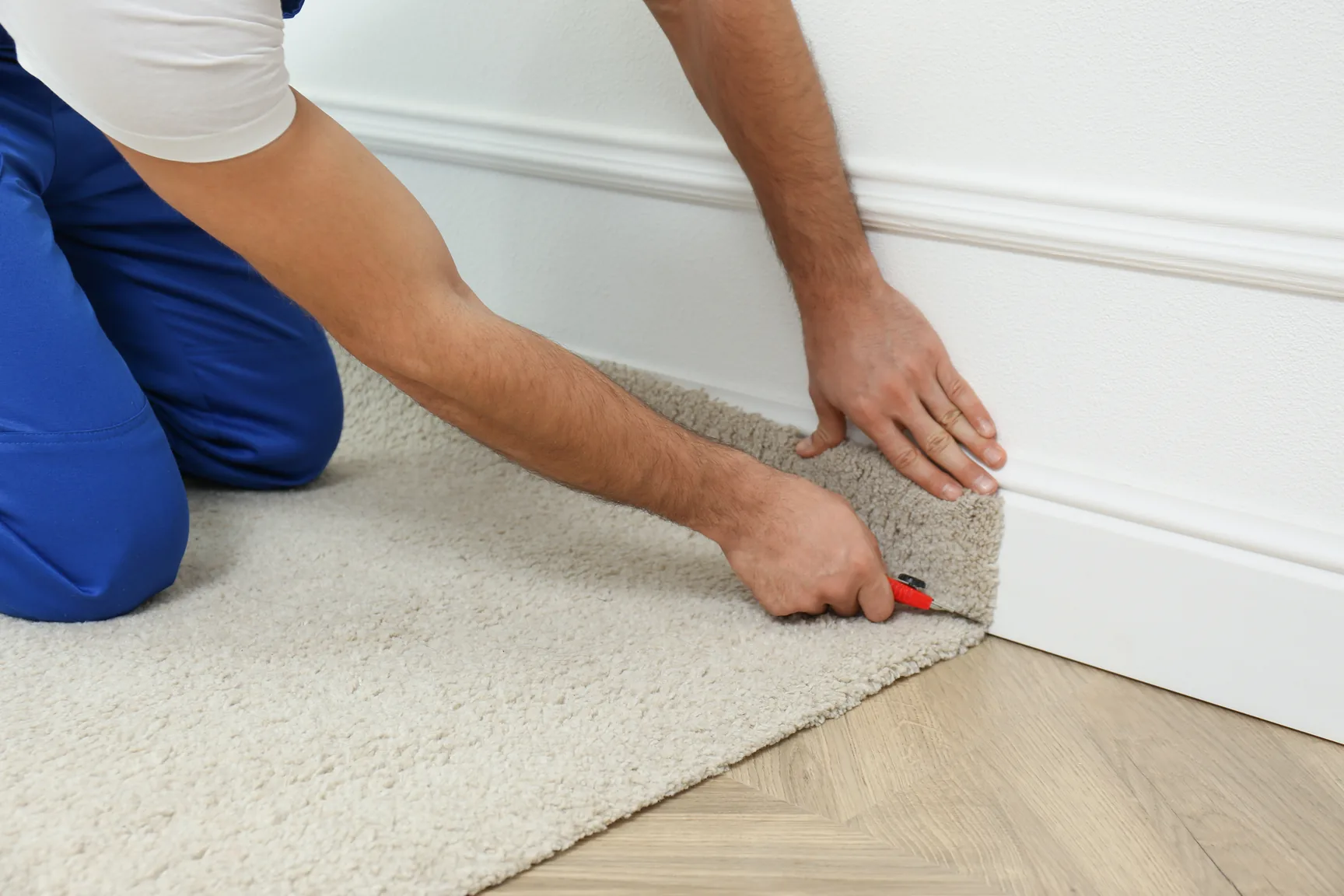
Virginia’s contractor regulations name the trade outright: a flooring business needs a state contractor license carrying the flooring and floor covering specialty, or a broader classification that includes flooring, in the license class its contract values call for. Beyond the license, EPA certifies lead-safe renovation firms, the state’s asbestos law speaks to flooring by name, and workers’ compensation is compulsory for covered employers, secured through an authorized insurer or another method the Act lists, since Virginia has no state fund.
Instead of a general license that happens to reach floors, Virginia wrote a specialty for the work, a second one for tile setting, and tied both to a dollar class. Below, every section prints a verified finding, quotes its source and says what it changes for an owner. The policies themselves are covered on the flooring contractor insurance page, whether your business is a residential flooring crew, a commercial flooring subcontractor, a carpet installation company or a tile and stone shop.
The Virginia flooring specialty, the tile specialty and the license class behind them
Contractor licensing in Virginia is statewide, and the regulations name the trade: the Board for Contractors sets out a flooring and floor covering specialty that covers wood, carpet securing, vinyl, linoleum and every type of tile, along with the subflooring and leveling work beneath them, and a separate tile, marble, ceramic and terrazzo specialty. Every license pairs a class, set by the value of the contracts the firm takes on, with the classifications or specialties that define the work it may do.
Authority: Va. Code § 54.1-1100; Va. Code § 54.1-1101(A)(15); Va. Code § 54.1-1103(A); Va. Code § 54.1-1111; 18VAC50-22-20; 18VAC50-22-30; 18VAC50-22-260(B)(27)
Here is the specialty in the regulation’s own words. Note how far it reaches below the finished surface:
“"Flooring and floor covering contracting" (Abbr: FLR) means the service that provides for the installation, repair, improvement, or removal of materials that are common in the flooring industry. This includes wood and wood composite flooring, tack strips or other products used to secure carpet, vinyl and linoleum, ceramic, marble, stone, and all other types of tile, and includes the installation or replacement of subflooring, leveling products, or other materials necessary to facilitate the installation of the flooring or floor covering. This does not include the installation, repair, or removal of floor joists or other structural components of the flooring system. The CBC and RBC classifications and HIC and CIC specialties also provide for this function.”
Tack strip, subfloor and leveling product all sit inside it; only the structure stops it. Its last sentence means a firm with a broader building or improvement classification already carries the function. Tile setting has an entry of its own:
“"Tile, marble, ceramic, and terrazzo contracting" (Abbr: TMC) means the service that provides for the preparation, fabrication, construction, and installation of artificial marble, burned clay tile, ceramic, terrazzo, encaustic, faience, quarry, semi-vitreous, cementitious board, and other tile, excluding hollow or structural partition tile.”
Before bidding on, offering or performing contracting work, a flooring business holds a Board for Contractors license in the class its contract and yearly values call for and carrying the flooring specialty or a broader classification that includes flooring; the class definitions are quoted below as printed. Working in a specialty or class the license does not carry is a prohibited act. A flooring subcontractor working on behalf of a licensed residential building, commercial building or home improvement contractor is exempt up to the per-project value quoted below. Local building officials will not issue a permit, and localities will not issue or renew a business license, until the contractor gives its license number or shows it is exempt.
“"Class A contractors" perform or manage construction, removal, repair, or improvements when (i) the total value referred to in a single contract or project is $150,000 or more, or (ii) the total value of all such construction, removal, repair, or improvements undertaken by such person within any 12-month period is $1 million or more.”
“"Class B contractors" perform or manage construction, removal, repair, or improvements when (i) the total value referred to in a single contract or project is $30,000 or more, but less than $150,000, or (ii) the total value of all such construction, removal, repair, or improvements undertaken by such person within any 12-month period is $250,000 or more, but less than $1 million.”
“"Class C contractors" perform or manage construction, removal, repair, or improvements when (i) the total value referred to in a single contract or project is over $1,000 but less than $30,000, or (ii) the total value of all such construction, removal, repair, or improvements undertaken by such person within any 12-month period is less than $250,000.”
Each definition has two tests, the single contract and the running yearly total, so a busy shop can outgrow its class without any one job being large. Working beyond what the license carries is a prohibited act:
“Practicing in a classification, specialty service, or class of license for which the contractor is not licensed.”
Installers working under someone else’s contract should read the exemption closely. It names the hiring contractor’s classification and caps each project:
“Work undertaken by a person providing construction, remodeling, repair, improvement, removal, or demolition valued at $25,000 or less per project on behalf of a properly licensed contractor, provided that such contractor holds a valid license in the (i) residential building, (ii) commercial building, or (iii) home improvement building contractor classification.”
Practical steps for a firm working under this scheme:
- Match the specialty on your license to the work you sell. A resilient shop that starts setting tile, or a tile setter that starts laying wood, should read both definitions against the new work.
- Diary the class like an expiration date, watching the yearly total as well as the contract in front of you.
- On subcontract work, get the hiring contractor’s classification in writing and compare the job’s value with the exemption before relying on it.
The certificate of insurance and additional insured wording a general contractor asks for are separate from the license, and the commercial flooring contractor insurance page takes them up.
Lead paint on a Virginia floor job: renovation certification is federal, abatement is licensed by the state
EPA has not authorized Virginia to run its own lead renovation, repair and painting (RRP) program, so EPA certifies renovation firms and renovators in Virginia. The state licenses lead abatement instead: the Board for Asbestos, Lead, and Home Inspectors licenses lead contractors, supervisors, workers, inspectors and risk assessors, and its own rule says abatement does not include renovation or remodeling.
Authority: 40 CFR Part 745; Va. Code § 54.1-500; Va. Code § 54.1-503(C); Va. Code § 40.1-51.20(A); 18VAC15-30-20
EPA keeps its own list of the places it has handed the renovation program to, and Virginia is not on it:
“EPA administers the RRP Program in most Tribes, states and territories, but has authorized the following to operate their own programs: Alabama, Delaware, Georgia, Iowa, Kansas, Massachusetts, Mississippi, North Carolina, Oklahoma, Oregon, Rhode Island, Utah, Vermont, Wisconsin and the Minnesota Chippewa Tribe-Boise Forte (Nette Lake).”
A flooring company that pulls painted baseboards, shoe molding, thresholds or door casings in housing or a child-occupied facility covered by the federal rule holds EPA firm certification, assigns an EPA-certified renovator and follows the federal work practices; the building-age threshold is in the EPA quote below. Work designed to permanently eliminate lead-based paint hazards is abatement, which in Virginia needs a lead contractor license from the Board and advance notice to the Department of Labor and Industry.
“In general, anyone who is paid to perform work that disturbs paint in housing and child-occupied facilities built before 1978 must be certified. This includes all firms, even sole proprietorships.”
Sole proprietorships are named in that sentence, so a one-truck installer is not outside it by being small. The state’s licensing side sits with the Virginia Board for Asbestos, Lead, and Home Inspectors, and its rule separates abatement from ordinary remodeling:
“Abatement does not include renovation, remodeling, landscaping, or other activities when such activities are not designed to permanently eliminate lead-based paint hazards, but instead are designed to repair, restore, or remodel a given structure or dwelling, even though these activities may incidentally result in a reduction or elimination of lead-based paint hazards.”
Paint meets a floor job at the edges: baseboards, shoe molding, thresholds and door casings, the pieces the obligation sentence lists. At the walkthrough, ask:
- When was the home or facility built, and is it somewhere children spend time?
- Is your crew pulling the painted trim, or is another trade handling it first?
- Which certified renovator in your firm is assigned to this job?
Occupied older homes raise these questions most often, and the residential flooring contractor insurance page spends time on them. For lead claims under a liability policy, see the general liability page.
Virginia asbestos law, nonfriable flooring and the point where a tear-out becomes a project
Asbestos law in Virginia speaks to flooring by name. The Board for Asbestos, Lead, and Home Inspectors licenses asbestos contractors, workers and inspectors, and the Department of Labor and Industry takes asbestos project notifications and issues project permits. Both define an asbestos project to leave out nonfriable asbestos-containing flooring that does not become friable when it is installed, encapsulated or removed.
Authority: Va. Code § 54.1-500; Va. Code § 54.1-503(A); Va. Code § 54.1-504; Va. Code § 54.1-512(D); Va. Code § 40.1-51.20; Va. Code § 40.1-51.23; Va. Code § 36-99.7; 16VAC25-20-10; 16VAC25-20-30(A); 16VAC25-20-40; 18VAC15-21-10
The exclusion for flooring sits inside the definition of an asbestos project itself:
“"Asbestos project" or "asbestos abatement project" means an activity involving job set-up for containment, removal, encapsulation, enclosure, encasement, renovation, repair, construction or alteration of an asbestos-containing material. An asbestos project or asbestos abatement project shall not include nonfriable asbestos-containing roofing, flooring and siding materials which when installed, encapsulated or removed do not become friable.”
The Virginia Department of Labor and Industry, Asbestos and Lead Program then names the methods that move flooring across the friable line:
“An asbestos notification is not required for nonfriable asbestos containing roofing, flooring and siding materials which when installed, encapsulated or removed do not become friable. Activities such as grinding, mechanical chipping, sawing or drilling can make the asbestos containing material friable and would require notification.”
Resilient tile, sheet flooring or mastic that comes up without becoming friable stays outside the asbestos project rules, but the Department warns that grinding, mechanical chipping, sawing or drilling can make the material friable, and the job then becomes an asbestos project that only a licensed asbestos contractor may perform, after notice to the Department and with a project permit outside residential buildings. A flooring contractor that subcontracts all of the abatement work to a licensed asbestos contractor does not need its own asbestos license. Before a local building department permits renovation of an older building, the owner certifies a licensed asbestos inspection; for a job that only repairs or replaces floor covering, a statement that the material is assumed to contain friable asbestos and will be handled by a licensed asbestos contractor meets that rule, and single-family homes and small residential buildings are outside it unless the work is for commercial or public development.
So the removal method sits at the heart of the bid. Hand removal that keeps tile and mastic intact is a different job, legally, from grinding mastic off a slab. When the work does become an asbestos project, a flooring firm without its own asbestos license has a route the statute spells out:
“Nothing in this chapter shall be construed as requiring the licensure of a contractor who contracts to undertake a project, a portion of which constitutes an asbestos or lead abatement project if all of the asbestos or lead abatement work is subcontracted to a person licensed to perform such work in accordance with the provisions of this chapter.”
Habits that fit these rules:
- Put the method in the proposal, and agree who halts the job if it has to change once the old floor is exposed.
- Ask for any inspection or assumed-asbestos statement filed for the permit, and read what it says about the floor you are replacing.
- Tell the crew lead which tools are off the table on that floor; saws and grinders are the ones the Department names.
How a policy treats asbestos claims, and finished work once the owner moves back in, belongs to the general liability page. Commercial tear-outs add contract insurance terms, covered on the commercial page, and tile demolition has its own angle on the tile and stone page.
Virginia workers’ compensation: a compulsory Act that counts your subcontractors’ crews
Every employer subject to Virginia’s Workers’ Compensation Act must insure the payment of compensation to its employees, either with an insurer authorized to write the coverage in Virginia or through self-insurance or another method the Act lists. The Act leaves out a business with fewer regularly employed workers than the count it prints, and the Workers’ Compensation Commission counts a contractor’s subcontractors’ employees toward that count.
Authority: Va. Code § 65.2-101 (definition of employee, item h); Va. Code § 65.2-302(B); Va. Code § 65.2-800(A); Va. Code § 65.2-801(A); Va. Code § 65.2-805(A), (C)
“Every employer subject to the compensation provisions of this title shall insure the payment of compensation to his employees in the manner hereinafter provided.”
The first method the Act lists is the ordinary one for a flooring business:
“Insuring and keeping insured his liability in an insurer authorized to transact the business of workers' compensation insurance in this Commonwealth;”
The Commission states the counting rule plainly, and it is the part an owner who leans on installers is most likely to miss:
“Virginia law requires that an employer who regularly employs more than two part-time or full-time employees carry Virginia workers' compensation coverage. If a business hires subcontractors to perform the same trade, business or occupation, or to fulfill a contract of the business, the subcontractor’s employees are included in determining the total number of employees. For those employers required to have coverage, it is mandatory; there are no waivers and no exceptions.”
“This is true even if all subcontractors have their own coverage.”
A flooring contractor that uses subcontracted installers counts their employees with its own, even when the subcontractors carry their own coverage, and once the total passes the statute’s count the coverage is mandatory with no waiver or exemption form. The Act also makes a contractor liable for compensation to a subcontractor’s workers. A sole proprietor with no employees who hires no subcontractors is not required to carry coverage but may buy it voluntarily. Failing to insure brings a daily civil penalty up to a cap, quoted as printed, can lead to an order to stop doing business, and costs the employer its common-law defenses in an employee’s lawsuit.
“If such employer fails to comply with the provisions of § 65.2-800 or 65.2-804 , he shall be assessed a civil penalty of not more than $250 per day for each day of noncompliance, subject to a maximum penalty of $50,000.”
At the small end of the trade, the Commission draws the line for a business of one:
“A sole proprietor that has no employees and that does not hire subcontractors is not required by law to carry workers’ compensation coverage. An individual that is not required by law to carry coverage can obtain it voluntarily.”
Bringing on a subcontracted installer takes a sole proprietor out of that sentence. Payroll, subcontracted installers and their certificates are underwriting questions, answered on the workers’ compensation page. Nothing on this page crosses a state line.
Virginia offices behind the license, the lead and asbestos rules and the comp law
The Virginia State Corporation Commission, Bureau of Insurance regulates insurance in Virginia. Anyone can confirm our agency’s license, or another agency’s, on NIPR.com.
Each body below links to its own site and carries the role the record verified for it:
- Virginia Department of Professional and Occupational Regulation, Board for Contractors: statewide contractor licensing by class and by classification or specialty, including the flooring and floor covering specialty
- Virginia Board for Asbestos, Lead, and Home Inspectors: licenses asbestos contractors, supervisors, workers and inspectors, and lead abatement contractors, supervisors, workers, inspectors and risk assessors
- Virginia Department of Labor and Industry, Asbestos and Lead Program: asbestos and lead project notifications and permits, and enforcement of the asbestos air-emission standard for renovation and demolition
- U.S. Environmental Protection Agency: administers lead renovation (RRP) firm and renovator certification in Virginia; Virginia licenses lead abatement through the Board for Asbestos, Lead, and Home Inspectors
- Virginia Workers’ Compensation Commission: administers the Workers’ Compensation Act: coverage compliance and civil penalties, self-insurance certificates, claims and the Uninsured Employer’s Fund
You will see no state workers’ compensation fund listed, since Virginia has none.
Virginia metro areas, their counties and independent cities
The cards show the largest metropolitan areas with a principal city in Virginia, as the U.S. Census Bureau delineates them. The Census lists Virginia’s independent cities alongside its counties, and the cards keep its spelling. Where a metro crosses a state line, only its Virginia localities are listed.
Washington-Arlington-Alexandria, DC-VA-MD-WV
Virginia localities in this metro: Arlington County, Clarke County, Culpeper County, Fairfax County, Fauquier County, Loudoun County, Prince William County, Rappahannock County, Spotsylvania County, Stafford County, Warren County, Alexandria city, Fairfax city, Falls Church city, Fredericksburg city, Manassas city and Manassas Park city.
One state contractor license covers flooring work in each of them, and local building officials and business license offices ask for its number before they issue a permit or license.
Virginia Beach-Chesapeake-Norfolk, VA-NC
Virginia localities in this metro: Gloucester County, Isle of Wight County, James City County, Mathews County, Surry County, York County, Chesapeake city, Hampton city, Newport News city, Norfolk city, Poquoson city, Portsmouth city, Suffolk city, Virginia Beach city and Williamsburg city.
One state contractor license covers flooring work in each of them, and local building officials and business license offices ask for its number before they issue a permit or license.
Richmond, VA
Localities in this metro: Amelia County, Charles City County, Chesterfield County, Dinwiddie County, Goochland County, Hanover County, Henrico County, King and Queen County, King William County, New Kent County, Powhatan County, Prince George County, Sussex County, Colonial Heights city, Hopewell city, Petersburg city and Richmond city.
One state contractor license covers flooring work in each of them, and local building officials and business license offices ask for its number before they issue a permit or license.
Roanoke, VA
Localities in this metro: Botetourt County, Craig County, Franklin County, Roanoke County, Roanoke city and Salem city.
One state contractor license covers flooring work in each of them, and local building officials and business license offices ask for its number before they issue a permit or license.
Lynchburg, VA
Localities in this metro: Amherst County, Appomattox County, Bedford County, Campbell County and Lynchburg city.
One state contractor license covers flooring work in each of them, and local building officials and business license offices ask for its number before they issue a permit or license.
Charlottesville, VA
Localities in this metro: Albemarle County, Fluvanna County, Greene County, Nelson County and Charlottesville city.
One state contractor license covers flooring work in each of them, and local building officials and business license offices ask for its number before they issue a permit or license.
Matching Virginia flooring work to the coverage pages
- General liability: claims by others for injury or damage, plus completed work and tear-out.
- Workers’ compensation: your crew, and the installers you bring on.
- Stretchers, saws and stock moving between jobs: inland marine coverage for contractors’ tools and equipment.
A carpet crew’s jobs look little like a tile setter’s, so the carpet installation and tile and stone pages treat them separately. To bring the Virginia pieces together, start with a quote request.
Residential Flooring Contractor Insurance
A panel for Virginia in rows. Contractor license: a state license or registration can reach this work. It connects to the General Liability page. Lead-safe renovation: the federal program applies in this state. It connects to the Residential Flooring Contractor Insurance page. Asbestos flooring and mastic: a state program reaches flooring removal. It connects to the General Liability page. Workers’ compensation: bought in the open market. It connects to the Workers Compensation page. Each row pairs a state rule with the page on this site that discusses it. No figures are shown.
Nearby states we also write
Related coverage and services
What we insure
Outside authorities
- Virginia State Corporation Commission, Bureau of Insurance
- Virginia Department of Professional and Occupational Regulation, Board for Contractors
- Virginia Board for Asbestos, Lead, and Home Inspectors
- Virginia Department of Labor and Industry, Asbestos and Lead Program
- U.S. Environmental Protection Agency
- Virginia Workers’ Compensation Commission
Virginia flooring contractor insurance questions
Is there a Virginia license specialty written for flooring work?
Yes. The Virginia Department of Professional and Occupational Regulation, Board for Contractors sets out a flooring and floor covering specialty covering wood, carpet securing, vinyl, linoleum and every type of tile, along with the subflooring and leveling work beneath them, and a separate tile, marble, ceramic and terrazzo specialty. Each license pairs one of those specialties, or a broader classification that includes flooring, with a class set by contract and yearly values.
What happens if a Virginia flooring firm takes a job bigger than its license class allows?
The Board’s regulations list practicing in a classification, specialty or class the contractor is not licensed for as a prohibited act. The class is set by the value of a single contract and of the work taken on over a year, so a growing firm checks its class before it bids a larger job.
Can a flooring subcontractor work in Virginia without holding its own contractor license?
Only inside a narrow exemption. Work done on behalf of a contractor licensed in the residential building, commercial building or home improvement classification is exempt up to the per-project value the statute prints. Outside that exemption the license rule applies, and building officials and localities ask for a license number or proof of the exemption before issuing a permit or business license.
Does Virginia certify flooring crews for lead-safe renovation?
No. Virginia is not on EPA’s list of authorized programs, so the U.S. Environmental Protection Agency certifies renovation firms and renovators there. The Virginia Board for Asbestos, Lead, and Home Inspectors licenses lead abatement instead, and its own rule says abatement does not include renovation or remodeling.
When does tearing out old resilient tile become an asbestos project in Virginia?
Nonfriable asbestos flooring that comes up without becoming friable stays outside the definition. The Virginia Department of Labor and Industry, Asbestos and Lead Program warns that grinding, mechanical chipping, sawing or drilling can make it friable, and the job then becomes an asbestos project that only a licensed asbestos contractor may perform, with notice to the Department and, outside residential buildings, a project permit.
Do installers I subcontract count toward my Virginia workers’ compensation obligation?
They do. The Virginia Workers’ Compensation Commission counts a contractor’s subcontractors’ employees with its own, even when those subcontractors carry their own coverage, and once the total reaches the statute’s count the coverage is mandatory with no waiver. The Act also makes a contractor liable for compensation to a subcontractor’s workers.
Which Virginia office oversees the insurers that write workers’ compensation?
The Virginia State Corporation Commission, Bureau of Insurance. It licenses and examines the insurance companies that write workers’ compensation in Virginia and handles assigned-risk applications, while the Virginia Workers’ Compensation Commission administers the Act itself. Virginia has no state fund.
This page describes insurance for flooring contractors and installers operating in this state. It is general information, not legal advice and not a statement of coverage. Licensing, lead-safe and asbestos requirements change; verify current requirements with the agency named before relying on them.
Get a quote for your Virginia flooring work
Tell us which license class and specialty your Virginia firm holds, which metros you work in and how the old floor comes up, and we will shape a program around that work.