
Flooring Contractor Insurance by State
West Virginia Flooring Contractor Insurance
West Virginia licenses the people who pull up old asbestos vinyl in homes, licenses contractors statewide by the size of the whole project, and makes workers’ compensation compulsory.
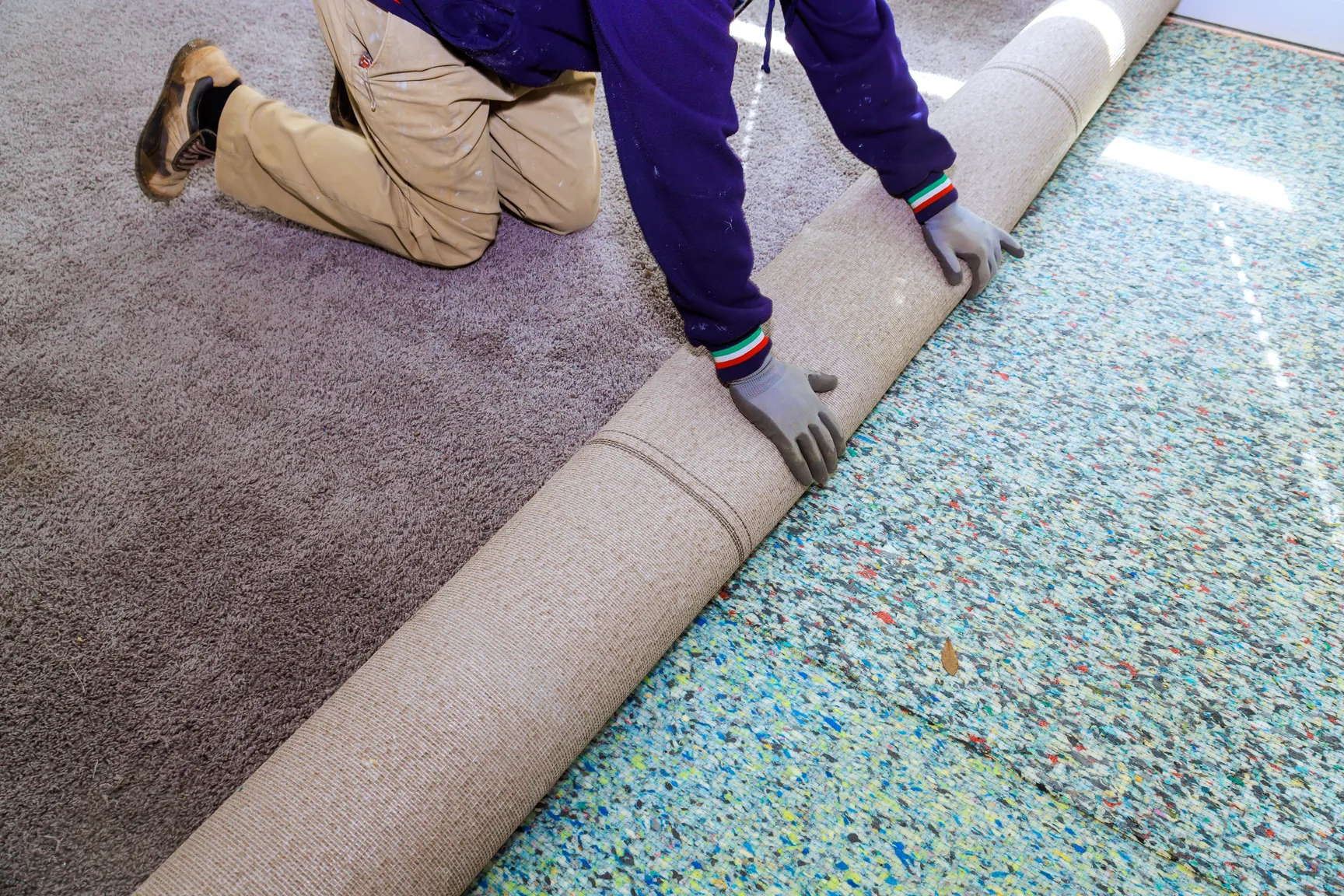
West Virginia’s asbestos law writes a license for this very trade: it defines resilient floor covering as floor tile, sheet vinyl and their adhesives, requires each person removing that material in a single-family home to hold a resilient floor covering worker license, and treats the same removal in any other building as an asbestos abatement project that only a licensed asbestos contractor may take on. Alongside it, the West Virginia Contractor Licensing Board licenses contractors statewide once a whole project reaches the statute’s cost threshold, EPA certifies lead-safe renovation firms here, and workers’ compensation is compulsory and bought from private carriers or through approved self-insurance.
That puts two separate licenses in front of many flooring owners in the state: one to contract the job at all, and one for the hands that lift old vinyl in a house. Each part of this page starts from a verified finding, adds the source’s own words, and ends with questions an owner can settle before a crew arrives. Policy questions belong to the flooring contractor insurance page and to the pages for residential flooring, commercial flooring, carpet installation and tile and stone businesses.
The West Virginia contractor license and the whole-project cost test
West Virginia requires a statewide license from the West Virginia Contractor Licensing Board before anyone acts as a contractor or bids contracting work, once the whole project reaches the statute’s residential or commercial cost threshold. The Board’s tested classifications name no flooring classification: a residential contractor license covers every classification a residential structure needs, a specialty contractor license is for work no listed classification substantially covers, and the Board confirms the classification from the applicant’s scope of work.
Authority: W. Va. Code §30-42-3(d), (o); §30-42-6(a), (b); §30-42-20; 28CSR2 §3.30, §6.2
The prohibition reaches bidding as well as doing the work, and the definition it points to is broad enough to take in any part of an improvement to a building:
“No person may engage in this state in any activity as a contractor or submit a bid to perform work as a contractor, as defined in this article, unless that person holds a license issued under the provisions of this article.”
“… undertakes, offers to undertake, purports to have the capacity to undertake, or submits a bid to construct, alter, repair, add to, subtract from, improve, move, wreck, or demolish any building, highway, road, railroad, structure, or excavation associated with a project, development, or improvement, or to do any part thereof, including the erection of scaffolding or other structures or works in connection therewith, where the cost of the undertaking is $5,000 or more for residential work or $25,000 or more for commercial work.”
Flooring subcontractors tend to measure that cost against their own price. The Board answers the question the other way:
“Yes, licensing requirements are based on the entire construction project, including the cost of all labor and materials, not your individual contract.”
A West Virginia flooring business holds a Contractor Licensing Board license before it bids or installs on a project whose total cost reaches the statute’s residential or commercial threshold, and the Board measures that threshold on the entire construction project, not the subcontract, so a flooring subcontractor on a larger job is licensed even when its own contract is small. Every applicant passes the Contractor Licensing Act exam and must be in good standing with the State Tax Department and, where it has employees, with workers’ compensation before the license issues; the license is posted at each job site, its number goes on advertising and contracts, and no city or county may demand an added contractor license from a licensee.
The classification question is where flooring owners most often guess. The Board’s rule and its tested classifications notice leave the answer to the scope of work, not to a trade label:
“A residential contractor is considered licensed for all classifications required in the construction, repair, or improvement of a residential structure, as defined in W. Va. Code §30‐42‐3(q).”
“Specialty Contractor - In order to obtain a license as a "Specialty Contractor," the work cannot substantially fall within the scope of any contractor classification listed above.”
“Contact and provide the West Virginia Contractor Licensing Board with your scope of work in order to verify the classification(s) and the exam(s) required for obtaining your contractor license.”
Before the card issues, the Board checks that the applicant is current with the other state offices, and once it does, the number travels with the firm’s paperwork:
“Applicant must be in good standing with all required agencies (Secretary of State-if applicable, WV State Tax Department, Workers' Compensation (if applicable) and Unemployment (if applicable) before a license will be issued.”
“The contractor’s license number shall be included in all contracting advertisements and all fully executed and binding contracts.”
The statute also settles a point that matters to crews who cross county lines every week. A licensee does not collect a second contractor license from each town:
“… no municipality, local government, or county may require any additional occupational license or other evidence of competence as a contractor from any person, firm, or corporation who or which holds a valid and current license issued pursuant to this article …”
Habits that keep the license question settled on West Virginia jobs:
- Ask the general contractor or owner for the size of the whole project before you bid, not just your line of it.
- Send the Board a written description of everything you install, from carpet to tile, and keep its answer on file.
- Put your license number on proposals, contracts and any advertising before the first job of the season goes out.
On a bigger job, the certificates a general contractor asks for are explained on the commercial flooring contractor insurance page, and what a liability policy does for finished work is on the general liability page.
West Virginia lead rules: EPA for renovation, the state for abatement
EPA has not authorized West Virginia to run the lead renovation, repair and painting (RRP) program, so EPA certifies renovation firms there. West Virginia’s own lead law licenses abatement, inspection and risk assessment through the state health program’s Office of Environmental Health Services, and that law says abatement does not include renovation or remodeling.
Authority: 40 CFR Part 745, Subpart E (RRP); W. Va. Code §16-35-3(a); §16-35-5(a); §16-35-7(b)
The list of states running their own renovation programs comes from EPA, and West Virginia does not appear on it:
“EPA administers the RRP Program in most Tribes, states and territories, but has authorized the following to operate their own programs: Alabama, Delaware, Georgia, Iowa, Kansas, Massachusetts, Mississippi, North Carolina, Oklahoma, Oregon, Rhode Island, Utah, Vermont, Wisconsin and the Minnesota Chippewa Tribe-Boise Forte (Nette Lake).”
The federal renovation rule applies when a crew disturbs painted baseboards, shoe molding, thresholds or door casings in older housing or a child-occupied facility, so a West Virginia flooring company doing that work is an EPA-certified renovation firm using lead-safe work practices; the housing age the rule turns on is quoted below as printed. A state lead discipline license comes into play only for abatement, inspection or risk assessment, the work the state law reserves to its licensees.
“Federal law requires all renovation, repair, and painting firms (including sole proprietorships) working in housing, or facilities where children are routinely present, built before 1978, to be certified.”
“Firms must apply to EPA for certification to perform renovations or dust sampling.”
The state’s own lead statute is real, but it draws its line around a different kind of work. Read the licensing line and the exclusion together:
“It is unlawful for any individual to carry out any lead-risk assessment, inspection or abatement activity for which he or she does not hold an appropriate lead discipline license.”
“Abatement does not include renovation, remodeling, landscaping or other activities, when the purpose of such activities are not intended to permanently eliminate lead-based paint hazards, but, instead, are designed to repair, restore or remodel a given structure or dwelling, even though these activities may incidentally result in a reduction or elimination of lead-based paint hazards.”
Paint usually enters a floor job through the trim that has to come off so the new floor can meet the wall. Points to check before pricing that part of the work:
- The year the house or child-occupied building went up, compared with the date printed in the firm certification quote.
- An EPA firm certificate in your company’s name, and a certified renovator named on the crew.
- Whether the owner has described the job as removing a hazard, which is a different job from replacing a floor.
Older houses and the questions they bring get more room on the residential flooring contractor insurance page.
West Virginia’s resilient floor covering worker license for old vinyl tear-out
West Virginia’s asbestos abatement law reaches flooring by name. It defines resilient floor covering as floor tile, sheet vinyl and their adhesives above the asbestos content it sets, and makes it unlawful to be employed removing that material in single-family dwellings without a resilient floor covering worker license from the state health program. In any other building, removing asbestos-containing material is an asbestos abatement project contracted only through a licensed asbestos contractor.
Authority: W. Va. Code §16-32-2(j), (w), (x); §16-32-6(a), (f); §16-32-9c(a), (b); §16-32-11(a), (c), (e); 64CSR63 §2.32, §3.1, §10.4
This statute speaks to a flooring crew directly. The license line comes first, and the two definitions behind it say exactly which material and which buildings it means:
“After January 1, 1994, it shall be unlawful for an individual who does not possess a valid resilient floor covering worker's license to be employed as a resilient floor covering worker.”
“"Resilient floor covering" means floor tile, sheet vinyl and associated adhesives which contain more than one percent asbestos by weight.”
“"Resilient floor covering worker" means a person who is employed to remove resilient floor covering in single-family dwellings.”
“Satisfactorily complete a training course approved by the director for resilient floor covering workers;”
For the firm, the single-family case comes with two reliefs, each conditioned on the workers meeting the article’s rules:
“Persons who contract to remove resilient floor covering materials in single-family dwellings are not required to be licensed as asbestos contractors: Provided, That the individuals engaged in removal shall meet the requirements of this article and any rules promulgated hereunder relating to resilient floor covering removal.”
“Persons who remove resilient floor covering materials in single-family dwellings are exempt from notification requirements.”
A flooring company tearing out old vinyl tile, sheet vinyl or their adhesive in a single-family home does not need an asbestos contractor license, but each person doing the removal holds a resilient floor covering worker license, earned through an approved training course, and that work is exempt from the state’s project notice. Anywhere else, removing asbestos-containing flooring is an asbestos abatement project: it is contracted through a licensed asbestos contractor whose crew is licensed, and the building owner notifies the program in advance, except for projects under the size threshold quoted below.
Outside a single-family home, the same tear-out falls under the general abatement provisions, which put the contract in a licensed asbestos contractor’s hands and the notice on the building owner:
“"Asbestos abatement project" means an activity involving the repair, removal, enclosure or encapsulation of asbestos-containing material.”
“It is unlawful for any person who does not possess a valid asbestos contractor's license to contract with another person for an asbestos abatement project.”
“Each owner or other person responsible for the operation of a building or facility where an asbestos abatement project is to occur shall notify the commissioner at least ten working days prior to commencement of each asbestos abatement project”
“Asbestos abatement projects involving less than one hundred sixty square feet or two hundred sixty linear feet of asbestos containing material are exempt from the prior notification requirement, unless the project takes place in a school for any of grades kindergarten through twelve.”
Planning points for a West Virginia vinyl tear-out:
- Decide at the estimate which side of the line the building sits on: a single-family dwelling, or anything else.
- Keep a copy of each worker’s resilient floor covering license with the crew, and confirm each one is current before booking a home tear-out.
- On apartments, offices, schools and stores, quote the new floor and leave the asbestos removal to a licensed asbestos contractor under its own contract.
How liability coverage treats tear-out and finished work is a general liability question, and tile removal gets its own treatment on the tile and stone page.
Compulsory workers’ compensation for a West Virginia flooring employer
West Virginia’s workers’ compensation law makes every person, firm, association and corporation regularly employing others in a business in the state an employer subject to all of the chapter’s requirements, with listed exceptions. Since the state system was privatized, coverage comes from a private carrier authorized by the Insurance Commissioner or from approved self-insurance.
Authority: W. Va. Code §23-2-1(a), (b), (d)(2); §23-2-8; §23-2C-1; §23-2C-2(d), (h); §23-2C-15(a)
“… all persons, firms, associations, and corporations regularly employing another person or persons for the purpose of carrying on any form of industry, service, or business in this state, are employers within the meaning of this chapter and are subject to all requirements of this chapter and all rules prescribed by the Industrial Council pursuant to §23-2C-5 of this code.”
The penalty for going without is set out in plain terms: liability to the injured worker, with the old common-law defenses taken away.
“All employers who fail to procure and continuously maintain workers’ compensation insurance as required by this chapter or who fail to obtain permission to self-insure their workers’ compensation risk as permitted by §23-2-9 of this code shall be liable to their employees”
“… such defendant shall not avail himself or herself of the following common-law defenses: The defense of the fellow-servant rule; the defense of the assumption of risk; or the defense of contributory negligence;”
The statute then says who may carry the risk, and how the coverage reaches the buyer:
““Insurer” includes: (1) A self-insured employer; and (2) A private carrier.”
““Private carrier” means any insurer or the legal representative of an insurer authorized by the Insurance Commissioner to provide workers’ compensation insurance pursuant to this chapter.”
“Private carriers are permitted to sell workers’ compensation insurance through licensed agents in the state.”
Without the required coverage, procured and continuously maintained, an employer is liable to injured employees in damages and loses the fellow-servant, assumption-of-risk and contributory-negligence defenses. A partnership, sole proprietorship or corporation may elect to leave its partners, owner or corporate officers out of coverage, but the Contractor Licensing Board issues no license until an applicant with employees shows coverage and good standing with workers’ compensation.
Two lines are worth reading side by side, one from the statute and one from the licensing Board, because a small shop owner meets both:
“If an employer is a partnership, sole proprietorship, association, or corporation, the employer may elect not to include as an “employee” within this chapter any member of the partnership, the owner of the sole proprietorship, or any corporate officer or member of the board of directors of the association or corporation.”
“If you have employees (other than yourself, partners, managers, members or officers) you must have workers' compensation and unemployment coverage.”
The election reaches owners, partners and officers, not the rest of the payroll. For how payroll, subcontracted installers and certificates of insurance shape a policy, see the workers’ compensation page.
Where to reach the West Virginia offices this page cites
The insurance regulator for West Virginia is the West Virginia Offices of the Insurance Commissioner, which also authorizes the private carriers that write workers’ compensation here. Our own agency license, or any other, can be checked on NIPR.com.
The other offices this page draws on, each linked to its own site with the role the record verified:
- West Virginia Contractor Licensing Board: statewide contractor licensing, classification by scope of work, the Contractor Licensing Act exam and discipline
- Office of Environmental Health Services, Radiation, Toxics & Indoor Air Division: asbestos and lead abatement licensing, including the resilient floor covering worker license; abatement project notification, inspections and complaints
- West Virginia Offices of the Insurance Commissioner, Workers’ Compensation: regulates workers’ compensation since privatization: carrier and self-insurer oversight, employer coverage verification and defaulted-employer notices
None of these offices sells workers’ compensation. Coverage in West Virginia comes from an authorized private carrier or approved self-insurance, as the section above quotes.
West Virginia metro areas where one state license does the work
The cards below follow the Census Bureau’s metropolitan areas that carry West Virginia in their names, largest first, each with a principal city in the state. Cross-border metros list their West Virginia counties alone.
Huntington-Ashland, WV-KY-OH
Its West Virginia counties: Cabell County, Putnam County and Wayne County.
The West Virginia Contractor Licensing Board license applies here as it does statewide, and no city or county here may ask a licensee for an added contractor license.
Hagerstown-Martinsburg, MD-WV
Its West Virginia counties: Berkeley County and Morgan County.
The West Virginia Contractor Licensing Board license applies here as it does statewide, and no city or county here may ask a licensee for an added contractor license.
Charleston, WV
Counties: Boone County, Clay County and Kanawha County.
The West Virginia Contractor Licensing Board license applies here as it does statewide, and no city or county here may ask a licensee for an added contractor license.
Morgantown, WV
Counties: Monongalia County and Preston County.
The West Virginia Contractor Licensing Board license applies here as it does statewide, and no city or county here may ask a licensee for an added contractor license.
Wheeling, WV-OH
Its West Virginia counties: Marshall County and Ohio County.
The West Virginia Contractor Licensing Board license applies here as it does statewide, and no city or county here may ask a licensee for an added contractor license.
Weirton-Steubenville, WV-OH
Its West Virginia counties: Brooke County and Hancock County.
The West Virginia Contractor Licensing Board license applies here as it does statewide, and no city or county here may ask a licensee for an added contractor license.
West Virginia flooring work and the coverage pages that answer for it
- Claims from others for injury or damage, finished floors and tear-out included: general liability.
- Your payroll crew and the subcontracted crews that work beside it: workers’ compensation.
- Knee kickers, scrapers, saws, moisture meters and rolls of material on the truck: inland marine coverage for contractors’ tools and equipment.
A firm that both lays carpet and pulls up old tile in houses will find the carpet installation and residential flooring pages worth reading together. When you want a quote for West Virginia work, the request form gathers the details in one place.
Residential Flooring Contractor Insurance
A panel for West Virginia in rows. Contractor license: a state license or registration can reach this work. It connects to the General Liability page. Lead-safe renovation: the federal program applies in this state. It connects to the Residential Flooring Contractor Insurance page. Asbestos flooring and mastic: a state program reaches flooring removal. It connects to the General Liability page. Workers’ compensation: bought in the open market. It connects to the Workers Compensation page. Each row pairs a state rule with the page on this site that discusses it. No figures are shown.
Nearby states we also write
Related coverage and services
What we insure
Outside authorities
West Virginia flooring contractor insurance questions
Who has to hold a resilient floor covering worker license in West Virginia?
Each person employed to remove resilient floor covering in a single-family dwelling. The statute defines that material as floor tile, sheet vinyl and their adhesives above the asbestos content it sets, and the license is earned through a training course the program approves. The firm that contracts the job does not need an asbestos contractor license for that work, and it is exempt from the project notice.
What if the old vinyl floor is in a West Virginia building other than a single-family home?
Then removing asbestos-containing flooring is an asbestos abatement project. Only a licensed asbestos contractor may contract for it, its crew is licensed, and the building owner notifies the program in advance unless the project falls under the size exemption the statute sets.
Is there a flooring classification on the West Virginia contractor license?
None is named. A residential contractor license covers every classification a residential structure needs, a specialty license is for work no listed classification substantially covers, and the West Virginia Contractor Licensing Board confirms the classification from the scope of work you send it.
My West Virginia subcontract is small, but the project is large. Does the license still apply?
Yes. The Board measures the cost threshold on the entire construction project, including all labor and materials, not on your own contract, so a flooring subcontractor on a larger job is licensed even when its share is small.
Can a West Virginia city or county ask a licensed flooring contractor for its own contractor license?
No. The statute bars a municipality, local government or county from requiring an added occupational license or other evidence of competence as a contractor from someone who holds a current state license.
Does West Virginia certify flooring firms for lead-safe renovation?
No, EPA does. West Virginia is not among the states EPA has authorized to run the renovation program. The state’s own lead law licenses abatement, inspection and risk assessment, and it says abatement does not include renovation or remodeling.
Where does a West Virginia flooring employer get workers’ compensation?
From a private carrier authorized by the Insurance Commissioner, sold through licensed agents, or through approved self-insurance. A partnership, sole proprietorship or corporation may elect to leave its partners, owner or officers out, but the Contractor Licensing Board issues no license until an applicant with employees is in good standing with workers’ compensation.
This page describes insurance for flooring contractors and installers operating in this state. It is general information, not legal advice and not a statement of coverage. Licensing, lead-safe and asbestos requirements change; verify current requirements with the agency named before relying on them.
Get a quote for your West Virginia flooring work
Tell us which West Virginia license your firm holds, whether your crews pull up old vinyl in houses or larger buildings, and who works for you, and we will build the program around it.