
Flooring Contractor Insurance by State
Delaware Flooring Contractor Insurance
Delaware asks a flooring business to register with its Department of Labor before the first job, with proof of workers’ compensation and of a business license that the state’s tax law, not a trade board, issues.
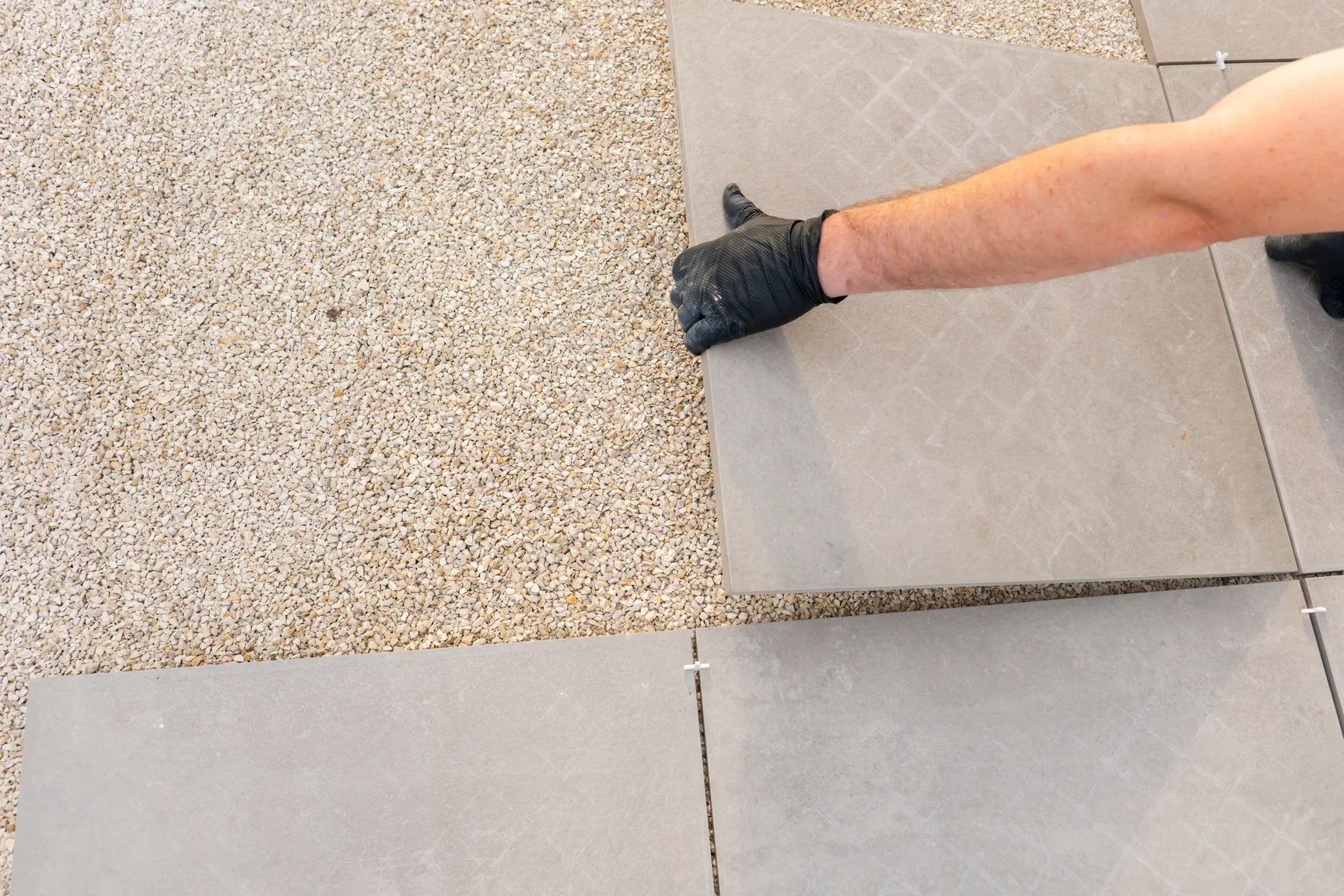
Before a flooring business does any construction work in Delaware, it registers with the Delaware Department of Labor, Office of Contractor Registration, and the application carries proof of Delaware workers’ compensation and proof of a state business license. That business license comes from the Delaware Division of Revenue under the state’s tax law and is a tax license, not the contractor credential; the registration is the credential, and it tests no trade skill.
The other findings follow from there. Delaware certifies lead-safe renovation itself, through the Delaware Division of Public Health, Healthy Homes and Lead Poisoning Prevention Program, rather than leaving it to the federal agency. The Delaware Office of Management and Budget, Division of Facilities Management certifies asbestos contractors, the Delaware Department of Natural Resources and Environmental Control, Division of Air Quality enforces the law and receives renovation notices, and the state rule reaches old floor tile and mastic whether or not they are friable. Workers’ compensation is compulsory, written by private insurers. Section by section, the verified record text sits beside quotations from the statutes and agencies, and short checklists close out the rules a crew lead should raise before a Delaware job is priced.
For how the policies work in any state, start at the flooring contractor insurance page and follow its links. This page stays with Delaware, whether your crews handle residential flooring in occupied homes, commercial flooring for general contractors, carpet installation or tile and stone setting.
Delaware contractor registration comes before the first plank or tile goes down
Delaware requires every contractor that performs construction services or maintenance for others to register with the Department of Labor’s Office of Contractor Registration before the work begins, and the Act’s definition of construction services takes in all work on a building, which reaches flooring installation. It is a registration, not an examined trade license: there is no state contractor licensing board. Separately, the Division of Revenue issues the contractor’s business license, a tax license under the state tax title.
Authority: 19 Del. C. §§ 3602(1)–(2), 3603, 3604, 3605(b)(6)–(7); 30 Del. C. § 2502(a), (b), (c)(1)
Registration under the Act rests on one short sentence:
“A contractor must register under this chapter before performing construction services or maintenance.”
Whether flooring falls inside it turns on the Act’s definition of the work. The definition opens broadly, and the record keeps its opening words:
““Construction services” includes all building or work on a building, structure, or improvement of any type, including …”
The record reads that general language as reaching flooring installation, which is work on a building; the Act does not name flooring. The registration is the Delaware Contractor Registration Act certificate of registration, and its reach, as the record states it, is every contractor or subcontractor doing construction services or maintenance for another for profit in Delaware; construction services include all building or work on a building, structure or improvement of any type. The Delaware Department of Labor, Office of Contractor Registration puts the timing in capital letters:
“Delaware law requires construction service businesses to register with the Office of Contractor Registration at the Delaware Department of Labor BEFORE beginning work in the state, in addition to registering with the Division of Revenue and reporting hiring.”
Two items on the application tie the registration to everything else on this page. The Act lists them among the things an applicant supplies:
“Proof of Delaware worker’s compensation insurance.”
“Proof of a state business license.”
Before starting work in Delaware, a flooring business registers with the Office of Contractor Registration, and the application must include proof of Delaware workers’ compensation insurance and proof of a state business license. That business license comes from the Division of Revenue, which requires it of any contractor doing business in the state and collects a license fee on the contractor’s gross receipts; the Division will not issue it without a certificate of workers’ compensation insurance (or self-insurance) and a Department of Labor notice certificate. Counties license contractors too: New Castle County requires its own contractor license for construction work in its unincorporated area, including work that needs no county permit.
The Delaware business license is a tax license
The Delaware business license for contractors (Division of Revenue) is easy to mistake for a contractor license, because the statute uses the word. Read its location and its fee, though, and it is a tax license. The record explains the typing in these words: Typed by its statute’s own words: the license sits in the state tax title, Title thirty («State Taxes»), in the chapter headed «Contractors’ License Requirements and Taxes», is obtained on application to the Division of Revenue, and carries a further license fee measured on the contractor’s aggregate gross receipts. It governs how a contractor is taxed and is not a credential of competence, so it is not the contractor credential this axis records.
“Any person desiring to engage in business in this State as a contractor shall obtain a license upon making application to the Division of Revenue and paying a fee of $75.”
“In addition to the license fee required by subsection (a) of this section, every contractor shall pay a license fee of 0.6472% of the aggregate gross receipts paid to such contractor”
Keeping the two apart matters in practice. A general contractor who asks for your Delaware registration is asking about the Delaware Department of Labor, Office of Contractor Registration; a question about gross receipts belongs to the Delaware Division of Revenue and your accountant, and this page does not answer tax questions.
New Castle County adds a license of its own
The record’s local example is the New Castle County contractor license, which reaches contractors providing construction and building improvement services in unincorporated New Castle County; a non-permit endorsed license covers construction activity that needs no county permit. The county says so directly:
“Contractors working in unincorporated New Castle County providing construction and building improvement services are required to obtain a New Castle County contractor license.”
“Non-Permit endorsed licenses are valid to perform construction activity defined by Sector 23 of the North American Industry Classification System (NAICS) code that does not require a permit or fall under HVACR/plumbing work.”
A few habits keep the paperwork ahead of the schedule:
- Register before you bid in the state, and keep the registration current; a lapse is not something to find out about on a job site.
- Keep the workers’ compensation certificate and the business license together, since the registration application asks for both.
- Working in New Castle County outside a city? Ask the county whether your work needs its license, even when no permit is involved.
A registration certificate does not prove insurance. For the certificate a general contractor requests, see the commercial flooring contractor insurance page; for what a homeowner may want to see, the residential page.
Delaware runs its own lead renovation program for work near old paint
Delaware operates an EPA-authorized state program for lead renovation. The Division of Public Health, not EPA, certifies the renovation firms and renovators that disturb paint in older housing, child care facilities and schools, and a firm paid for that work needs the Division’s certification before it starts.
Authority: 16 DE Admin. Code 4459B §§ 1.1, 1.4.2; 40 CFR Part 745, Subparts E and Q
EPA’s own page names Delaware among the places that run their own programs:
“EPA administers the RRP Program in most Tribes, states and territories, but has authorized the following to operate their own programs: Alabama, Delaware, Georgia, Iowa, Kansas, Massachusetts, Mississippi, North Carolina, Oklahoma, Oregon, Rhode Island, Utah, Vermont, Wisconsin and the Minnesota Chippewa Tribe-Boise Forte (Nette Lake).”
The Delaware Division of Public Health, Healthy Homes and Lead Poisoning Prevention Program describes the state’s position in its own words:
“The State of Delaware has become the first state in EPA’s Mid-Atlantic Region III to administer and enforce a Lead Renovation, Repair and Painting (RRP) program.”
“Individuals and firms performing lead-based paint activities in the State of Delaware must be certified by the Division of Public Health (DPH).”
Above the disturbance thresholds quoted below, removing painted baseboards, shoe molding, thresholds or door casings in older housing or a child-occupied facility brings a flooring job under the state rule: the firm holds Division of Public Health certification, a certified renovator directs the work, and the rule’s lead-safe work practices and pre-renovation notice apply. The rule reaches renovations done for compensation, so unpaid work by an owner on the owner’s own home is outside it.
“Certification is required for renovations that disturb more than six square feet of painted surfaces in a room for interior projects or more than twenty square feet of painted surfaces for exterior projects or window replacement or demolition in housing, child care facilities and schools built before 1978.”
The state rule says whom it reaches and what an uncertified firm may not do:
“These regulations apply to all renovations performed for compensation in target housing and child-occupied facilities.”
“On or after the effective date of these regulations, it shall be unlawful for any firm to perform, offer, or claim to perform renovations in target housing or child-occupied facilities without certification from the Secretary under Section 7.0, unless the renovation qualifies for 1 of the exceptions identified in subsections 1.5.1 and 1.5.2.”
On a flooring job the paint is usually at the edges of the room. Questions for the walkthrough:
- Note the construction date on the estimate, since the area quote above turns on it.
- Check whether children spend their days there; the rule names child-occupied facilities alongside homes.
- Settle whose hands take off the baseboards, shoe molding and door casings.
- Does your firm hold the state certification, and will a certified renovator be on this job?
Older houses get more attention on the residential flooring contractor insurance page, and a lead claim under a policy is a general liability question.
Old floor tile and mastic in Delaware: certified removal, inspection and notice
Delaware regulates asbestos work under its own statute and rule. State law makes the removal of materials containing asbestos an abatement activity that only certified contractors and workers may do; the Office of Management and Budget’s Division of Facilities Management certifies them, and the Department of Natural Resources and Environmental Control enforces the law and receives renovation notifications. The state rule reaches removal of asbestos floor tile and mastic by a flooring contractor, not only friable material.
Authority: 16 Del. C. §§ 7802(2), 7803(a), 7805, 7806(1); 19 DE Admin. Code 4103 §§ 3.0, 5.1; 7 DE Admin. Code 1121; 40 CFR Part 61, Subpart M
The statute starts with a definition and then lists the activities it covers. Removal is among them:
““Asbestos abatement” shall mean any of the following activities except those which may be considered incidental during normal day-to-day operations and maintenance:”
“Removal or encapsulation of materials containing asbestos;”
It then bars uncertified work outright:
“No contractor or asbestos worker shall undertake any asbestos abatement work without having first been certified in accordance with this chapter.”
The certification rule of the Delaware Office of Management and Budget, Division of Facilities Management carries its own definition, and the difference from the federal emission standard is the point for a flooring business. It reaches removal of asbestos-containing material generally, not only friable material:
““Asbestos Abatement” means project work undertaken by a contractor or person which involves the installation, removal, encapsulation, application or enclosure of any asbestos project or asbestos-containing project materials, or the disturbance of friable asbestos or cementitious asbestos-containing material or the disturbance of non-friable material that will become friable with handling, except for work in an owner occupied single family dwelling performed by the owner of such dwelling.”
“Any public or private asbestos abatement project, except for work in an owner-occupied single family dwelling performed by the owner of such dwelling, shall be performed by a contractor and/or contractors who have been certified by Facilities Management.”
For a trade that meets asbestos in the ordinary course of its work, the rule sets out a limited class of contractor certification:
“to perform limited or specialized (roofer, exterior sider, plumber, HVAC mechanic or other tradesman who must work in and around asbestos-containing material in their normal everyday craft) asbestos abatement within the State of Delaware, and whose main business is not asbestos abatement.”
Before a renovation, the building is inspected for asbestos by a Delaware-licensed inspector. If asbestos flooring or mastic will be disturbed, its removal is asbestos abatement under the rule, done by a contractor certified by the Division of Facilities Management with certified workers; the rule offers a limited class of certification for tradesmen whose main business is not abatement. The facility owner or operator notifies the Department of Natural Resources and Environmental Control in advance of regulated asbestos renovations above the quantities quoted below. A homeowner working on an owner-occupied single family home is outside the certification rule.
The Delaware Department of Natural Resources and Environmental Control, Division of Air Quality sets the order of events on a renovation:
“A thorough inspection must be conducted for the presence of asbestos-containing building materials prior to any building renovation or demolition project.”
“For asbestos renovations, facility owners or operators must provide electronic notification to DNREC at least ten working days before the start of regulated asbestos renovations.”
“Notification is not required for renovations where less than 260 linear feet, 160 square feet, or 35 cubic feet of regulated asbestos will be disturbed and where non-regulated asbestos may not become friable during renovations.”
Some habits that follow from those rules:
- Ask for the inspection results before pricing a tear-out, and read what they say about the layers under the floor you are replacing.
- Decide in writing who removes any asbestos flooring or mastic, and whether that firm holds certification.
- If the job may need notice to the environmental department, settle with the owner who files it and when.
- File the inspection report beside the proposal and every change order for that job.
How an asbestos claim or finished work meets a policy belongs to the general liability page; contract insurance terms on a commercial tear-out to the commercial page; and demolition of old tile to the tile and stone page.
Delaware workers’ compensation is compulsory and is checked twice
Delaware makes workers’ compensation compulsory. Each covered employer insures its liability with an authorized insurer or qualifies to self-insure, and the Department of Labor says employers with even one employee must carry coverage. The state does not sell the insurance; private insurers licensed in Delaware write it.
Authority: 19 Del. C. §§ 2371(a)–(c), 2372(a), 2374(d); 30 Del. C. § 2502(b)(3); 18 Del. C. § 2618(a)
Two sections of the labor title carry the duty and the ways to meet it:
“Every employer to whom this chapter applies shall insure the payment of compensation to the employees, or their dependents, in the manner provided in § 2372 of this title.”
“Every employer to whom this chapter applies shall insure and keep insured the employer’s liability for compensation in some corporation, association or organization approved by the Department and authorized to transact the business of workers’ compensation insurance in this State or shall furnish to the Department satisfactory proof of the employer’s financial ability to pay directly the compensation, in the amount and manner and when due, as provided in this chapter.”
The Delaware Department of Labor, Division of Industrial Affairs, Office of Workers’ Compensation puts it in plain terms for employers:
“All employers with one or more employees must carry workers’ compensation insurance through a licensed carrier or an approved self-insurance program.”
With employees, a flooring contractor carries a Delaware workers’ compensation policy or approved self-insurance before work begins, and files proof of it twice over: with the Division of Revenue to get its contractor business license, and with the Office of Contractor Registration to register. An out-of-state flooring contractor doing construction work in Delaware carries Delaware coverage for those employees as if it were a Delaware employer. An employer without coverage faces daily civil penalties and can be sued at law by an injured employee. An employer the voluntary market turns down is placed through a residual market plan in which every authorized insurer must participate.
The checks run through the other credentials. The business license statute makes a filed certificate a condition:
“Has filed a certificate of insurance showing that such person has insured liability in the amount and manner, and when due, and as required, under the workers’ compensation laws of this State”
A flooring business based across a state line is not outside the rule when its crews work here:
“Every employer having a primary place of business in another state shall carry Delaware workers’ compensation coverage in full for any employees doing substantial work in the State as if they were an employer in Delaware.”
And the statute spells out what an employer that neglects the duty faces from its own workers:
“The employer shall also be liable to the employer’s injured employees during continuance of such neglect or refusal, either for compensation under this chapter or in an action at law for damages.”
Coverage here means a policy from an insurer authorized in Delaware or an approved self-insurance program; the state runs no fund that sells it. Payroll classes, and how installers paid as subcontractors are treated, are policy questions rather than Delaware ones; the workers’ compensation page sets them out.
Who regulates what for a Delaware flooring business
The Delaware Department of Insurance is the insurance regulator. Its job, in the record’s words: insurance regulator; licenses the insurers that write workers’ compensation and general liability in Delaware, and its Commissioner approves the residual market plan for workers’ compensation. Anyone can check an insurance agency’s licenses, ours included, on NIPR.com.
The remaining offices, each linked to its own site and described as the record verified it:
- Delaware Department of Labor, Office of Contractor Registration: registers construction contractors, including flooring contractors, before they perform construction services or maintenance in Delaware; there is no state contractor licensing board
- Delaware Division of Revenue: issues the business license a contractor holds, a tax license under the state tax title, with a license fee on gross receipts
- Delaware Division of Public Health, Healthy Homes and Lead Poisoning Prevention Program: administers Delaware’s EPA-authorized lead renovation program and certifies renovation firms, renovators and lead-based paint workers
- Delaware Office of Management and Budget, Division of Facilities Management: certifies asbestos abatement contractors, supervisors and workers under the state asbestos chapter; the Department of Natural Resources and Environmental Control enforces it and receives renovation notifications
- Delaware Department of Labor, Division of Industrial Affairs, Office of Workers’ Compensation: administers and enforces the workers’ compensation law: proof of coverage, self-insurance, injury reports and claim petitions heard by the Industrial Accident Board
Asbestos enforcement and renovation notices go to the Delaware Department of Natural Resources and Environmental Control, Division of Air Quality. Registered contractors can be looked up on the state contractor registry. Missing from the list are a contractor licensing board and a state workers’ compensation fund; Delaware has neither.
Delaware metro areas and their counties
Few metropolitan areas delineated by the U.S. Census Bureau carry Delaware in their names, and every one appears below. The cross-border card lists only its Delaware county, where the state registration and the tax license apply.
Philadelphia-Camden-Wilmington, PA-NJ-DE-MD
Delaware portion of the metro: New Castle County.
The Delaware Division of Revenue’s business license and registration with the Delaware Department of Labor, Office of Contractor Registration apply statewide, and New Castle County adds its own contractor license in its unincorporated area.
Dover, DE
County making up the metro: Kent County.
The Delaware Division of Revenue’s business license and registration with the Delaware Department of Labor, Office of Contractor Registration apply statewide.
Putting together a Delaware flooring insurance program
The rules sit where the findings above put them; the coverage that answers for the work has pages of its own: general liability for injury and damage to others, finished work and tear-out included; workers’ compensation for the crew and subcontracted installers; and inland marine coverage for contractors’ tools and equipment for saws, trowels and material moving between jobs.
A carpet crew and a tile setter face different jobs; the carpet installation and tile and stone pages treat them separately. Pricing Delaware work starts with a quote request.
Residential Flooring Contractor Insurance
A panel for Delaware in rows. Contractor license: a state license or registration can reach this work. It connects to the General Liability page. Lead-safe renovation: the state runs its own lead-safe program. It connects to the Residential Flooring Contractor Insurance page. Asbestos flooring and mastic: a state program reaches flooring removal. It connects to the General Liability page. Workers’ compensation: bought in the open market. It connects to the Workers Compensation page. Each row pairs a state rule with the page on this site that discusses it. No figures are shown.
Nearby states we also write
Related coverage and services
What we insure
Outside authorities
- Delaware Department of Insurance
- Delaware Department of Labor, Office of Contractor Registration
- Delaware Division of Revenue
- Delaware Division of Public Health, Healthy Homes and Lead Poisoning Prevention Program
- Delaware Office of Management and Budget, Division of Facilities Management
- Delaware Department of Labor, Division of Industrial Affairs, Office of Workers’ Compensation
Delaware flooring contractor insurance questions
Does a Delaware flooring installer have to register before taking a job?
Yes. The Delaware Department of Labor, Office of Contractor Registration registers contractors that do construction services or maintenance for others for profit, subcontractors included, and the registration comes before the work. The Act’s definition of construction services takes in all work on a building, which reaches flooring installation. It is a registration, not an examined trade license.
Is the Delaware business license the same thing as a contractor license?
No. The Delaware Division of Revenue issues the business license a contractor holds, and the statute that requires it sits in the state tax title, in a chapter on contractors’ license requirements and taxes, with a further license fee measured on gross receipts. It is a tax license. The contractor credential is the registration with the Delaware Department of Labor, Office of Contractor Registration, and that application asks for proof of the business license.
Which Delaware agency certifies flooring firms that disturb old paint?
The Delaware Division of Public Health, Healthy Homes and Lead Poisoning Prevention Program. Delaware runs its own lead renovation program, which EPA lists among the authorized state programs, and the state rule makes it unlawful for a firm to do covered renovations for compensation in older housing or child-occupied facilities without the state’s certification.
Can a Delaware flooring crew take up old asbestos floor tile without certification?
Not as a paid contractor. The state certification rule treats removal of any asbestos-containing material as abatement, not only friable material, and requires a contractor certified by the Delaware Office of Management and Budget, Division of Facilities Management for public and private projects. The rule offers a limited class of certification for tradesmen whose main business is not abatement. The one exception is an owner’s own work in an owner-occupied single family home.
Must a Delaware flooring business with employees carry workers’ compensation?
Yes. Delaware makes it compulsory: a covered employer insures with an authorized insurer or qualifies to self-insure, and the Delaware Department of Labor, Division of Industrial Affairs, Office of Workers’ Compensation tells employers to carry it through a licensed insurer or an approved self-insurance program. Proof of coverage is also a condition of both the business license and the contractor registration.
Can a Delaware flooring business buy its comp policy from the state?
No. There is no state fund. Private insurers licensed in Delaware write the coverage, or the employer self-insures with approval. An employer the voluntary market turns down is placed through a plan in which every authorized insurer must take part.
Do Delaware counties license flooring contractors as well?
Some do. New Castle County requires its own contractor license for construction and building improvement work in its unincorporated area, and a non-permit endorsement covers construction work that needs no county permit. That county license sits on top of the state registration and the tax license.
This page describes insurance for flooring contractors and installers operating in this state. It is general information, not legal advice and not a statement of coverage. Licensing, lead-safe and asbestos requirements change; verify current requirements with the agency named before relying on them.
Get a quote for your Delaware flooring work
Tell us where in Delaware your crews work, whether your registration and comp are current and what comes up before the new floor goes down, and we will build the program around it.