
Flooring Contractor Insurance by State
North Dakota Flooring Contractor Insurance
North Dakota insures a flooring crew through a state agency fund rather than a private policy, licenses contractors through its Secretary of State, and lists resilient floor covering in its asbestos rule.
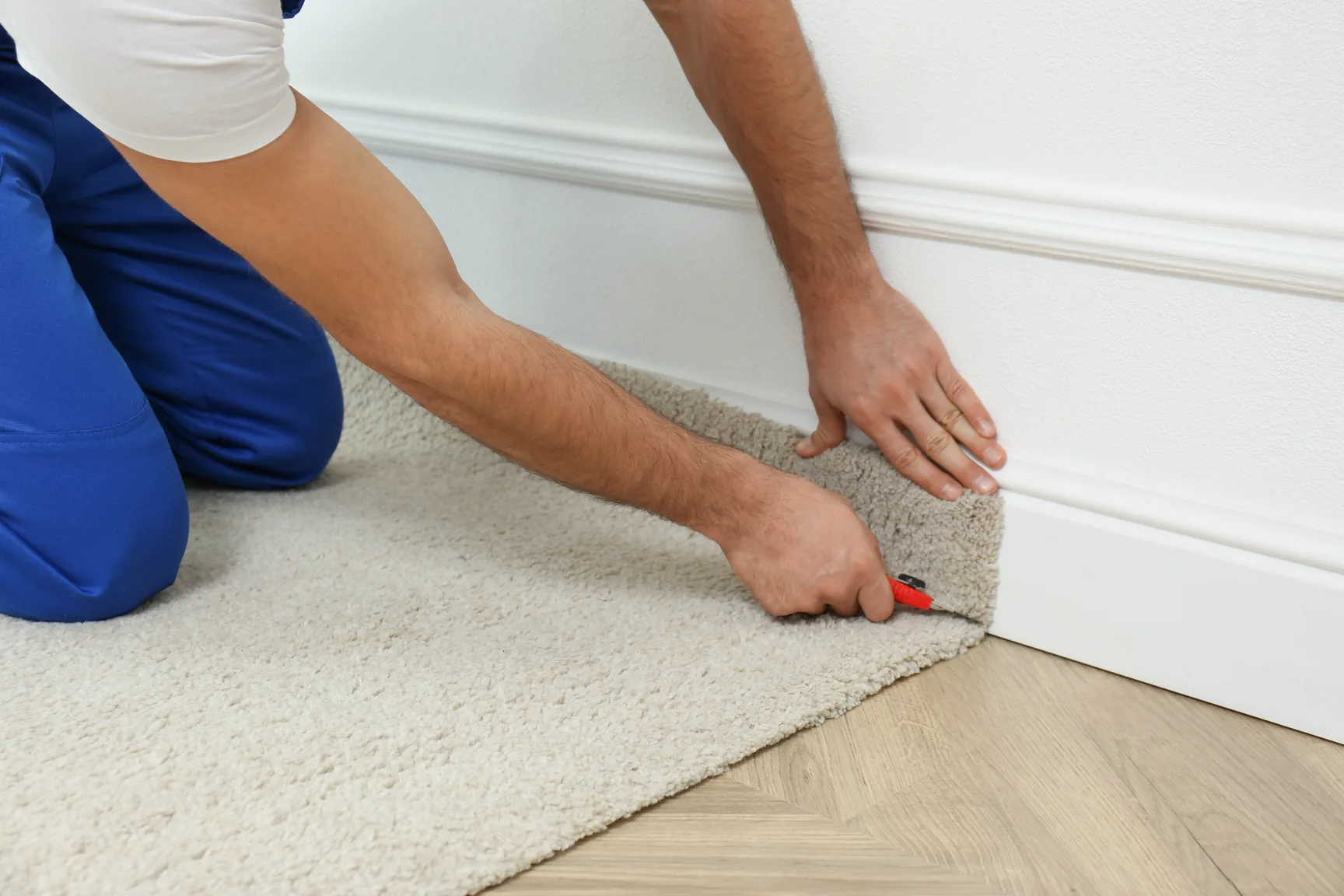
North Dakota runs workers’ compensation as a state monopoly: every employer the Act reaches pays its premium into a fund the state treasurer holds, the North Dakota Workforce Safety & Insurance (WSI) administers it, and the agency says in its own words that private insurers may not write the coverage there, so a flooring employer has no second route to choose. The state also licenses contractors itself, through the North Dakota Secretary of State, once a job’s price passes the contractor law’s threshold, in four classes set by the value of a single project.
Two further findings complete the picture. EPA, not the state, certifies a flooring firm for lead-safe renovation work, and the North Dakota Department of Environmental Quality enforces an asbestos rule that names the resilient floor covering a crew pulls up.
For a North Dakota flooring owner, then, two pieces of paper come before the first job: an account with the state agency fund and a contractor license from the state. The license application asks for proof of the first. Below, one section per finding sets out the record’s summary, its source’s own words and some working habits drawn from them. Our explanations of each policy sit on the flooring contractor insurance page and the pages it links to, sorted by the shop you run: residential flooring crews in occupied homes, commercial flooring firms working under general contractors, carpet installation businesses and tile and stone setters.
A Secretary of State license above the job-price line: North Dakota contractor law and the flooring trade
North Dakota licenses contractors statewide through the Secretary of State, and the license reaches flooring installation. The contractor law covers anyone in the business of building, repairing or altering buildings and every other improvement to real property, a contractor whose job price passes the law’s threshold must hold the license, and the license is issued in four classes set by the value of a single contract project.
Authority: N.D.C.C. 43-07-01(1), (5); N.D.C.C. 43-07-02(1), (2); N.D.C.C. 43-07-04(1); N.D.C.C. 43-07-07(1); N.D.C.C. 43-07-08(2)
A flooring contractor taking a North Dakota job priced above the threshold quoted below first holds a Secretary of State contractor license in the class that fits the project’s value. The application carries a certificate of liability insurance and a statement from Workforce Safety & Insurance that the contractor has secured coverage, and the license is renewed each year. Working without one is a misdemeanor. A seller who only furnishes flooring material and does not attach it to the building is outside the law, but installing it is not. Electrical and plumbing work stays with the state electrical and plumbing boards, and asbestos abatement with the Department of Environmental Quality.
Flooring is never named in the chapter. It gets there through the definition of a contractor, which is written broadly enough to take in nearly any work on a building:
“"Contractor" means any person engaged in the business of construction, repair, alteration, dismantling, or demolition of … buildings, … and every other type of structure, project, development, or improvement coming within the definition of real or personal property, including the construction, alteration, or repair of property to be held either for sale or rental, and includes subcontractor, public contractor, and nonresident contractor.”
The license duty switches on at a price per job, printed here as the statute prints it:
“A person may not engage in the business nor act in the capacity of a contractor within this state when the cost, value, or price per job exceeds the sum of four thousand dollars nor may that person maintain any claim, action, suit, or proceeding in any court of this state related to the person's business or capacity as a contractor without first having a license as provided in this chapter.”
The same sentence also limits what an unlicensed contractor can pursue in the state’s courts over its contracting business, one more reason to hold the license before the bid rather than after it.
The application is where insurance first meets the license. The North Dakota Secretary of State wants to see both lines before it issues anything:
“A copy of a certificate of liability insurance must be filed with the application and the contractor shall submit a statement from North Dakota workforce safety and insurance that the contractor has secured workforce safety and insurance coverage satisfactory to workforce safety and insurance.”
Classes follow project value rather than trade. The statute sets out four of them, and the smallest reads like this:
“Four classes of licenses may be issued under this chapter, which must be designated as class A, B, C, and D licenses.”
“The holder of a class D license is not entitled to engage in the construction of any single contract project of a value in excess of one hundred thousand dollars.”
The North Dakota Secretary of State also reminds applicants that its license is not the only credential a job can call for:
“In addition to a contractor's license, you may need to obtain other licenses or permits as required by law. These specialized licenses or permits are not part of the contractor license issued by the Secretary of State.”
Several office routines follow from that for a flooring business working in North Dakota:
- Match your license class to the largest single project you expect to bid this year, not the typical one. A commercial job can outgrow a class faster than a run of kitchens and baths.
- Keep the liability certificate the application used and the agency’s coverage statement in the same file, so the annual renewal does not stall on a missing page.
- Where a job includes a heated floor or a relocated outlet, name the licensed electrical contractor in the proposal and leave that work to them.
Once the license is in hand, a commercial bid usually brings a certificate request and additional insured wording from the general contractor; the commercial flooring contractor insurance page discusses both.
North Dakota keeps lead abatement and leaves renovation certification with EPA
Certification for lead-safe renovation firms in North Dakota comes from EPA, not the state. At the Department of Environmental Quality, North Dakota’s own lead program licenses abatement firms and certifies testing and abatement workers, while the renovation, repair and painting (RRP) rule there is EPA’s own, administered directly.
Authority: 40 CFR Part 745; N.D. Admin. Code 33.1-15-24-01, 33.1-15-24-02 (40 CFR 745.220(a) as amended)
The U.S. Environmental Protection Agency lists the places that run their own renovation programs, and North Dakota is not among them:
“EPA administers the RRP Program in most Tribes, states and territories, but has authorized the following to operate their own programs: Alabama, Delaware, Georgia, Iowa, Kansas, Massachusetts, Mississippi, North Carolina, Oklahoma, Oregon, Rhode Island, Utah, Vermont, Wisconsin and the Minnesota Chippewa Tribe-Boise Forte (Nette Lake).”
The state Department draws the same line from its side, sorting lead work into two kinds of credential:
“There are two main types of certifications for contractors in North Dakota who address lead-based paint (LBP) in residences and child-occupied facilities. They are: North Dakota–licensed companies and certified individuals who do testing and abatement work, and the EPA-certified renovator/firms who conduct renovation work.”
Under the federal rule, a North Dakota crew removing painted baseboards, shoe molding, thresholds or door casings in covered housing or a child-occupied facility is doing renovation work: the firm is certified by EPA, a certified renovator is assigned to the job, and the rule’s work practices apply, with the building-age threshold quoted below as printed. Lead abatement in North Dakota is a separate activity that the Department of Environmental Quality reserves to its licensed firms and certified individuals.
EPA puts the certification duty in terms that leave out no firm by size:
“In general, anyone who is paid to perform work that disturbs paint in housing and child-occupied facilities built before 1978 must be certified. This includes all firms, even sole proprietorships.”
Few flooring jobs set out to touch paint, yet trim comes off on almost every replacement in an older house. A short pre-bid routine keeps that from becoming a surprise:
- Pin down the construction year and whether children use the building, as a home, school or daycare.
- Decide on paper whether your crew or the painter removes and resets the baseboards and casings.
- Record which certified renovator will be assigned, and confirm that person is free on the job dates.
Occupied older homes bring these questions up most, and the residential flooring contractor insurance page gives them room. Any lead claim against a liability policy raises a coverage question, handled on the general liability page.
Asbestos floor tile and sheet vinyl under North Dakota’s emission standard
Asbestos in North Dakota is regulated by a state program at the Department of Environmental Quality, and its rule names resilient floor covering. The state’s emission standard for asbestos counts asbestos floor tile and sheet vinyl as Category I nonfriable material, which becomes regulated material when it is sanded, ground, cut or abraded, and the Department’s Asbestos Control Program licenses asbestos contractors and certifies the people who do abatement.
Authority: N.D. Admin. Code 33.1-15-13-02(2)(d), (i), (p), (y), (uu), (ww), (yy); 33.1-15-13-02(6)(a), (a)(3), (b)(1); 33.1-15-13-02(16), (16)(c)
The program’s own description of its work comes from the North Dakota Department of Environmental Quality, Asbestos Control Program:
“The Asbestos Control Program enforces the Emission Standards for Asbestos under the North Dakota Pollution Control Rules. The Asbestos Control Program also licenses contractors and certifies workers for asbestos abatement activities and project monitoring.”
An inspection of the affected area comes first: before renovating or demolishing a facility the rule covers, the owner or operator has it inspected for asbestos, including nonfriable flooring materials. Once sanded, ground, cut or abraded, resilient tile, sheet flooring or mastic counts as regulated material: the Department says regulated material is removed by state-certified individuals before the project begins, a company that contracts to do asbestos abatement for others holds a Department license, and above the rule’s quantity threshold the owner or operator gives the Department written notice and follows the rule’s emission controls. Some residential buildings sit outside the facility definition, which is quoted below.
Floor coverings come into the rule by name, and the rule spells out which ones:
“"Resilient floor covering" means asbestos-containing floor tile, including … vinyl floor tiles and sheet vinyl floor covering containing more than one percent asbestos …”
Intact, that tile is nonfriable. The method used to take it up is what changes its status, and the definition of regulated material names the methods:
“Category I nonfriable asbestos-containing material that will be or has been subjected to sanding, grinding, cutting, or abrading.”
Before any of that happens, the rule calls for an inspection that looks at nonfriable materials as well:
“prior to the commencement of the demolition or renovation, thoroughly inspect the affected facility, or part of the facility where the demolition or renovation operation will occur, for the presence of asbestos, including category I and category II nonfriable …”
The Department’s page sets the order of operations in one passage, from inspection to removal:
“Federal and State regulations require that all affected parts of a facility being renovated or demolished must be inspected by a state-certified inspector for the presence of asbestos-containing materials prior to beginning a renovation or demolition project; all regulated asbestos-containing material that will be disturbed as part of a renovation or demolition must be properly removed by state-certified individuals before beginning the project; …”
Larger jobs bring written notice to the Department. The quantity that triggers it is shown as the rule prints it, followed by the notice duty itself:
“For a renovation project where at least one hundred sixty square feet [14.9 square meters] of regulated asbestos-containing material on facility components … are to be stripped, removed, dislodged, cut, drilled, or similarly disturbed at a facility all the notification requirements of subdivision b apply.”
“Provide the department with written notice of the intention to demolish or renovate.”
Houses enter through the facility definition, which leaves the smaller residential buildings out:
“"Facility" means any institutional, commercial, public, industrial, or residential structure, installation, or building, including any structure, installation, or building containing condominiums or individual dwelling units operated as a residential cooperative, but excluding residential buildings having four or fewer dwelling units; …”
From those passages a flooring owner can draw a few habits for North Dakota tear-outs:
- On commercial and larger residential work, get the inspection report before pricing removal, and read what it says about every layer, adhesive included.
- Write into the proposal the method your crew will use to take the old floor up. Those four verbs, sanding, grinding, cutting and abrading, come from the rule itself, so a method choice is also a regulatory choice.
- Where the report finds regulated material, bring in a firm the Department licenses for that removal and keep your crew off that floor until the work is done.
- In a smaller house, treat the facility exclusion as an answer about the rule only; it says nothing about what the floor contains, so ask the owner what is known before quoting.
Our general liability page takes up asbestos claims, and finished work once a room is back in use. Tear-out of old tile also gets its own treatment on the tile and stone page, and general contractors’ insurance terms on commercial jobs are on the commercial page.
Workers’ compensation in North Dakota comes from a single state agency fund
Monopolistic and state-run, North Dakota’s workers’ compensation is compulsory for hazardous employment, which the law defines as any business that regularly employs workers, with listed exceptions that do not include construction. Every employer subject to the law pays premium into the workforce safety and insurance fund, which the state treasurer holds, and Workforce Safety & Insurance, the state agency that runs the system, says North Dakota law does not allow private insurers to underwrite the coverage.
Authority: N.D.C.C. 65-01-01; N.D.C.C. 65-01-02(20), (21), (25); N.D.C.C. 65-02-01; N.D.C.C. 65-02-01.3; N.D.C.C. 65-04-04(1); N.D.C.C. 65-04-26.2(1); N.D.C.C. 65-04-28; N.D.C.C. 65-04-30; N.D.C.C. 65-07-01; N.D.C.C. 43-07-04(1)
The agency’s own coverage page states the arrangement directly, including what it says about private insurers:
“WSI is the sole provider and administrator of workers’ compensation in North Dakota. WSI is an exclusive employer-financed, no-fault insurance system covering workplace injuries, illnesses, and death. North Dakota law does not allow private insurers to underwrite workers' compensation insurance in North Dakota.”
The Act builds that arrangement out of a few short sections. Every employer subject to the title pays into the fund, and the money sits in the state treasurer’s keeping:
“Each employer subject to this title shall pay into the fund the amount of premium and assessment determined by the organization.”
“The state treasurer is the custodian of the fund and all payments of awards of the organization for disbursements other than travel and administrative expenses must be paid by the state treasurer upon warrant-checks authorized and prepared by the organization.”
Reach is set by the definition of hazardous employment, which begins with any business that regularly employs workers; the exceptions that follow do not include construction:
“"Hazardous employment" means any employment in which one or more employees are employed regularly in the same business or in or about the establishment except:”
Paying in is also what protects an employer from being sued by an injured worker, and only for the period the premiums cover:
“Employers who comply with the provisions of this chapter shall not be liable to respond in damages at common law or by statute for injury to or death of any employee, wherever occurring, during the period covered by the premiums paid into the fund.”
Employing installers in North Dakota means opening an account with Workforce Safety & Insurance and paying its premium; the Secretary of State will not license a contractor without a statement from the agency that coverage is secured. A general contractor is liable for the premium of a subcontractor that does not secure coverage. Self-employed installers are outside the employee definition but may buy coverage for themselves from the agency.
Two parts of that summary come straight from the statute. A subcontractor without coverage can leave its premium with the contractor above it:
“A general contractor and a subcontractor are liable for payment of premium and any applicable penalty for an employee of a subcontractor or independent contractor that does not secure required coverage or pay the premium owing.”
An owner who works alone can still choose to be covered:
“Self-employed persons may contract with the organization for workforce safety and insurance coverage for themselves.”
One answer on the agency’s common-questions page matters to a crew that travels, because the fund stops at the state line:
“As a state agency, and not an insurance agency, WSI cannot write coverage for exposure outside the state.”
So North Dakota payroll is covered by the state fund, the North Dakota Workforce Safety & Insurance (WSI), and by no private policy. Because the agency handles account setup, premium and claims (its coverage requirements page sets out the terms), this is the single line of a North Dakota flooring program we do not place. If your crews also take jobs outside the state, raise it when you ask us for a quote.
Who oversees flooring work in North Dakota, office by office
Regulating insurance itself falls to the North Dakota Insurance Department. The record gives its role as insurance regulator; workers’ compensation in North Dakota is written by the state agency fund, not by insurers it licenses. Through NIPR.com, anyone can confirm an insurance agency’s license, ours included.
The other offices on this page, each linked to its own site and listed with the role the record verified:
- North Dakota Workforce Safety & Insurance (WSI): the state agency fund for workers’ compensation: employer accounts, premium, coverage certificates and claims
- North Dakota Secretary of State: registrar for the statewide contractor license, issued in classes by contract value; takes applications and annual renewals
- North Dakota Department of Environmental Quality: state environmental agency; its Division of Waste Management runs the Asbestos Control Program and the lead-based paint abatement program
- North Dakota Department of Environmental Quality, Asbestos Control Program: asbestos inspection, notification and emission-control enforcement for demolition and renovation; licenses asbestos contractors and certifies abatement workers
Expect to deal with the first two most often. One holds your crew’s coverage and the other your license, and the license application asks for proof of that coverage.
North Dakota’s metropolitan statistical areas, county by county
Every metropolitan area on North Dakota’s list, as the U.S. Census Bureau delineates them, appears below with its North Dakota counties. Each has its principal city in the state, and two of them reach across a state line.
Fargo, ND-MN
On the North Dakota side, it takes in Cass County.
North Dakota jobs here above the contractor law’s price threshold need the North Dakota Secretary of State license.
Bismarck, ND
Its counties are Burleigh County, Morton County and Oliver County.
Jobs here above the contractor law’s price threshold need the North Dakota Secretary of State license.
Grand Forks, ND-MN
On the North Dakota side, it takes in Grand Forks County.
North Dakota jobs here above the contractor law’s price threshold need the North Dakota Secretary of State license.
Minot, ND
Its counties are McHenry County, Renville County and Ward County.
Jobs here above the contractor law’s price threshold need the North Dakota Secretary of State license.
What a North Dakota flooring business insures privately, page by page
With injury coverage for the crew settled by the state fund, the rest of the program is made of lines a flooring business carries anywhere, each explained on its own page:
- Claims from customers and the public, tear-out and finished floors included, under general liability.
- Job-site tools and stock, from saws and sanders to carpet stretchers, under inland marine for contractors’ tools and equipment.
- How underwriters read flooring payroll and subcontracted installers, on the workers’ compensation page.
The balance between them depends on the floors you put down, which is why carpet installation and tile and stone each have a page of their own.
Residential Flooring Contractor Insurance
Written separately with the state fund, not placed in this program, so no connector is drawn.
A panel for North Dakota in rows. Contractor license: a state license or registration can reach this work. It connects to the General Liability page. Lead-safe renovation: the federal program applies in this state. It connects to the Residential Flooring Contractor Insurance page. Asbestos flooring and mastic: a state program reaches flooring removal. It connects to the General Liability page. Workers’ compensation: bought only from the state fund. It is written separately, so no connector is drawn. Each row pairs a state rule with the page on this site that discusses it. No figures are shown.
Nearby states we also write
Related coverage and services
What we insure
Outside authorities
- North Dakota Insurance Department
- North Dakota Secretary of State
- North Dakota Department of Environmental Quality
- North Dakota Department of Environmental Quality, Asbestos Control Program
- North Dakota Workforce Safety & Insurance (WSI)
- North Dakota Workforce Safety & Insurance (WSI)
- U.S. Environmental Protection Agency
North Dakota flooring contractor insurance questions
Who sells workers’ compensation to a North Dakota flooring employer?
From the state. Every employer subject to North Dakota’s Act pays premium into the workforce safety and insurance fund, which the state treasurer holds, and the North Dakota Workforce Safety & Insurance (WSI) describes itself as the sole provider and administrator of the coverage. The agency also says North Dakota law does not allow private insurers to underwrite it there.
Does a North Dakota contractor license reach someone who only installs floors?
Yes, above the law’s job-price threshold. The contractor law covers anyone in the business of building, repairing or altering buildings and other improvements to real property, and its exception reaches only a seller who furnishes material without attaching it. Installing a floor attaches it, so the North Dakota Secretary of State license applies, in the class that fits the project’s value.
What has to be on file before the Secretary of State issues a North Dakota contractor license?
A copy of a certificate of liability insurance, and a statement from North Dakota Workforce Safety & Insurance (WSI) that the contractor has secured coverage. The license is renewed each year, and acting as a contractor without one is a misdemeanor.
If my subcontracted installer has no state fund account, who pays the premium?
Under North Dakota’s Act, a general contractor and a subcontractor are liable for the premium, and any penalty, for the employees of a subcontractor that does not secure coverage. Proof of a current account from each installer you hire is the simplest protection.
Can a self-employed flooring installer in North Dakota insure their own work?
Yes. Self-employed people sit outside the Act’s employee definition, but they may contract with North Dakota Workforce Safety & Insurance (WSI) for coverage for themselves.
Is a lead-safe renovation certificate for North Dakota work issued by the state?
No. EPA runs the renovation, repair and painting rule in North Dakota directly. The North Dakota Department of Environmental Quality licenses lead abatement firms and certifies testing and abatement workers, which is a separate activity from renovation.
Is old vinyl floor tile covered by North Dakota’s asbestos rule?
The state’s emission standard counts asbestos floor tile and sheet vinyl as Category I nonfriable material, and that material becomes regulated once it is sanded, ground, cut or abraded. The North Dakota Department of Environmental Quality, Asbestos Control Program says regulated material that a project will disturb is removed by state-certified individuals before the project begins.
What does the North Dakota Insurance Department have to do with workers’ compensation?
Little. The North Dakota Insurance Department regulates insurance in North Dakota, but workers’ compensation there is written by the state agency fund, not by insurers it licenses. Accounts, premium, coverage certificates and claims sit with North Dakota Workforce Safety & Insurance (WSI).
This page describes insurance for flooring contractors and installers operating in this state. It is general information, not legal advice and not a statement of coverage. Licensing, lead-safe and asbestos requirements change; verify current requirements with the agency named before relying on them.
Get a quote for your North Dakota flooring work
Send us the North Dakota towns you work in, the license class you hold and the old floors you pull up, and we will build the private side of your program around your state fund account.